
لقد أنشأ التمويل اللامركزي (DeFi) نظامًا ماليًا مفتوحًا يمكن لأي شخص من خلاله الإقراض والاقتراض والتداول وبناء الاستراتيجيات دون وسطاء تقليديين. لكن تبقى هناك تحدية رئيسية واحدة: غالبًا ما تكون أسعار الفائدة غير قابلة للتنبؤ. فقد تبدو صفقة إقراض جذابة اليوم أقل جاذبية بكثير عندما تتغير ظروف السوق، بينما قد يواجه المقترضون تكاليف تمويل أعلى بشكل غير متوقع.
وهنا يتخذ TermMax نهجًا مختلفًا.
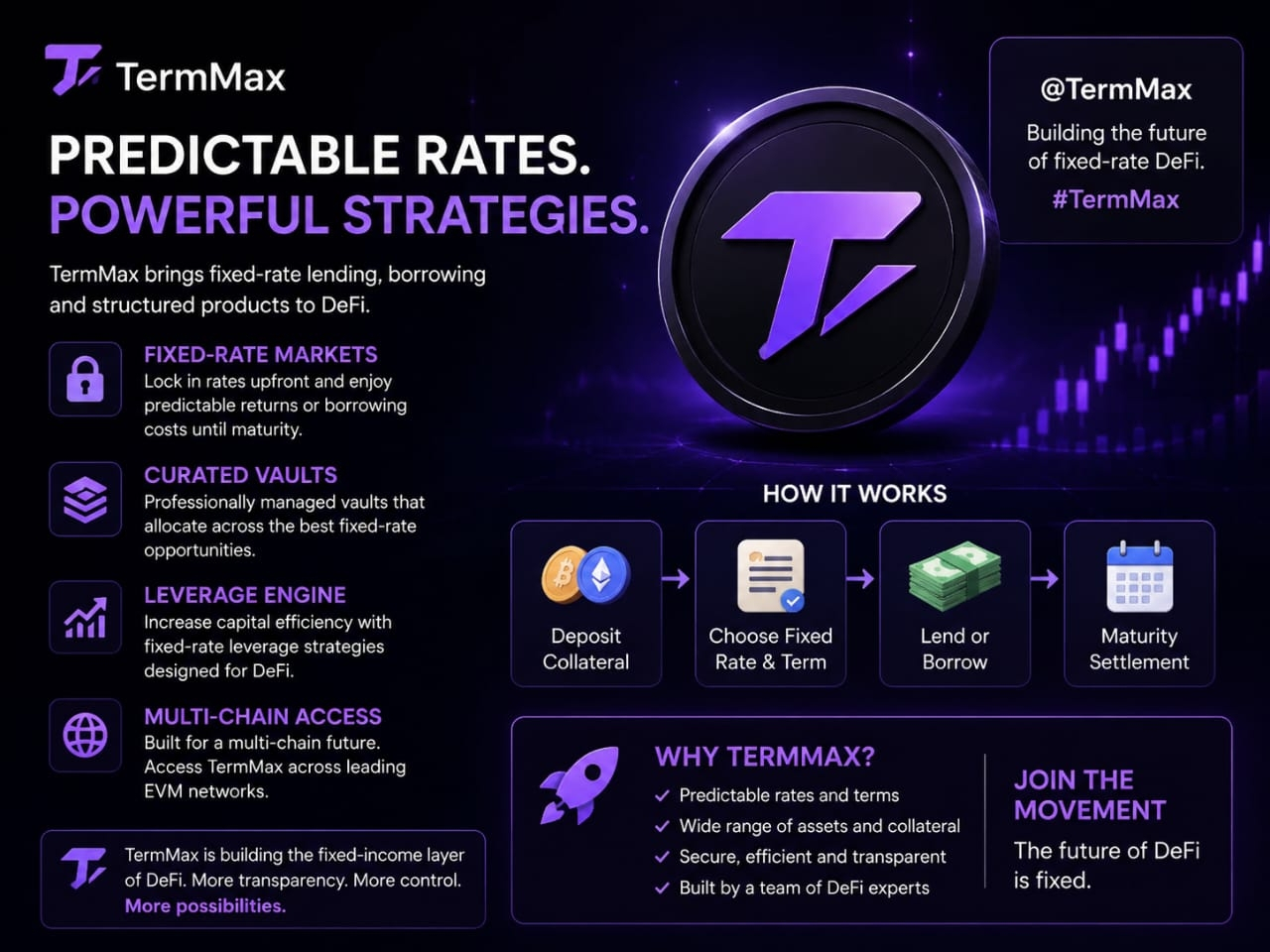
تعمل @TermMax على بناء بنية تحتية حول أسواق ذات أسعار فائدة ثابتة وفترات ثابتة، بهدف جعل الاقتراض والإقراض أكثر قابلية للتنبؤ. بدلًا من تعريض المستخدمين بالكامل لتقلبات مستمرة في الأسعار، يتيح TermMax للمشاركين الاتفاق على سعر واستحقاق مسبقًا. ويمكن لهذا التغيير البسيط أن يحدث فرقًا كبيرًا عندما يحاول المستخدمون تخطيط تخصيص رأس المال، وإدارة المخاطر، أو هيكلة استراتيجية أطول أمدًا في DeFi.
لماذا يهم التمويل اللامركزي ذو المعدل الثابت
تخيّل مقترضًا يحتاج إلى سيولة لفترة محددة. مع سوق ذي معدل متغير، يمكن أن تتحرك تكلفة التمويل طوال فترة المركز. ويصبح التنبؤ بالتكلفة النهائية صعبًا.
مع هيكل معدل ثابت، يعرف المقترض المعدل المتفق عليه وتاريخ الاستحقاق منذ البداية. كما تكون لدى المُقرِضين توقعات أوضح بشأن العائد المرتبط بمركز محتفظ به حتى الاستحقاق.
تم تصميم بنية TermMax حول هذا المفهوم. تجمع أسواقها بين أصل الدين وأصل الضمان وتاريخ الاستحقاق، ما يخلق اتفاقًا ماليًا محددًا بدلًا من مركز اقتراض مفتوح النهاية.
أكثر من مجرد إقراض بسيط
ما يجعل TermMax مثيرًا للاهتمام بشكل خاص هو أن البروتوكول لا يقتصر على الإقراض والاقتراض الأساسيين.
تشمل منظومتها أسواقًا ذات معدل ثابت، وخزائن تُدار بواسطة القائمين على التنظيم، واستراتيجيات مرفوعة، ومنتجات مهيكلة. كما يدعم البروتوكول نطاقًا واسعًا من الضمانات، بما في ذلك الأصول المشفرة، والأصول المدرة للعائد، ورموز Pendle PT، وضمانات مختارة مرتبطة بأصول حقيقية.
يُعد نظام الخزائن جزءًا مهمًا آخر من التصميم. فبدلًا من أن يضطر كل مستخدم إلى إدارة عدة أسواق يدويًا، يمكن للخزائن تخصيص رأس المال عبر فرص مختلفة ذات معدل ثابت. وهذا يخلق تجربة أكثر انسيابية للمستخدمين الذين يريدون التعرض لاستراتيجيات الإقراض دون إدارة المراكز الفردية باستمرار.
نهج مختلف للرافعة المالية
تُعد الرافعة المالية مجالًا آخر تحاول TermMax فيه تبسيط تجربة التمويل اللامركزي.
يمكن أن تتطلب استراتيجيات العائد المرفوعة تقليديًا عدة معاملات: توفير الضمانات، والاقتراض، ومبادلة الأصول، وتكرار العملية. صُمّم محرك الرافعة في TermMax ليجمع هذه الإجراءات في تجربة أكثر انسيابية مع استخدام تكاليف اقتراض ثابتة وشروط محددة.
الفكرة المهمة ليست مجرد "رافعة مالية أكبر"، بل جعل تكلفة الاستراتيجية ومدتها أسهل في الفهم قبل الدخول في المركز.
يمكن لهذه القابلية للتنبؤ أن تكون ذات قيمة للمتداولين ومستخدمي التمويل اللامركزي الذين يهتمون بكفاءة رأس المال لكنهم يريدون أيضًا معايير أوضح لمراكزهم.
التقنية وراء النموذج
تستخدم TermMax تصميمًا لترميز المعدل الثابت يتضمن رموزًا متخصصة تمثل مكونات مختلفة من مركز الدين. وتصف وثائقها الرموز ذات المعدل الثابت (FT) بأنها أدوات على نمط السندات صفرية القسيمة يمكن استردادها مقابل أصل الدين الأساسي عند الاستحقاق. يفصل هذا الهيكل مكوّن المعدل الثابت عن الجوانب الأخرى لمركز الدين ويخلق إطارًا لتداول التعرض للمعدل الثابت على السلسلة.
هذا مفهوم مهم لأن أسواق الدخل الثابت اعتمدت تاريخيًا على بنية تحتية مالية متطورة. إن إدخال مفاهيم مماثلة إلى العقود الذكية القابلة للبرمجة قد يجعل المنتجات المالية ذات المعدل الثابت أكثر سهولة في الوصول وأكثر قابلية للتركيب داخل التمويل اللامركزي (DeFi).التوسع متعدد السلاسل
صُممت TermMax أيضًا كبروتوكول متعدد السلاسل بدلًا من أن تكون محدودة بسلسلة بلوكتشين واحدة. وتذكر موادها الحالية شبكات تشمل Ethereum وArbitrum وBNB Chain وBerachain وBase وعدة أنظمة بيئية أخرى متوافقة مع EVM.
تُعدّ الإتاحة عبر عدة سلاسل مهمة لأن السيولة والمستخدمين يتوزعون بشكل متزايد عبر شبكات مختلفة. إن طبقة مالية ذات معدل ثابت يمكنها العمل عبر عدة أنظمة بيئية لديها القدرة على ربط مجموعات مختلفة من رأس المال وخلق المزيد من الفرص للمقترضين والمُقرِضين وبناة الاستراتيجيات.
أين يمكن أن تناسب TermMax الصورة الأكبر للتمويل اللامركزي
الفكرة الأوسع وراء TermMax أكبر من مجرد تقديم منصة إقراض أخرى.
يحتاج التمويل اللامركزي إلى منتجات مالية يمكنها تقديم ملفات مختلفة للمخاطر والعائد. الإقراض بمعدل متغير مفيد، لكنه لا يحل كل المشكلات. يمكن للأسواق ذات المعدل الثابت أن توفر لبنة أخرى لبناء المحافظ والتحوط والرافعة المالية وتخطيط رأس المال.
إذا كان للتمويل اللامركزي أن ينضج إلى نظام مالي قادر على خدمة مستخدمين أكثر تطورًا، فقد تصبح البنية التحتية للدخل الثابت جزءًا مهمًا من هذا التطور.
تتموضع TermMax حول تلك الفرصة من خلال الجمع بين أسواق محددة الأجل، والخزائن، والرافعة المالية، والمنتجات المهيكلة، ودعم واسع للضمانات.