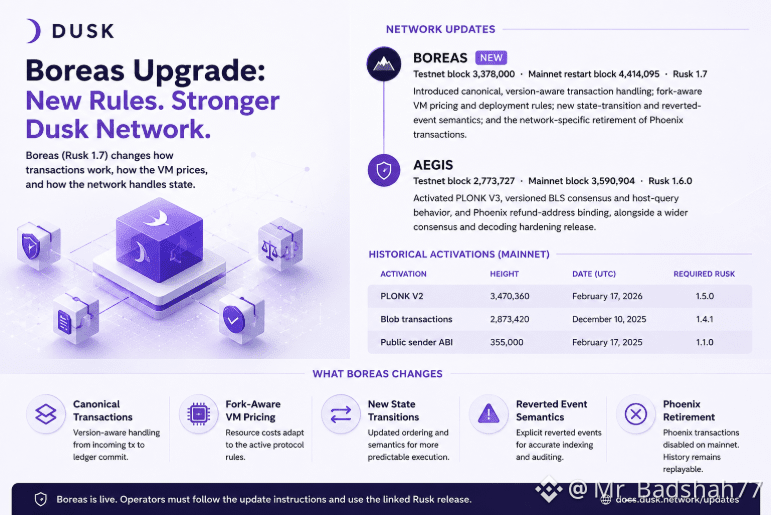

#dusk $DUSK @Dusk ........I expected Boreas to make Dusk faster and cleaner. The deeper change was harder to notice: it changed the rules for what the network considers a valid transaction.
تخيّل بلوكتشين مثل كتاب قواعد الحكم. لا تكون ترقية البرامج مهمة لأن الحكم يجري أسرع. تصبح مهمة عندما تتغير القواعد نفسها، ويجب على كل عقدة أن تفسّر اللعبة بالطريقة نفسها.....
هذا ما فعله Boreas.
مع Rusk 1.7، قدّم Dusk ترقيم إصدارات صريحًا بين المعاملات الواردة وصيغتها القانونية، وما يتم في النهاية الالتزام به في الدفتر. كما أصبحت محاسبة الغاز واعية بالانقسام (fork-aware)، مع ربط تكاليف الموارد لعمليات مثل التجزئة والتحقق التشفيري بقواعد البروتوكول الفعّالة.......
لقد تعمّق الأمر أكثر.
غيّر Boreas ترتيب انتقالات الحالة، وجعل أحداث العقود التي تم التراجع عنها واضحة لمستهلكي الأرشيف، وأنشأ حدودًا بروتوكولية واضحة لسلوك المعاملات الأقدم. والأهم من ذلك، تم تعطيل معاملات Phoenix على شبكة Dusk الرئيسية في إعادة التشغيل التي تمت في 10 يونيو عند الكتلة 4,414,095، بينما أبقتها شبكة الاختبار خلال فترة تجريبية قبل تعطيلها عند الكتلة 4,000,000 في 7 أغسطس. تظل بيانات Phoenix التاريخية قابلة لإعادة التشغيل.....
التفصيل الأخير هو ما لفت انتباهي.
ليست الشبكة الناضجة مجرد إضافة ميزات جديدة. أحيانًا تكون الترقية المهمة هي تحديد ما يجب أن يتوقف البروتوكول عن فعله، مع الحفاظ على قدر كافٍ من التاريخ لكي تظل السلسلة قابلة لإعادة الإنتاج.......
ومع إصدار Rusk v1.7.1 الآن هو أحدث إصدار مُدرج، تبدو أعمال هندسة Dusk أقل كأنها ترقية واحدة وأكثر كأنها تشديد مستمر للقواعد تحت طبقة المعاملات المالية.
بالنسبة للأسواق المنظمة، أليس السلوك البروتوكولي المتوقع مهمًا بقدر إضافة وظائف جديدة؟
$ACE $BTW
تخيّل بلوكتشين مثل كتاب قواعد الحكم. لا تكون ترقية البرامج مهمة لأن الحكم يجري أسرع. تصبح مهمة عندما تتغير القواعد نفسها، ويجب على كل عقدة أن تفسّر اللعبة بالطريقة نفسها.....
هذا ما فعله Boreas.
مع Rusk 1.7، قدّم Dusk ترقيم إصدارات صريحًا بين المعاملات الواردة وصيغتها القانونية، وما يتم في النهاية الالتزام به في الدفتر. كما أصبحت محاسبة الغاز واعية بالانقسام (fork-aware)، مع ربط تكاليف الموارد لعمليات مثل التجزئة والتحقق التشفيري بقواعد البروتوكول الفعّالة.......
لقد تعمّق الأمر أكثر.
غيّر Boreas ترتيب انتقالات الحالة، وجعل أحداث العقود التي تم التراجع عنها واضحة لمستهلكي الأرشيف، وأنشأ حدودًا بروتوكولية واضحة لسلوك المعاملات الأقدم. والأهم من ذلك، تم تعطيل معاملات Phoenix على شبكة Dusk الرئيسية في إعادة التشغيل التي تمت في 10 يونيو عند الكتلة 4,414,095، بينما أبقتها شبكة الاختبار خلال فترة تجريبية قبل تعطيلها عند الكتلة 4,000,000 في 7 أغسطس. تظل بيانات Phoenix التاريخية قابلة لإعادة التشغيل.....
التفصيل الأخير هو ما لفت انتباهي.
ليست الشبكة الناضجة مجرد إضافة ميزات جديدة. أحيانًا تكون الترقية المهمة هي تحديد ما يجب أن يتوقف البروتوكول عن فعله، مع الحفاظ على قدر كافٍ من التاريخ لكي تظل السلسلة قابلة لإعادة الإنتاج.......
ومع إصدار Rusk v1.7.1 الآن هو أحدث إصدار مُدرج، تبدو أعمال هندسة Dusk أقل كأنها ترقية واحدة وأكثر كأنها تشديد مستمر للقواعد تحت طبقة المعاملات المالية.
بالنسبة للأسواق المنظمة، أليس السلوك البروتوكولي المتوقع مهمًا بقدر إضافة وظائف جديدة؟
$ACE $BTW