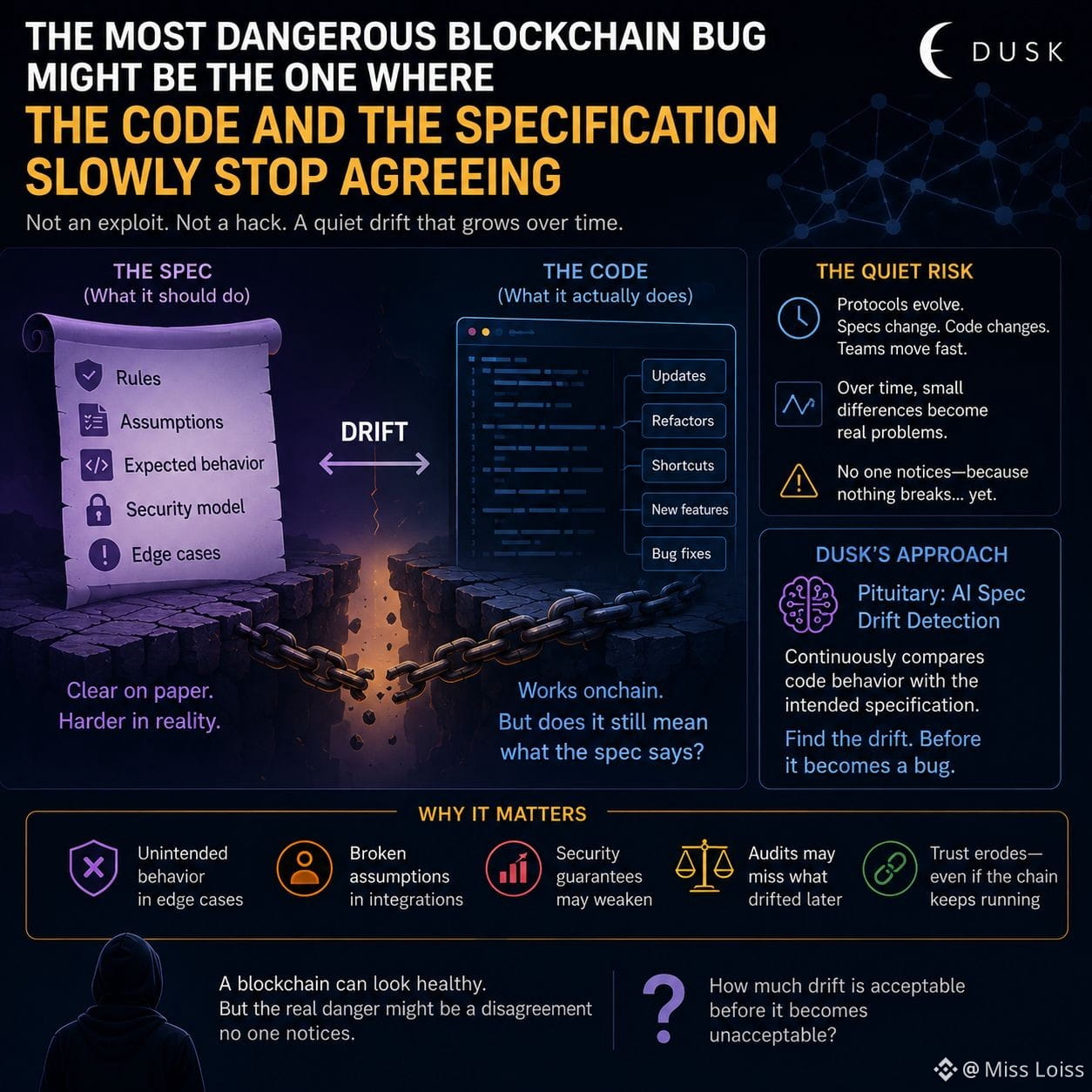

لقد كنت أفكر مؤخرًا في نوعٍ أكثر هدوءًا من مخاطر البروتوكول. ليس الاستغلال الواضح، ولا مفتاحًا سيئًا، ولا فشل إجماعي درامي. شيءٌ أبطأ.
تغييرات في الشيفرة. تغييرات في الوثائق. يتم تحديث المواصفات. تُطلق الفرق إصلاحات، وتضيف ميزات، وتزيل افتراضات. وبعد عددٍ كافٍ من التكرارات، أبدأ بالتساؤل عن مدى تكرار أن التنفيذ ما يزال يعني بالضبط ما تقوله التصميمات أنه يعنيه.
وهذه هي النقطة التي أعود إليها باستمرار مع Dusk.
قد تبدو الأنظمة سليمة على السلسلة، ومع ذلك تتكوّن تحت السطح فجوة مزعجة، حيث تنحرف القواعد المكتوبة والشفرة المفعّلة تدريجيًا عن بعضهما. ربما بشكلٍ بسيط في البداية. حالة طرفية هنا، وافتراضٌ قديم هناك. لا يحدث ما ينكسر فورًا، وهذا على الأرجح ما يجعل الأمر يزعجني أكثر.
لست متأكدًا أن الكشف الآلي عن انحراف المواصفات يحل ذلك وحده. فهو ما يزال يعتمد على ما تعتبره المواصفة “الصحيحة” فعليًا، وعلى كيفية مراجعة التغييرات، وعلى ما إذا كانت الفرق تثق بالتنبيهات بما يكفي للتحقيق فيها بدل التعامل معها كضجيج.
لكنني أحب هذه الصياغة لأنها تنقل الأمن بعيدًا عن مجرد مطاردة الاستغلالات.
أحيانًا قد تكون الحشرة الخطِرة خلافًا لا يلاحظه أحد لأن الطرفين ما زالا يبدوان منطقيين.
على الأقل من موقعي هذا، يبدو الأمر أصعب في الالتقاط من عقدٍ معطوب.
#dusk $DUSK @Dusk
$ACE $ALPINE
تغييرات في الشيفرة. تغييرات في الوثائق. يتم تحديث المواصفات. تُطلق الفرق إصلاحات، وتضيف ميزات، وتزيل افتراضات. وبعد عددٍ كافٍ من التكرارات، أبدأ بالتساؤل عن مدى تكرار أن التنفيذ ما يزال يعني بالضبط ما تقوله التصميمات أنه يعنيه.
وهذه هي النقطة التي أعود إليها باستمرار مع Dusk.
قد تبدو الأنظمة سليمة على السلسلة، ومع ذلك تتكوّن تحت السطح فجوة مزعجة، حيث تنحرف القواعد المكتوبة والشفرة المفعّلة تدريجيًا عن بعضهما. ربما بشكلٍ بسيط في البداية. حالة طرفية هنا، وافتراضٌ قديم هناك. لا يحدث ما ينكسر فورًا، وهذا على الأرجح ما يجعل الأمر يزعجني أكثر.
لست متأكدًا أن الكشف الآلي عن انحراف المواصفات يحل ذلك وحده. فهو ما يزال يعتمد على ما تعتبره المواصفة “الصحيحة” فعليًا، وعلى كيفية مراجعة التغييرات، وعلى ما إذا كانت الفرق تثق بالتنبيهات بما يكفي للتحقيق فيها بدل التعامل معها كضجيج.
لكنني أحب هذه الصياغة لأنها تنقل الأمن بعيدًا عن مجرد مطاردة الاستغلالات.
أحيانًا قد تكون الحشرة الخطِرة خلافًا لا يلاحظه أحد لأن الطرفين ما زالا يبدوان منطقيين.
على الأقل من موقعي هذا، يبدو الأمر أصعب في الالتقاط من عقدٍ معطوب.
#dusk $DUSK @Dusk
$ACE $ALPINE