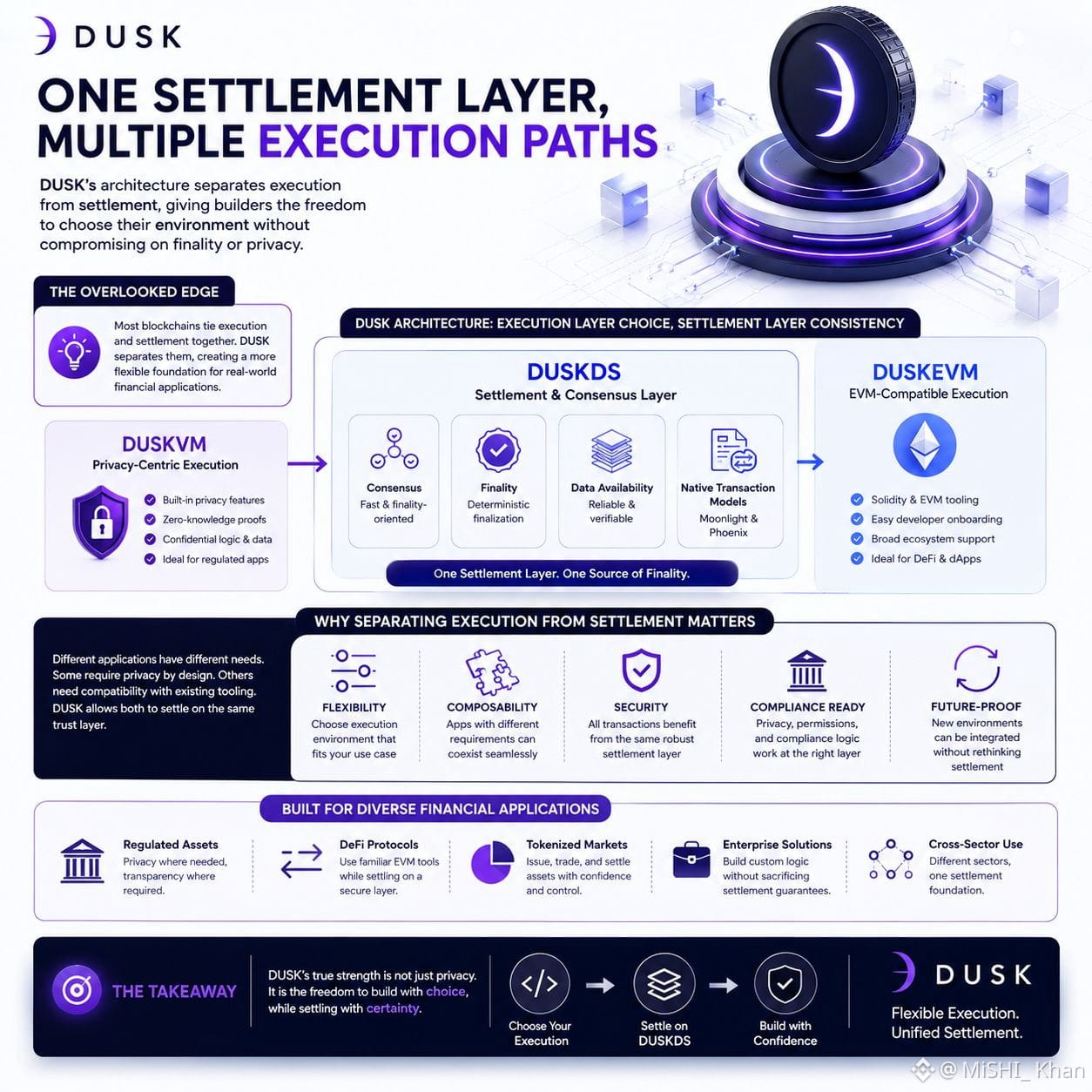
جزءٌ منسيّ من DUSK هو كيفية فصل بنيته بين التنفيذ والتسوية. تتولى DuskDS مهام الإجماع والنهائية وتوافر البيانات ونماذج المعاملات الأصلية، بينما يوفر DuskVM وDuskEVM بيئات مختلفة لمنطق التطبيقات.
لماذا يهم ذلك؟ تمتلك التطبيقات المالية احتياجات مختلفة. قد تحتاج إلى ميزات الخصوصية، بينما قد يفضّل تطبيق آخر Solidity وأدوات EVM المألوفة. يتيح DUSK لكلا المسارين أن يتما في التسوية عبر الطبقة نفسها بدلًا من إجبار التطبيقات على نموذج تنفيذ واحد.
والدلالة الأعمق هي مرونة البنية التحتية. يستطيع البناؤون اختيار بيئة التنفيذ دون التخلي عن DuskDS كأساس التسوية. وهذا مهم للتطبيقات المنظمة، حيث يجب أن تعمل الخصوصية ومنطق الامتثال والتسوية المتوقعة معًا.
#dusk $DUSK @Dusk
لماذا يهم ذلك؟ تمتلك التطبيقات المالية احتياجات مختلفة. قد تحتاج إلى ميزات الخصوصية، بينما قد يفضّل تطبيق آخر Solidity وأدوات EVM المألوفة. يتيح DUSK لكلا المسارين أن يتما في التسوية عبر الطبقة نفسها بدلًا من إجبار التطبيقات على نموذج تنفيذ واحد.
والدلالة الأعمق هي مرونة البنية التحتية. يستطيع البناؤون اختيار بيئة التنفيذ دون التخلي عن DuskDS كأساس التسوية. وهذا مهم للتطبيقات المنظمة، حيث يجب أن تعمل الخصوصية ومنطق الامتثال والتسوية المتوقعة معًا.
#dusk $DUSK @Dusk