
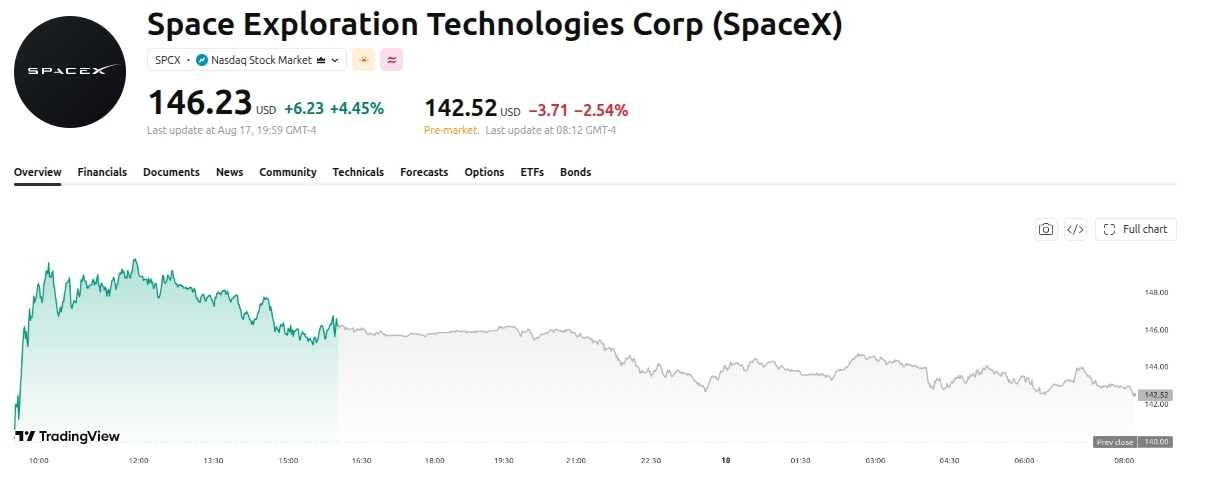
The institutional capital rotation just took a cosmic turn. Intesa Sanpaolo, Italy’s largest banking institution with over $1 trillion in assets under management, has officially executed a massive strategic pivot.
According to recent institutional regulatory filings, the Italian banking giant has disclosed a staggering $966.42 million stake in Elon Musk’s SpaceX. This cosmic bet comes just weeks after the bank aggressively slashed its exposure to BlackRock’s iShares Bitcoin Trust (IBIT).
For the Binance Square community, this high-stakes rotation provides a fascinating look into how legacy financial titans manage risk, yield, and portfolio exposure during macro corrections. Here is the breakdown of the move.
The Strategic Rebalance: Trimming Crypto for Stars
Intesa Sanpaolo’s exit from its Bitcoin spot ETF exposure shouldn't be read as a lack of long-term faith in digital assets, but rather as an aggressive play to capture rare, late-stage private equity value.
The Bitcoin Drawdown: The bank trimmed its spot Bitcoin ETF basket during a multi-quarter consolidation period where BTC has repeatedly tested heavy overhead resistance layers like $65,000.
The SpaceX Entry: By reallocating nearly $966.42 million into SpaceX, Intesa Sanpaolo is buying directly into a dominant aerospace monopoly. SpaceX’s internal valuation has recently climbed past $210 billion, fueled by its near-monopoly on global satellite launches via Starlink and its massive defense contracts.
The TradFi Playbook: The Hunt for Non-Correlated Alpha
Why would Italy's largest bank swap a highly liquid digital asset like Bitcoin for a highly illiquid private equity stake like SpaceX? The answer lies in structural asset correlation:
Escaping the Macro Chop: Bitcoin has been trading closely in tandem with global technology equities and semiconductor stock corrections. By rotating capital into SpaceX, the bank is seeking "idiosyncratic alpha"—profits driven entirely by a company’s unique operational milestones rather than broad stock market swings.
Locking in Primary Allocations: Spot Bitcoin ETFs are highly liquid; institutional market makers can buy or sell hundreds of millions of dollars of IBIT in seconds. Private shares in SpaceX, however, are notoriously difficult to secure. Intesa Sanpaolo seized a rare secondary market liquidity window to secure its near-billion-dollar position, knowing they can easily buy back into Bitcoin ETFs later if liquidity trends shift.
The Big Picture for Crypto Traders
For crypto investors, this news brings an important reality check: institutional capital is hyper-fluid.
Multi-billion dollar banks do not "HODL" assets with a retail mindset. They view Bitcoin, spot ETFs, and elite private tech equities as interchangeable liquidity buckets. When Bitcoin moves through a stagnant, range-bound compression phase, institutions will routinely rotate out of liquid assets to capture immediate private equity opportunities.
The Bottom Line: Intesa Sanpaolo's exit from the Bitcoin ETF pipeline creates a temporary vacuum, but the macro structural floor remains rock solid. With other global giants like BlackRock and Citi aggressively expanding their allocation mandates and custody networks, the broader institutional demand curve for crypto remains highly intact. The capital wheels will keep turning, and when tech equities peak, that legacy bank liquidity will look for a frictionless home right back in crypto.
Disclaimer: This post is for informational and educational purposes only. It does not constitute financial advice. Always Do Your Own Research (DYOR).
#Write2Earn #ItalyCryptoToday #SpaceX