
@TermMax #TermMax
واصلت افتراض أن “السعر الثابت” لدى TermMax يعمل مثل سوق إقراض عادي، حيث يتم فقط تثبيت السعر عندما تقترض.
الجزء الذي فاتني هو أن التكلفة الثابتة تأتي فعليًا من كيفية تداول رموز ديونه.
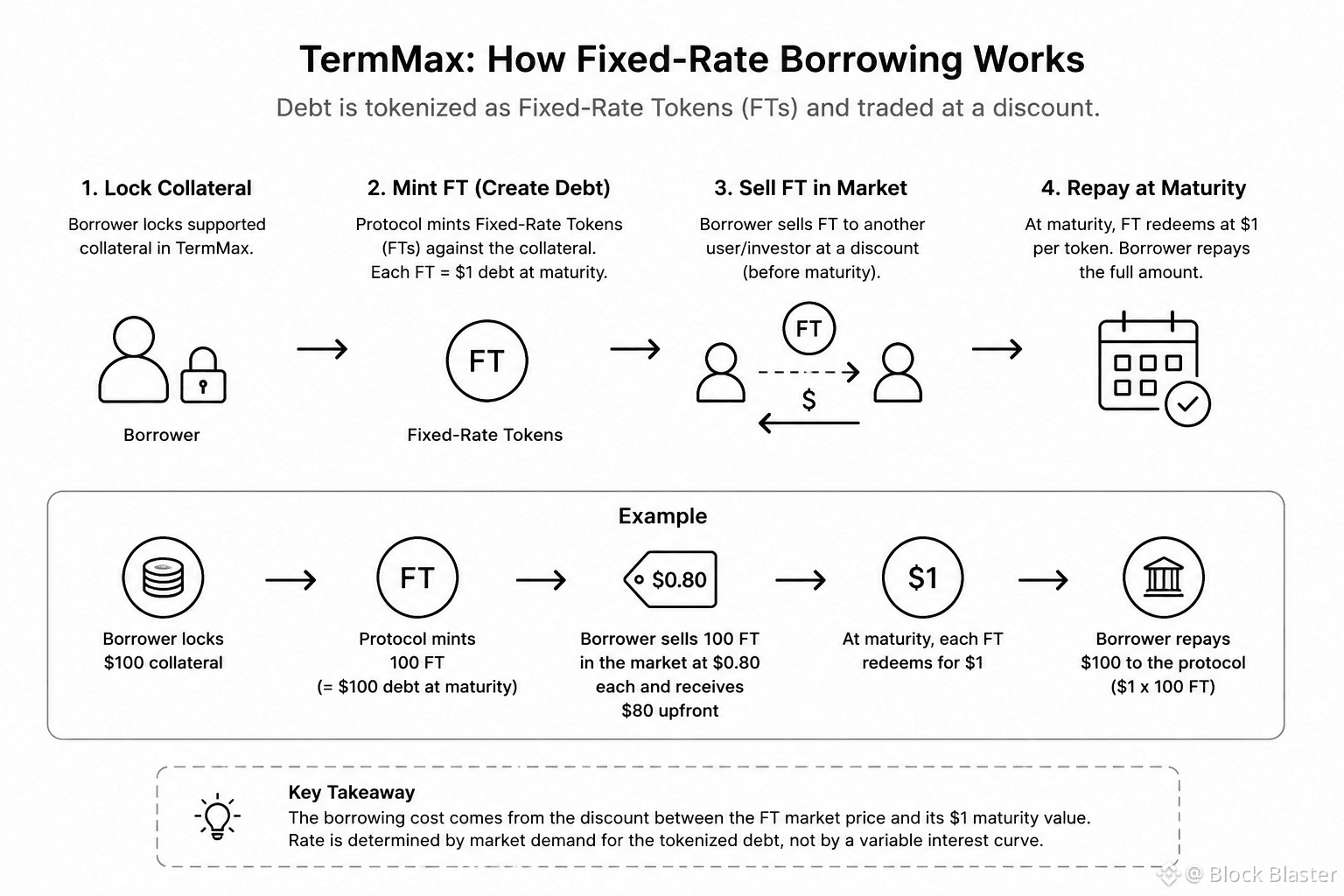
ينشئ المقترض رموزًا ذات معدل ثابت مقابل وضعية مرهونة بضمانات. تمتلك تلك الرموز قيمة معروفة عند الاستحقاق، لكنها يمكن بيعها بأقل من تلك القيمة اليوم. إذا استقرّت FT لاحقًا عند 1 دولار وتم دفع 0.80 دولارًا مقابلها الآن في السوق، يحصل المقترض على 0.80 دولارًا مقدمًا ويتحمل التزام سداد قدره 1 دولار.
هذا الفرق البالغ 0.20 دولارًا هو، بشكل أساسي، تكلفة الاقتراض.
ما غيّر رأيي هو أن السعر ليس مجرد رقم تحدده البروتوكول. بل ينبع من السعر الذي يرغب شخص ما في دفعه مقابل ذلك السداد المستقبلي.
وهذا يجعل البنية أكثر قابلية للتوقع بالنسبة للمقترضين، لكنه يعني أيضًا أن السيولة تصبح جزءًا من السعر نفسه. قد يؤدي ضعف الطلب إلى جعل التمويل مكلفًا حتى عندما تكون قيمة الدين النهائية معروفة بالفعل.
أستطيع أن أفهم سبب منطقية هذا التصميم: السوق هو الذي يقوم بالتسعير بدل الاعتماد على منحنى استخدام يتغير باستمرار.
لكن هل يجعل ذلك فعليًا التمويل اللامركزي بسعر ثابت أكثر صفاءً، أم أنه يخفي فقط مخاطر السعر داخل سيولة الرموز؟
واصلت افتراض أن “السعر الثابت” لدى TermMax يعمل مثل سوق إقراض عادي، حيث يتم فقط تثبيت السعر عندما تقترض.
الجزء الذي فاتني هو أن التكلفة الثابتة تأتي فعليًا من كيفية تداول رموز ديونه.
ينشئ المقترض رموزًا ذات معدل ثابت مقابل وضعية مرهونة بضمانات. تمتلك تلك الرموز قيمة معروفة عند الاستحقاق، لكنها يمكن بيعها بأقل من تلك القيمة اليوم. إذا استقرّت FT لاحقًا عند 1 دولار وتم دفع 0.80 دولارًا مقابلها الآن في السوق، يحصل المقترض على 0.80 دولارًا مقدمًا ويتحمل التزام سداد قدره 1 دولار.
هذا الفرق البالغ 0.20 دولارًا هو، بشكل أساسي، تكلفة الاقتراض.
ما غيّر رأيي هو أن السعر ليس مجرد رقم تحدده البروتوكول. بل ينبع من السعر الذي يرغب شخص ما في دفعه مقابل ذلك السداد المستقبلي.
وهذا يجعل البنية أكثر قابلية للتوقع بالنسبة للمقترضين، لكنه يعني أيضًا أن السيولة تصبح جزءًا من السعر نفسه. قد يؤدي ضعف الطلب إلى جعل التمويل مكلفًا حتى عندما تكون قيمة الدين النهائية معروفة بالفعل.
أستطيع أن أفهم سبب منطقية هذا التصميم: السوق هو الذي يقوم بالتسعير بدل الاعتماد على منحنى استخدام يتغير باستمرار.
لكن هل يجعل ذلك فعليًا التمويل اللامركزي بسعر ثابت أكثر صفاءً، أم أنه يخفي فقط مخاطر السعر داخل سيولة الرموز؟