#dusk $DUSK @Dusk
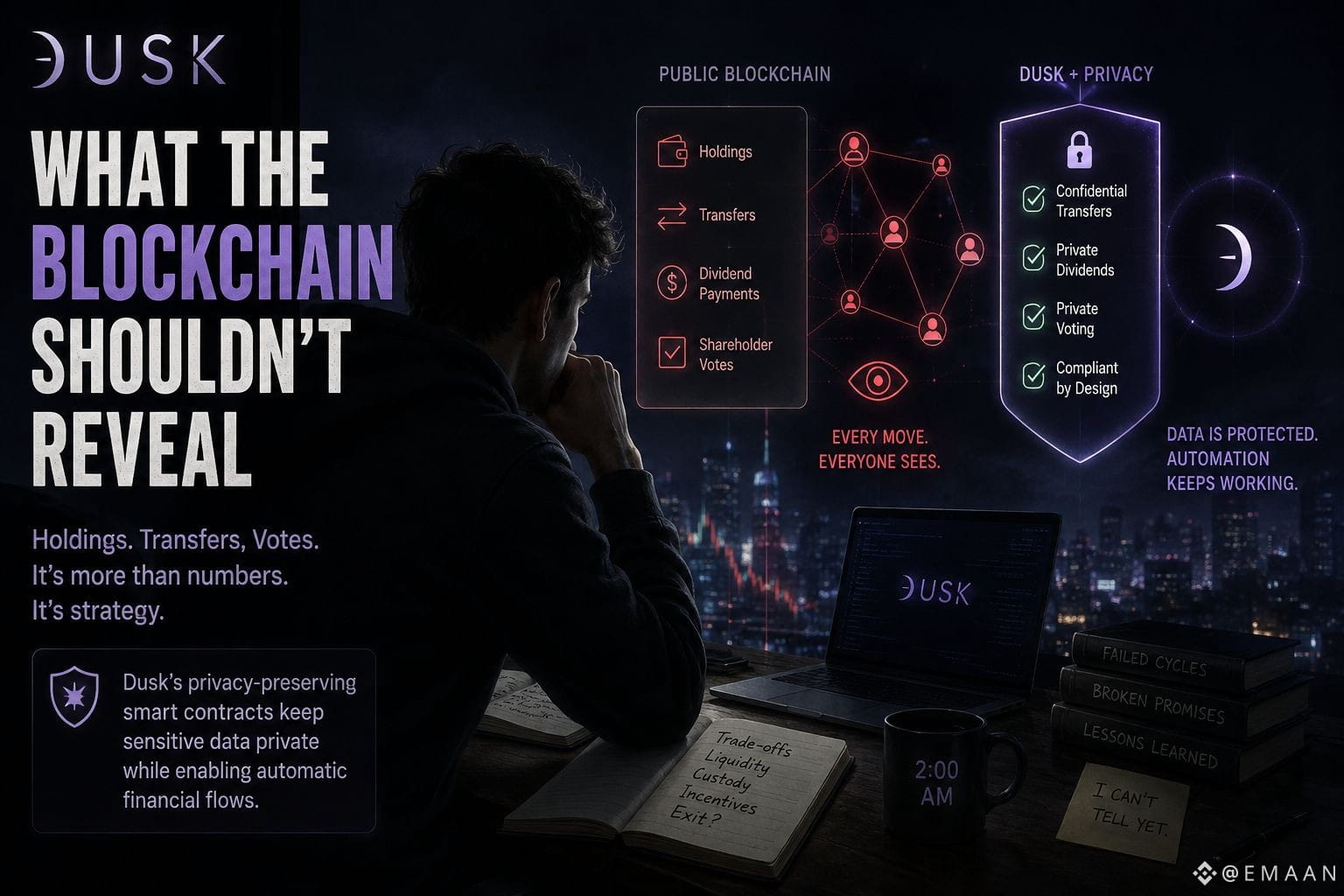
I keep thinking about how much a public ledger gives away. In an older cycle, I watched traders follow whale wallets like weather reports. Holdings were only the beginning: who was moving, what was accumulating, how large a position might be building. For securities, that transparency can become a map of someone else’s intentions.
That is why Dusk’s confidential transfers and selective disclosure catch me. Its shielded model can keep sender, receiver and amount private while allowing controlled visibility, and its ZK smart contracts target regulated workflows where eligibility, transfers, voting and settlement coexist.
But I hesitate at the machinery around it. Privacy does not remove custody, liquidity, key management, fees, or question of how users exit when a private position is harder to inspect than a normal token. Dusk splits public and shielded account paths, while staking carries operational demands and slashing risk.
Then I remember January 2026, when a bridge signing wallet was compromised. It was not a consensus failure, but real value still moved because the surrounding layer was vulnerable. The redesign makes the point sharper: protocol security and practical security are not the same thing.
Maybe that bothers me. Privacy can hide strategy from the market, but it cannot hide custody risk, thin liquidity, bad incentives, or panic at the exit.
I keep thinking about how much a public ledger gives away. In an older cycle, I watched traders follow whale wallets like weather reports. Holdings were only the beginning: who was moving, what was accumulating, how large a position might be building. For securities, that transparency can become a map of someone else’s intentions.
That is why Dusk’s confidential transfers and selective disclosure catch me. Its shielded model can keep sender, receiver and amount private while allowing controlled visibility, and its ZK smart contracts target regulated workflows where eligibility, transfers, voting and settlement coexist.
But I hesitate at the machinery around it. Privacy does not remove custody, liquidity, key management, fees, or question of how users exit when a private position is harder to inspect than a normal token. Dusk splits public and shielded account paths, while staking carries operational demands and slashing risk.
Then I remember January 2026, when a bridge signing wallet was compromised. It was not a consensus failure, but real value still moved because the surrounding layer was vulnerable. The redesign makes the point sharper: protocol security and practical security are not the same thing.
Maybe that bothers me. Privacy can hide strategy from the market, but it cannot hide custody risk, thin liquidity, bad incentives, or panic at the exit.