
#dusk $DUSK @Dusk
أنظمة إثباتات المعرفة الصفرية: ما يهمّني بشأن Dusk ليس أنها تستخدم إثباتات ZK. بل أنّ أنظمة إثبات مختلفة يمكنها معالجة عنق زجاجة مختلف داخل سلسلة بلوكتشين مالية.
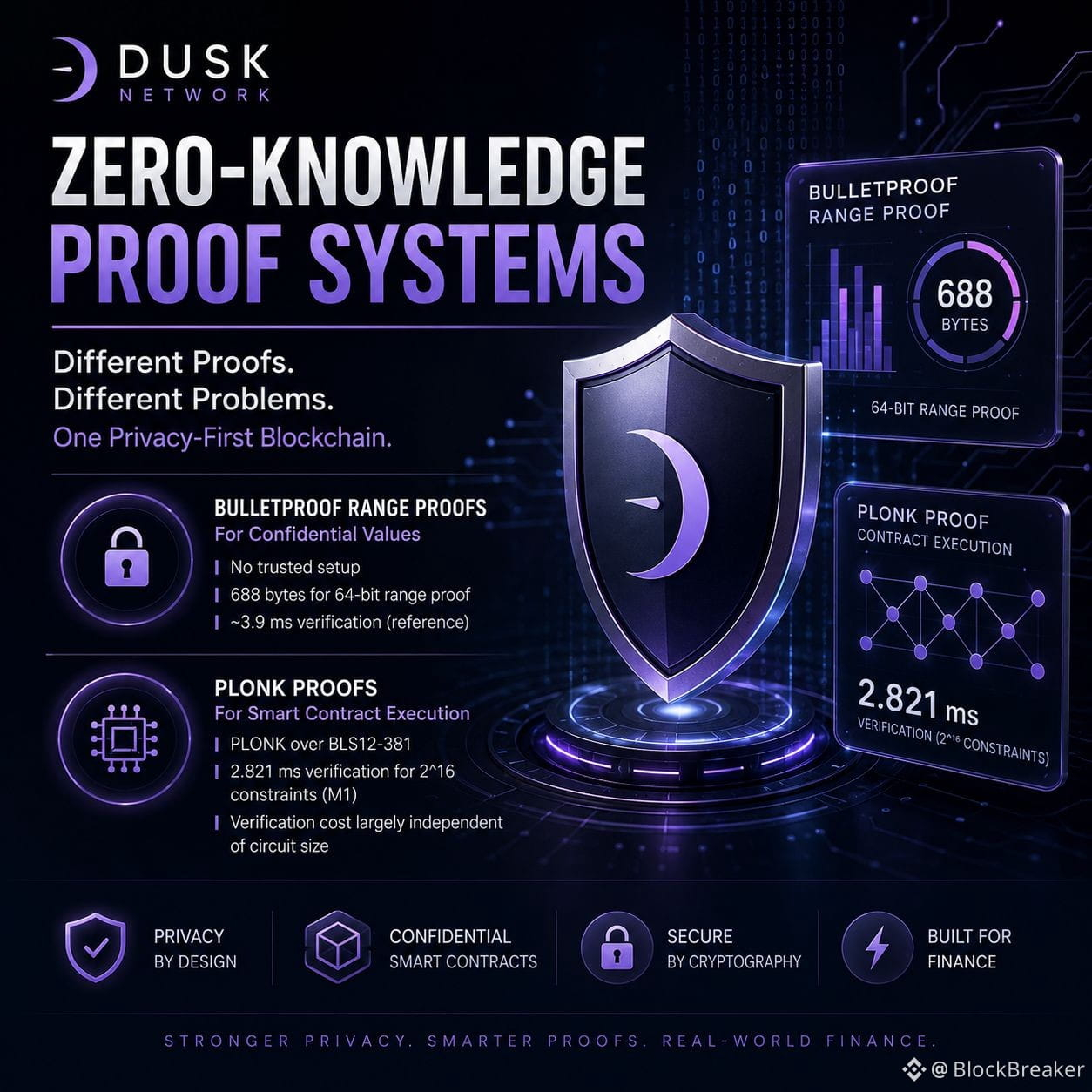
براهين نطاق على نمط Bulletproofs تبدو منطقية للقيم السرّية. يمكنها إثبات أن قيمة مخفية تقع ضمن نطاق مسموح دون الكشف عن القيمة نفسها، ويفعلون ذلك دون إعداد موثوق. المقايضة هي أن تكاليف الإثبات والتحقق تنمو مع العبارة التي يتم إثباتها.
يميل اتجاه Dusk الأحدث إلى نقل مزيد من عبء التنفيذ نحو الإثبات على نمط PLONK. وهذه تمييز أكثر أهمية من الوصف المعتاد «Dusk هي شبكة خاصة». عندما تصبح المعاملات السرّية عقودًا قابلة للبرمجة، لا يعود التحدي هو إخفاء الأرقام فقط؛ بل يصبح هو إثبات أن مجموعة كاملة من انتقالات الحالة التزمت بالقواعد.
هنا يبدأ تصميم الدارات في أن يصبح أكثر أهمية من حجم الإثبات الخام. قد يكون إثباتٌ صغير لكن مكلف في توليده، أو صعب في التدقيق، أو غير مريح في الصياغة أقل فائدة من إثبات أكبر قليلًا مدعوم بنظام تنفيذ مرن.
كما أن التطوير الأخير في Dusk حول إصدارات PLONK الأحدث يجعل جانب هندسة الأمان مستحيلًا تجاهله. أنظمة ZK ليست آمنة لمجرد أن الرياضيات صحيحة. منطق المُتحقق، وربط الالتزام (commitment binding)، وقيود الدارة، وتفاصيل التنفيذ يمكن أن تصبح سطح الهجوم الفعلي.
لذا سأُقيّم Dusk بشكل مختلف: زمن المُثبت، زمن المُتحقق، حجم الإثبات، تعقيد الدارة، ومتانة التدقيق — كلها معًا.
السؤال المثير للاهتمام ليس ما إذا كان لدى Dusk ZK.
بل ما إذا كانت بنية إثباته تستطيع البقاء فعّالة وقابلة للبرمجة وموثوقة مع ازدياد تعقيد المنطق المالي السرّي.
أنظمة إثباتات المعرفة الصفرية: ما يهمّني بشأن Dusk ليس أنها تستخدم إثباتات ZK. بل أنّ أنظمة إثبات مختلفة يمكنها معالجة عنق زجاجة مختلف داخل سلسلة بلوكتشين مالية.
براهين نطاق على نمط Bulletproofs تبدو منطقية للقيم السرّية. يمكنها إثبات أن قيمة مخفية تقع ضمن نطاق مسموح دون الكشف عن القيمة نفسها، ويفعلون ذلك دون إعداد موثوق. المقايضة هي أن تكاليف الإثبات والتحقق تنمو مع العبارة التي يتم إثباتها.
يميل اتجاه Dusk الأحدث إلى نقل مزيد من عبء التنفيذ نحو الإثبات على نمط PLONK. وهذه تمييز أكثر أهمية من الوصف المعتاد «Dusk هي شبكة خاصة». عندما تصبح المعاملات السرّية عقودًا قابلة للبرمجة، لا يعود التحدي هو إخفاء الأرقام فقط؛ بل يصبح هو إثبات أن مجموعة كاملة من انتقالات الحالة التزمت بالقواعد.
هنا يبدأ تصميم الدارات في أن يصبح أكثر أهمية من حجم الإثبات الخام. قد يكون إثباتٌ صغير لكن مكلف في توليده، أو صعب في التدقيق، أو غير مريح في الصياغة أقل فائدة من إثبات أكبر قليلًا مدعوم بنظام تنفيذ مرن.
كما أن التطوير الأخير في Dusk حول إصدارات PLONK الأحدث يجعل جانب هندسة الأمان مستحيلًا تجاهله. أنظمة ZK ليست آمنة لمجرد أن الرياضيات صحيحة. منطق المُتحقق، وربط الالتزام (commitment binding)، وقيود الدارة، وتفاصيل التنفيذ يمكن أن تصبح سطح الهجوم الفعلي.
لذا سأُقيّم Dusk بشكل مختلف: زمن المُثبت، زمن المُتحقق، حجم الإثبات، تعقيد الدارة، ومتانة التدقيق — كلها معًا.
السؤال المثير للاهتمام ليس ما إذا كان لدى Dusk ZK.
بل ما إذا كانت بنية إثباته تستطيع البقاء فعّالة وقابلة للبرمجة وموثوقة مع ازدياد تعقيد المنطق المالي السرّي.