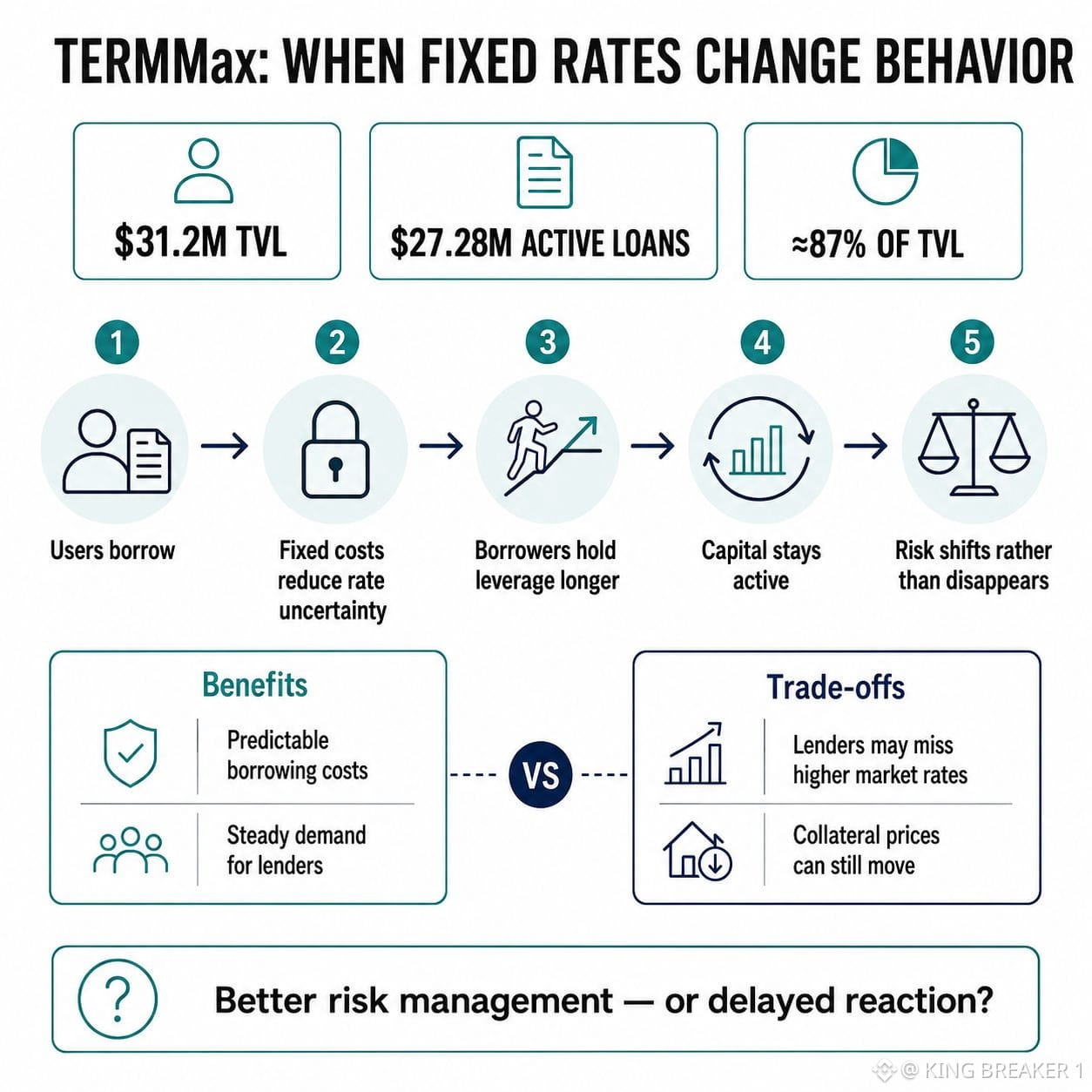

كنت ألاحظ نفس السلوك على TermMax: لم يكن المستخدمون يودعون رأس المال فقط من أجل عائد سلبي—بل كانوا يقترضون بشكل كبير مقابله. يعرض البروتوكول حاليًا حوالي 31.2 مليون دولار في TVL و27.28 مليون دولار في القروض النشطة، ما يعني أن قيمة القروض القائمة تقارب 87% من رأس المال المودع. DefiLlama
قد يفسر معدل الاقتراض الثابت جزءًا من ذلك. عندما يعرف المستخدمون تكلفة تمويلهم مسبقًا، لا تكون لديهم أسباب كافية لإغلاق مركز مُدار بالرافعة لمجرد أن الأسعار في مكان آخر تقفز فجأة. يجعل الرفع بالضغط الواحد اتخاذ هذا القرار أسهل أيضًا، محولًا ما كان سيتطلب عادةً عدة معاملات إلى صفقة أبسط بكثير.
يحصل المقترضون على تكاليف يمكن التنبؤ بها، ويتلقى المُقرضون عوائد ثابتة، وتستفيد TermMax عندما يبقى رأس المال نشطًا. ولقد ولّد البروتوكول حوالي 19,930 دولارًا في الرسوم خلال الأيام الـ30 الماضية. لكن الحافز نفسه له جانب آخر: قد يفوت المُقرضون الذين يقبلون عائدًا ثابتًا فرصًا أفضل إذا ارتفعت معدلات السوق الأوسع، بينما قد يحتفظ المقترضون بالرافعة لفترة أطول لأن التكلفة المستقرة تجعل المركز يبدو أكثر أمانًا مما هو عليه فعليًا.
إذا انتشر هذا السلوك، فقد تجذب TermMax طلب اقتراض أكثر ثباتًا—لكنها قد أيضًا تخلق تجمعًا من المستخدمين الذين يتفاعلون ببطء عندما تتغير أسعار الضمانات.
عندما تزيل الأسعار الثابتة الضغط للخروج، هل يصبح المستخدمون أكثر انضباطًا، أم أنهم ببساطة أكثر ارتياحًا لحمل المخاطر؟
@TermMax
#TermMax
قد يفسر معدل الاقتراض الثابت جزءًا من ذلك. عندما يعرف المستخدمون تكلفة تمويلهم مسبقًا، لا تكون لديهم أسباب كافية لإغلاق مركز مُدار بالرافعة لمجرد أن الأسعار في مكان آخر تقفز فجأة. يجعل الرفع بالضغط الواحد اتخاذ هذا القرار أسهل أيضًا، محولًا ما كان سيتطلب عادةً عدة معاملات إلى صفقة أبسط بكثير.
يحصل المقترضون على تكاليف يمكن التنبؤ بها، ويتلقى المُقرضون عوائد ثابتة، وتستفيد TermMax عندما يبقى رأس المال نشطًا. ولقد ولّد البروتوكول حوالي 19,930 دولارًا في الرسوم خلال الأيام الـ30 الماضية. لكن الحافز نفسه له جانب آخر: قد يفوت المُقرضون الذين يقبلون عائدًا ثابتًا فرصًا أفضل إذا ارتفعت معدلات السوق الأوسع، بينما قد يحتفظ المقترضون بالرافعة لفترة أطول لأن التكلفة المستقرة تجعل المركز يبدو أكثر أمانًا مما هو عليه فعليًا.
إذا انتشر هذا السلوك، فقد تجذب TermMax طلب اقتراض أكثر ثباتًا—لكنها قد أيضًا تخلق تجمعًا من المستخدمين الذين يتفاعلون ببطء عندما تتغير أسعار الضمانات.
عندما تزيل الأسعار الثابتة الضغط للخروج، هل يصبح المستخدمون أكثر انضباطًا، أم أنهم ببساطة أكثر ارتياحًا لحمل المخاطر؟
@TermMax
#TermMax