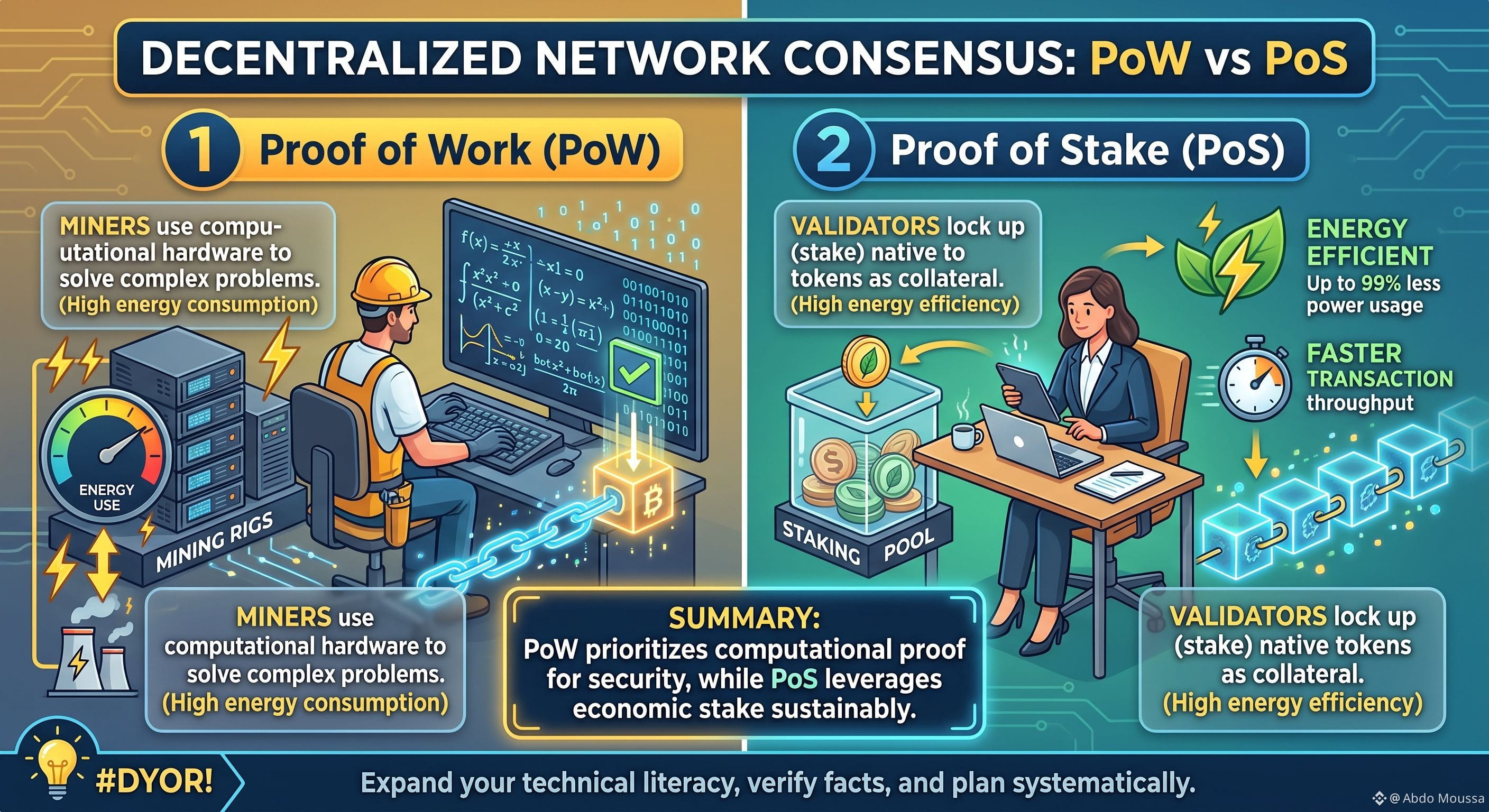
كيف تتوصل الشبكات اللامركزية إلى اتفاق حول صحة المعاملات دون سلطة مركزية؟ عبر "آليات الإجماع" 🌐⛓️
أكثر نموذجين مستخدمين على نطاق واسع هما إثبات العمل (PoW) وإثبات الحصة (PoS). إليك مقارنة بسيطة لكيفية عملهما:
1️⃣ إثبات العمل (PoW):
• الآلية: يستخدم المشاركون في الشبكة (العمال/Miners) أجهزة حاسوبية لحل مسائل رياضية معقدة للتحقق من المعاملات وإضافة كتل جديدة.
• نقاط القوة: نموذج أمني مجرّب على أرض الواقع (يُستخدم في بيتكوين).
• الاعتبارات: يتطلب استهلاكًا كبيرًا للطاقة وعتادًا مخصصًا.
2️⃣ إثبات الحصة (PoS):
• الآلية: يقوم المشاركون في الشبكة (المدققون/Validators) بتجميد (حجز) الرموز المميزة الأصلية كضمان (stake) لكسب الحق في التحقق من المعاملات.
• نقاط القوة: كفاءة عالية في استهلاك الطاقة (تصل إلى تقليل استخدام الطاقة بنسبة 99%) وتمكّن من إنتاجية معاملات أسرع.
• الاعتبارات: يعتمد الأمان على الحوافز الاقتصادية ومشاركة المدققين بشكل نشط.
💡 ملخص:
بينما يعطي إثبات العمل الأولوية لإثبات الحسابات لتحقيق الأمان، يعتمد إثبات الحصة على الحصة الاقتصادية للوصول إلى الإجماع بشكل مستدام. وكلاهما يمثل محطات تكنولوجية رئيسية في بنية الشبكات اللامركزية.
⚠️ تنبيه تعليمي:
تختلف تطبيقات الشبكات وخصائص المنتجات حسب المنطقة. هذا المحتوى لأغراض تعليمية فقط ولا يشكل نصيحة فنية أو مالية.
استكشف بنية البلوك تشين بعمق عبر #BinanceAcademy .
عزّز معرفتك التقنية وابقَ دائمًا #dyor 💡
#Binance #LearnWithBinance #PoS
أكثر نموذجين مستخدمين على نطاق واسع هما إثبات العمل (PoW) وإثبات الحصة (PoS). إليك مقارنة بسيطة لكيفية عملهما:
1️⃣ إثبات العمل (PoW):
• الآلية: يستخدم المشاركون في الشبكة (العمال/Miners) أجهزة حاسوبية لحل مسائل رياضية معقدة للتحقق من المعاملات وإضافة كتل جديدة.
• نقاط القوة: نموذج أمني مجرّب على أرض الواقع (يُستخدم في بيتكوين).
• الاعتبارات: يتطلب استهلاكًا كبيرًا للطاقة وعتادًا مخصصًا.
2️⃣ إثبات الحصة (PoS):
• الآلية: يقوم المشاركون في الشبكة (المدققون/Validators) بتجميد (حجز) الرموز المميزة الأصلية كضمان (stake) لكسب الحق في التحقق من المعاملات.
• نقاط القوة: كفاءة عالية في استهلاك الطاقة (تصل إلى تقليل استخدام الطاقة بنسبة 99%) وتمكّن من إنتاجية معاملات أسرع.
• الاعتبارات: يعتمد الأمان على الحوافز الاقتصادية ومشاركة المدققين بشكل نشط.
💡 ملخص:
بينما يعطي إثبات العمل الأولوية لإثبات الحسابات لتحقيق الأمان، يعتمد إثبات الحصة على الحصة الاقتصادية للوصول إلى الإجماع بشكل مستدام. وكلاهما يمثل محطات تكنولوجية رئيسية في بنية الشبكات اللامركزية.
⚠️ تنبيه تعليمي:
تختلف تطبيقات الشبكات وخصائص المنتجات حسب المنطقة. هذا المحتوى لأغراض تعليمية فقط ولا يشكل نصيحة فنية أو مالية.
استكشف بنية البلوك تشين بعمق عبر #BinanceAcademy .
عزّز معرفتك التقنية وابقَ دائمًا #dyor 💡
#Binance #LearnWithBinance #PoS