DUSKEVM: المسار الحقيقي لمطوري Solidity إلى الخصوصية
لقد كنت أبحث في معنى DuskEVM الفعلي للمطورين.
وهناك فجوة بين ما تقوله التسويق والواقع التقني، وهي فجوة مهمة.
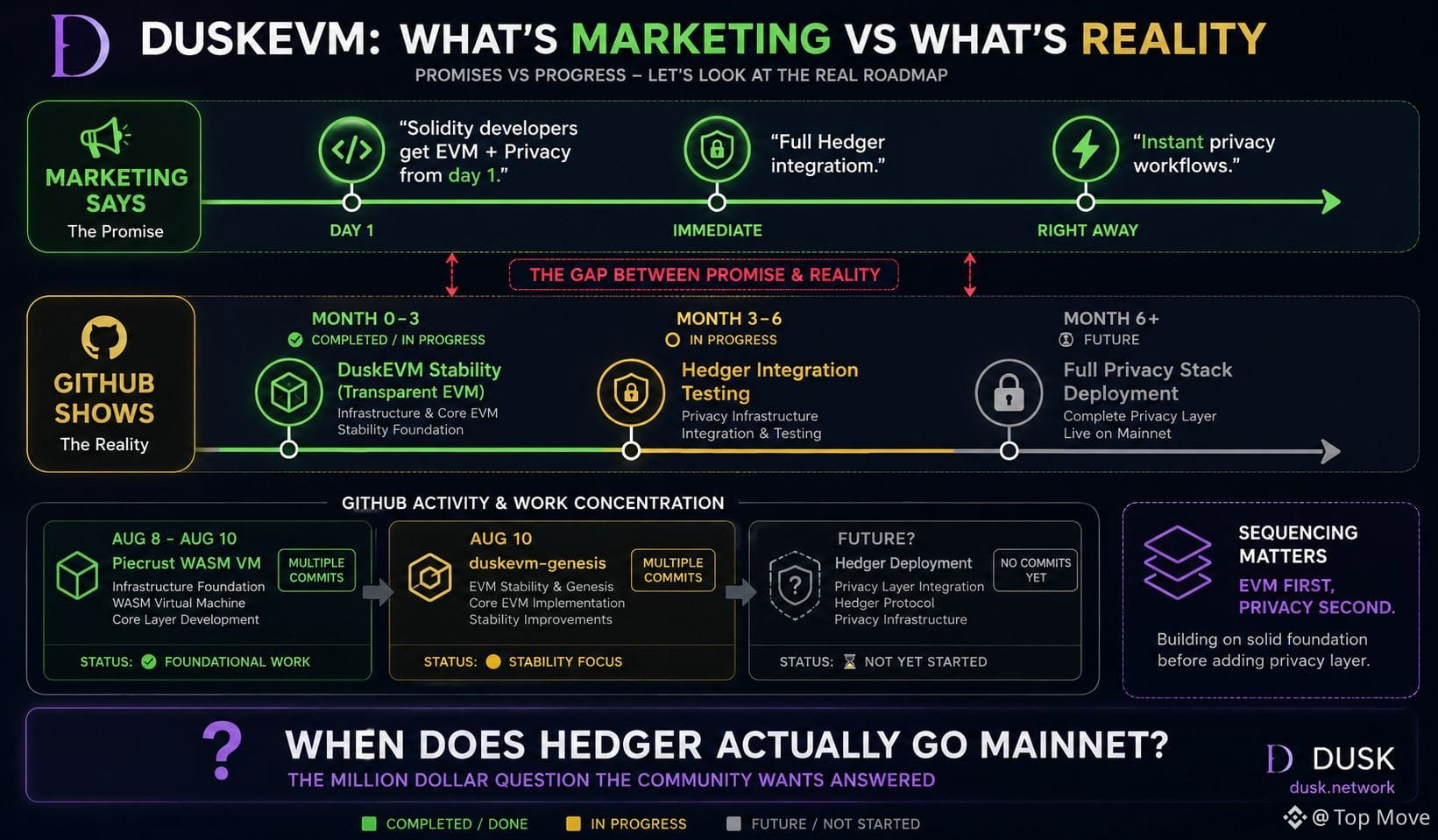
إليك العرض: "مسار مألوف لـ Solidity/EVM إلى Dusk مع خصوصية عبر Hedger."
يبدو رائعًا. فمطوروا Solidity لا يحتاجون لإعادة تعلم لغة جديدة. بل يحصلون على توافق EVM + مرونة اختيار الخصوصية.
لكنني راجعت التزامات GitHub وتسلسل العمل، فتبيّن قصة مختلفة.
يتم بناء DuskEVM من أجل الاستقرار أولًا. وجزء Hedger (الخاص بالخصوصية) يأتي ثانيًا.
الترجمة: ستحصل التطبيقات التي يتم نشرها على شبكة DuskEVM الرئيسية على توافق EVM. أما ميزات الخصوصية فستأتي لاحقًا.
وهذا في الحقيقة تصرف ذكي. لكنّه ليس ما يوحي به التسويق.
إليك ما أعتقد أن الذي يحدث فعلًا:
الشهر 0-3 (الآن): تطلق DuskEVM كسلسلة EVM متوافقة. لا توجد خصوصية بعد. يقوم مطورو Solidity بنشر تطبيقاتهم كما هي تمامًا. يعمل الأمر مثل أي EVM آخر.
الشهر 3-6: يتم تثبيت Hedger ودمجه. يمكن للمطورين تفعيل الخصوصية للاتعاقدات/المعاملات المحددة.
الشهر 6+: تصبح الخصوصية معيارًا. تتطور بالكامل مكدسات Solidity + الخصوصية.
لكن ما يزعجني هو:
إذا كانت المؤسسات تقيم شبكة DuskEVM الرئيسية اليوم، فهي تقيم سلسلة EVM شفافة. وليست سلسلة تركز على الخصوصية أولًا.
وسيأتي جانب الخصوصية لاحقًا.
قد يكون هذا مقصودًا (بناء الثقة أولًا، ثم إضافة الخصوصية ثانيًا). أو قد يكشف أن الخصوصية ليست بالضرورة عنصرًا حاسمًا في التبني الأولي من قِبل المؤسسات.
سؤالي للمطورين: هل تحتاج إلى خصوصية Hedger لكي تبدأ بالنشر على DuskEVM؟ أم أنها تصبح قيمة فقط بعد أن تثبت أن البنية التحتية تعمل على مسارات شفافة؟
لأن الإجابة على ذلك تغيّر مع من ينافس DuskEVM فعليًا.
@Dusk $DUSK #dusk
لقد كنت أبحث في معنى DuskEVM الفعلي للمطورين.
وهناك فجوة بين ما تقوله التسويق والواقع التقني، وهي فجوة مهمة.
إليك العرض: "مسار مألوف لـ Solidity/EVM إلى Dusk مع خصوصية عبر Hedger."
يبدو رائعًا. فمطوروا Solidity لا يحتاجون لإعادة تعلم لغة جديدة. بل يحصلون على توافق EVM + مرونة اختيار الخصوصية.
لكنني راجعت التزامات GitHub وتسلسل العمل، فتبيّن قصة مختلفة.
يتم بناء DuskEVM من أجل الاستقرار أولًا. وجزء Hedger (الخاص بالخصوصية) يأتي ثانيًا.
الترجمة: ستحصل التطبيقات التي يتم نشرها على شبكة DuskEVM الرئيسية على توافق EVM. أما ميزات الخصوصية فستأتي لاحقًا.
وهذا في الحقيقة تصرف ذكي. لكنّه ليس ما يوحي به التسويق.
إليك ما أعتقد أن الذي يحدث فعلًا:
الشهر 0-3 (الآن): تطلق DuskEVM كسلسلة EVM متوافقة. لا توجد خصوصية بعد. يقوم مطورو Solidity بنشر تطبيقاتهم كما هي تمامًا. يعمل الأمر مثل أي EVM آخر.
الشهر 3-6: يتم تثبيت Hedger ودمجه. يمكن للمطورين تفعيل الخصوصية للاتعاقدات/المعاملات المحددة.
الشهر 6+: تصبح الخصوصية معيارًا. تتطور بالكامل مكدسات Solidity + الخصوصية.
لكن ما يزعجني هو:
إذا كانت المؤسسات تقيم شبكة DuskEVM الرئيسية اليوم، فهي تقيم سلسلة EVM شفافة. وليست سلسلة تركز على الخصوصية أولًا.
وسيأتي جانب الخصوصية لاحقًا.
قد يكون هذا مقصودًا (بناء الثقة أولًا، ثم إضافة الخصوصية ثانيًا). أو قد يكشف أن الخصوصية ليست بالضرورة عنصرًا حاسمًا في التبني الأولي من قِبل المؤسسات.
سؤالي للمطورين: هل تحتاج إلى خصوصية Hedger لكي تبدأ بالنشر على DuskEVM؟ أم أنها تصبح قيمة فقط بعد أن تثبت أن البنية التحتية تعمل على مسارات شفافة؟
لأن الإجابة على ذلك تغيّر مع من ينافس DuskEVM فعليًا.
@Dusk $DUSK #dusk