في البداية، بدا أن إثباتات أقل من ثانيتين محضَ إنجازٍ أدائيّ… لكن هناك شعورًا بأن شيئًا ما غير دقيق عند النظر إلى الرقم وحده.
ثم بدأت أتساءل… ماذا يتغير فعليًا عندما يصبح هذا الإثبات بهذه السرعة جزءًا من سير العمل؟
تبدأ الصورة بالظهور كالتالي:
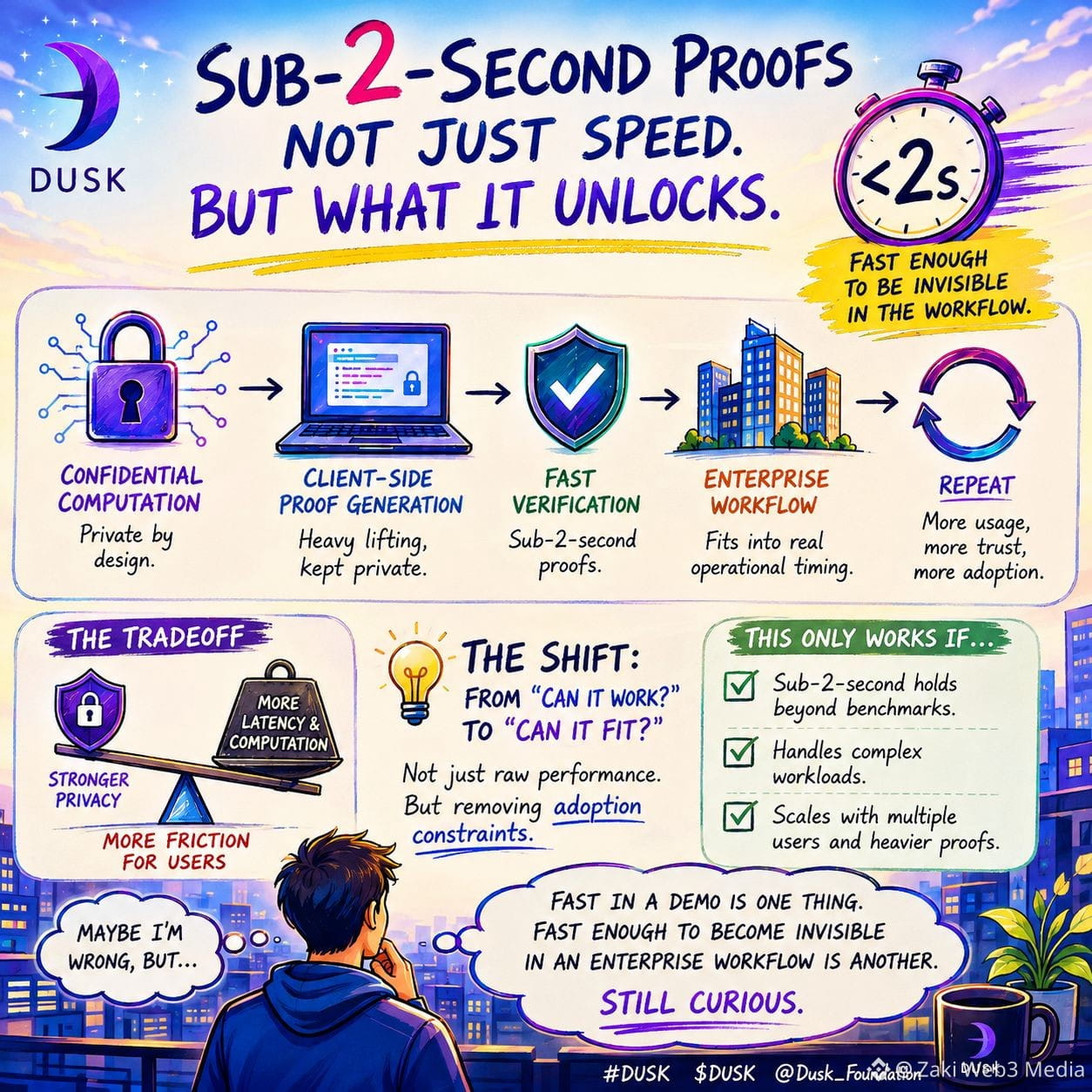
الحوسبة السرّية → توليد الإثبات على جانب العميل → تحقق سريع → سير عمل مؤسسي → تكرار
تنبع أهمية هذه الحلقة لأن الأنظمة السرّية غالبًا ما تواجه مفاضلة: تعزيز الخصوصية قد يضيف المزيد من الحوسبة، وزمن تأخير أكبر، وفي النهاية قد يسبب احتكاكًا أكبر للمستخدم.
إذا كان @dusk قادرًا على دفع توليد الإثبات إلى ما دون ثانيتين لسيناريوهات مؤسسية حقيقية، فربما تنتقل المناقشة من “هل يمكن للحوسبة الخاصة أن تعمل؟” إلى “هل يمكن أن تتناسب مع التوقيت التشغيلي المعتاد؟”
وهذا التفريق يبدو مهمًا جدًا.
ولا ينجح ذلك إلا إذا ظلت تجربة أقل من ثانيتين ثابتة خارج نطاق الاختبارات المعيارية المُحكمة — خصوصًا مع تعقّد الأحمال، وثِقل الإثباتات، وتعرّض النظام لعدد من المستخدمين في الوقت نفسه.
قد أكون مخطئًا، لكن هذا يبدو أقل كونه سباقًا محضًا على السرعة وأكثر كونه قيدَ تبنٍّ يتم رفعه.
ربما لهذا السبب تتحرك محادثة البنية التحتية أيضًا — بعيدًا عن الانبهار بالأرقام الكبيرة للأداء، نحو التركيز على ما يصمد فعلًا عندما تصبح الاستخدامات واقعية.
ومع ذلك، ما زلت أتساءل إن كانت السرعة ستظل بهذه النظافة تحت الضغط.
فالسرعة في عرضٍ تجريبي شيء.
والسرعة الكافية لتصبح غير مرئية ضمن سير عمل مؤسسي شيء آخر.#dusk $DUSK @Dusk
ثم بدأت أتساءل… ماذا يتغير فعليًا عندما يصبح هذا الإثبات بهذه السرعة جزءًا من سير العمل؟
تبدأ الصورة بالظهور كالتالي:
الحوسبة السرّية → توليد الإثبات على جانب العميل → تحقق سريع → سير عمل مؤسسي → تكرار
تنبع أهمية هذه الحلقة لأن الأنظمة السرّية غالبًا ما تواجه مفاضلة: تعزيز الخصوصية قد يضيف المزيد من الحوسبة، وزمن تأخير أكبر، وفي النهاية قد يسبب احتكاكًا أكبر للمستخدم.
إذا كان @dusk قادرًا على دفع توليد الإثبات إلى ما دون ثانيتين لسيناريوهات مؤسسية حقيقية، فربما تنتقل المناقشة من “هل يمكن للحوسبة الخاصة أن تعمل؟” إلى “هل يمكن أن تتناسب مع التوقيت التشغيلي المعتاد؟”
وهذا التفريق يبدو مهمًا جدًا.
ولا ينجح ذلك إلا إذا ظلت تجربة أقل من ثانيتين ثابتة خارج نطاق الاختبارات المعيارية المُحكمة — خصوصًا مع تعقّد الأحمال، وثِقل الإثباتات، وتعرّض النظام لعدد من المستخدمين في الوقت نفسه.
قد أكون مخطئًا، لكن هذا يبدو أقل كونه سباقًا محضًا على السرعة وأكثر كونه قيدَ تبنٍّ يتم رفعه.
ربما لهذا السبب تتحرك محادثة البنية التحتية أيضًا — بعيدًا عن الانبهار بالأرقام الكبيرة للأداء، نحو التركيز على ما يصمد فعلًا عندما تصبح الاستخدامات واقعية.
ومع ذلك، ما زلت أتساءل إن كانت السرعة ستظل بهذه النظافة تحت الضغط.
فالسرعة في عرضٍ تجريبي شيء.
والسرعة الكافية لتصبح غير مرئية ضمن سير عمل مؤسسي شيء آخر.#dusk $DUSK @Dusk