@TermMax #TermMax
لماذا ما زال الاقتراض في عالم التمويل اللامركزي (DeFi) يبدو غير قابل للتنبؤ، حتى عندما يكون القرض نفسه مضمونًا بما يزيد عن المطلوب؟
هذا ما دفعني إلى البحث بشكل أعمق في TermMax. بحسب ما فهمت، هو بروتوكول لامركزي مبني حول الاقتراض بمعدل ثابت والإقراض وتداول الخيارات.
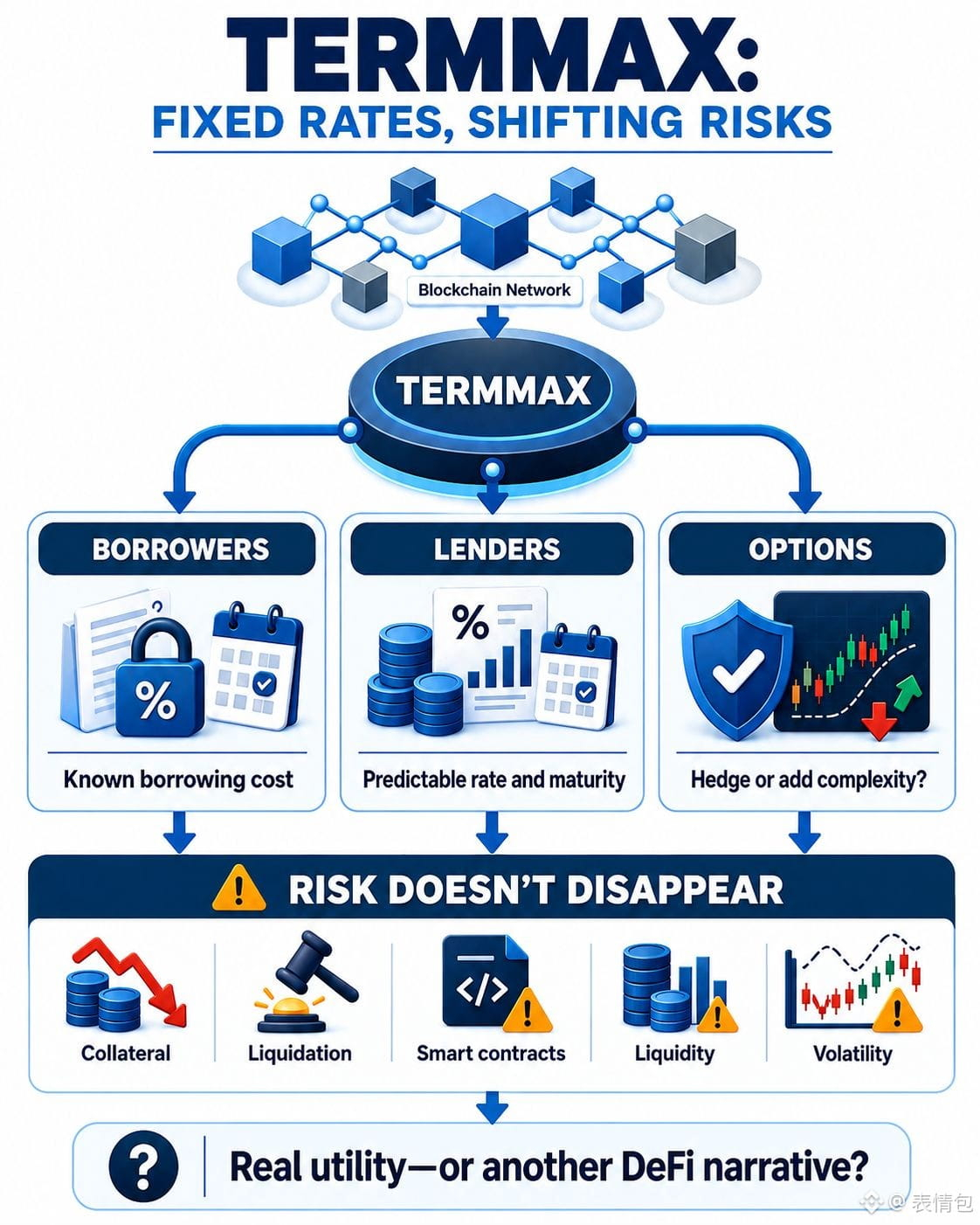
جزء المعدل الثابت يبدو مفيدًا حقًا. معظم قروض DeFi تكون بمعدلات متغيرة، ما يعني أن تكاليف الاقتراض قد تتغير مع تغيّر الطلب والسيولة في السوق. مع TermMax، يمكن للمقترضين معرفة تكلفة فائدة القرض وتاريخ استحقاقه مسبقًا، بينما يحصل المموّلون على صورة أوضح للعائد المتوقع.
لكن بصراحة، إن معدلات الفائدة المتوقعة لا تجعل المركز بأكمله متوقعًا.
قد تنخفض أسعار الضمانات. قد لا تزال تحدث التصفية. قد تحتوي العقود الذكية على ثغرات، وقد تصبح السيولة رقيقة عندما يريد المستخدمون الخروج. أما جانب الخيارات فيمكن أن يساعد المتداولين ذوي الخبرة على التحوّط من هذه المخاطر، لكنه يضيف أيضًا تعقيدًا عبر الأقساط وأسعار الإضراب وتواريخ الانتهاء.
أحيانًا أتساءل: من سيستفيد أكثر من هذا النوع من البنية؟ هل سيجذب أشخاصًا يحتاجون فعلًا إلى تكاليف اقتراض مستقرة، أم أنه سيجذب أساسًا متداولين متقدمين يبنون استراتيجيات قصيرة الأجل؟
ما فهمته هو أن TermMax لا يزيل المخاطر—بل يغيّر مكان تمركزها. قد تنخفض حالة عدم اليقين المتعلقة بمعدل الفائدة، لكن تظل مخاطر الضمان والسيولة والسوق والمخاطر التقنية.
في النهاية، يتعامل البروتوكول مع نقطة ضعف حقيقية في DeFi. قد تجعل أسواق المعدل الثابت الاقتراض عبر السلسلة أكثر عملية بالنسبة للمستخدمين الذين يحتاجون إلى اليقين. ومع ذلك، يبقى السؤال الحقيقي: هل سيستمر الطلب دون حوافز ومضاربة؟
هل يمكن أن يصبح TermMax بنية تحتية مالية مفيدة، أم أن DeFi بمعدلات ثابتة سيظل فكرة أخرى تبدو أقوى على الورق مما تشعر به فعليًا عند الاستخدام؟
لماذا ما زال الاقتراض في عالم التمويل اللامركزي (DeFi) يبدو غير قابل للتنبؤ، حتى عندما يكون القرض نفسه مضمونًا بما يزيد عن المطلوب؟
هذا ما دفعني إلى البحث بشكل أعمق في TermMax. بحسب ما فهمت، هو بروتوكول لامركزي مبني حول الاقتراض بمعدل ثابت والإقراض وتداول الخيارات.
جزء المعدل الثابت يبدو مفيدًا حقًا. معظم قروض DeFi تكون بمعدلات متغيرة، ما يعني أن تكاليف الاقتراض قد تتغير مع تغيّر الطلب والسيولة في السوق. مع TermMax، يمكن للمقترضين معرفة تكلفة فائدة القرض وتاريخ استحقاقه مسبقًا، بينما يحصل المموّلون على صورة أوضح للعائد المتوقع.
لكن بصراحة، إن معدلات الفائدة المتوقعة لا تجعل المركز بأكمله متوقعًا.
قد تنخفض أسعار الضمانات. قد لا تزال تحدث التصفية. قد تحتوي العقود الذكية على ثغرات، وقد تصبح السيولة رقيقة عندما يريد المستخدمون الخروج. أما جانب الخيارات فيمكن أن يساعد المتداولين ذوي الخبرة على التحوّط من هذه المخاطر، لكنه يضيف أيضًا تعقيدًا عبر الأقساط وأسعار الإضراب وتواريخ الانتهاء.
أحيانًا أتساءل: من سيستفيد أكثر من هذا النوع من البنية؟ هل سيجذب أشخاصًا يحتاجون فعلًا إلى تكاليف اقتراض مستقرة، أم أنه سيجذب أساسًا متداولين متقدمين يبنون استراتيجيات قصيرة الأجل؟
ما فهمته هو أن TermMax لا يزيل المخاطر—بل يغيّر مكان تمركزها. قد تنخفض حالة عدم اليقين المتعلقة بمعدل الفائدة، لكن تظل مخاطر الضمان والسيولة والسوق والمخاطر التقنية.
في النهاية، يتعامل البروتوكول مع نقطة ضعف حقيقية في DeFi. قد تجعل أسواق المعدل الثابت الاقتراض عبر السلسلة أكثر عملية بالنسبة للمستخدمين الذين يحتاجون إلى اليقين. ومع ذلك، يبقى السؤال الحقيقي: هل سيستمر الطلب دون حوافز ومضاربة؟
هل يمكن أن يصبح TermMax بنية تحتية مالية مفيدة، أم أن DeFi بمعدلات ثابتة سيظل فكرة أخرى تبدو أقوى على الورق مما تشعر به فعليًا عند الاستخدام؟