
كلما نظرت إلى DUSK أكثر، قلّ ما أفكر في الحوكمة بوصفها “من يحق له التصويت”.
هذا هو الجزء السهل.
ما يثير اهتمامي حقًا هو ما يحدث بعد النقاش، بعد طرح الاقتراح، بعد أن يتفق الجميع على ما يريدونه.
عندها يجب على شخص ما تغيير الشبكة.
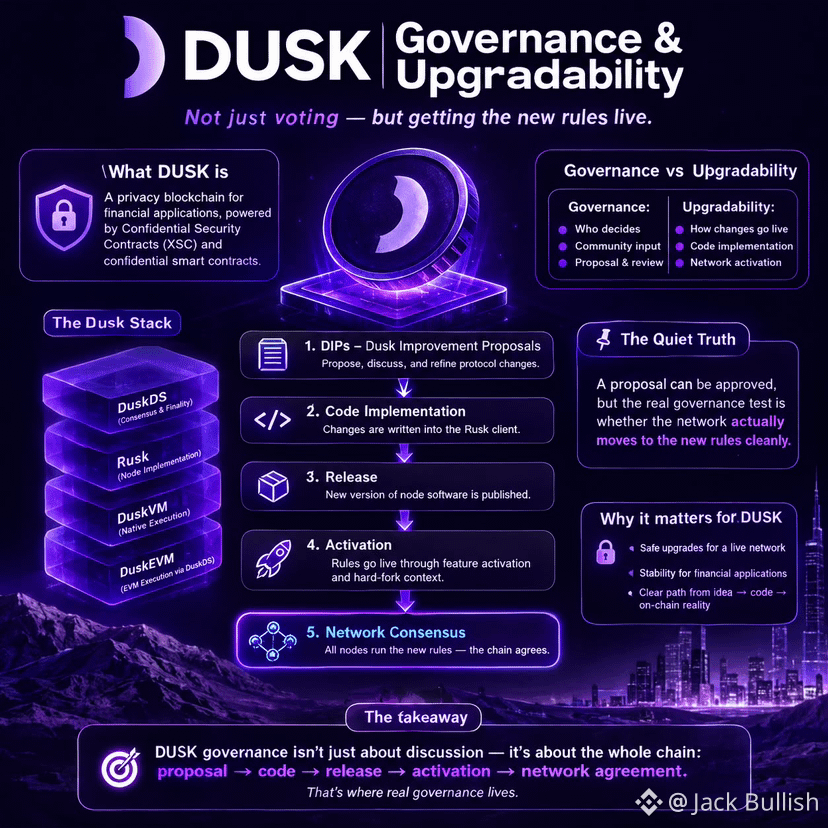
تستخدم Dusk DIPs — مقترحات تحسين Dusk — لتوثيق تغييرات البروتوكول وتمريرها عبر المراجعة قبل أن تصبح جزءًا من النظام.
لكن الاقتراح يظل مجرد وثيقة.
وفي مرحلة ما، لا بد أن يتحول إلى كود.
وهنا تصبح الأمور أكثر جدّية بكثير.
يمكن للترقية أن تغيّر القواعد التي تستخدمها عُقد التحقق من المعاملات، أو معالجة الكتل، أو تفعيل وظائف جديدة. لدى عميل Rusk الخاص بـ Dusk منطق ترقية وتفعيل صريح للتعامل مع تلك التغييرات.
تفصيلة صغيرة كهذه تهمني أكثر من صفحة الحوكمة.
لأن السؤال الحقيقي ليس:
“هل وافقت عليه الجماعة؟”
بل هو:
“هل انتقلت الشبكة فعلاً إلى القواعد الجديدة بسلاسة؟”
هذه مشكلة مختلفة تمامًا.
وهناك طبقة أخرى يميل الناس إلى تجاهلها.
لا تسعى Dusk فقط لأن تكون سلسلة عامة الاستخدام أخرى. إنها تبني بنية تحتية حول الخصوصية والتطبيقات المالية، حيث قد تمس الترقية في النهاية أشياء مثل الصلاحيات، والتحكم في الأصول، والعمليات المُنظَّمة، وسلوك العقود الذكية.
في هذا السياق، تُعد “قابلية الترقية” سلاحًا ذا حدّين.
تحتاج إلى القدرة على إصلاح الأشياء.
وتحتاج أيضًا إلى معرفة من يستطيع تغيير ماذا بالضبط، وكيف يحدث هذا التغيير، وماذا تفعل الشبكة أثناء حدوثه.
لهذا أود أن أولي اهتمامًا أقل لعدد نقاشات الحوكمة حول DUSK…
…وأن أولي اهتمامًا أكبر للأمور المملة:
the DIP،
the code commit،
the release،
the activation rule،
وأخيرًا اللحظة التي تبدأ فيها العقد بفرض السلوك الجديد.
تلك السلسلة بأكملها هي الحوكمة.
الجزء غير المعلن هو أنك لا تلاحظ عمل الحوكمة حقًا عندما تسير الأمور على ما يرام.
تلاحظ ذلك عندما تتغير القواعد — وما تزال الشبكة تتفق على الواقع.
#dusk $DUSK @Dusk
هذا هو الجزء السهل.
ما يثير اهتمامي حقًا هو ما يحدث بعد النقاش، بعد طرح الاقتراح، بعد أن يتفق الجميع على ما يريدونه.
عندها يجب على شخص ما تغيير الشبكة.
تستخدم Dusk DIPs — مقترحات تحسين Dusk — لتوثيق تغييرات البروتوكول وتمريرها عبر المراجعة قبل أن تصبح جزءًا من النظام.
لكن الاقتراح يظل مجرد وثيقة.
وفي مرحلة ما، لا بد أن يتحول إلى كود.
وهنا تصبح الأمور أكثر جدّية بكثير.
يمكن للترقية أن تغيّر القواعد التي تستخدمها عُقد التحقق من المعاملات، أو معالجة الكتل، أو تفعيل وظائف جديدة. لدى عميل Rusk الخاص بـ Dusk منطق ترقية وتفعيل صريح للتعامل مع تلك التغييرات.
تفصيلة صغيرة كهذه تهمني أكثر من صفحة الحوكمة.
لأن السؤال الحقيقي ليس:
“هل وافقت عليه الجماعة؟”
بل هو:
“هل انتقلت الشبكة فعلاً إلى القواعد الجديدة بسلاسة؟”
هذه مشكلة مختلفة تمامًا.
وهناك طبقة أخرى يميل الناس إلى تجاهلها.
لا تسعى Dusk فقط لأن تكون سلسلة عامة الاستخدام أخرى. إنها تبني بنية تحتية حول الخصوصية والتطبيقات المالية، حيث قد تمس الترقية في النهاية أشياء مثل الصلاحيات، والتحكم في الأصول، والعمليات المُنظَّمة، وسلوك العقود الذكية.
في هذا السياق، تُعد “قابلية الترقية” سلاحًا ذا حدّين.
تحتاج إلى القدرة على إصلاح الأشياء.
وتحتاج أيضًا إلى معرفة من يستطيع تغيير ماذا بالضبط، وكيف يحدث هذا التغيير، وماذا تفعل الشبكة أثناء حدوثه.
لهذا أود أن أولي اهتمامًا أقل لعدد نقاشات الحوكمة حول DUSK…
…وأن أولي اهتمامًا أكبر للأمور المملة:
the DIP،
the code commit،
the release،
the activation rule،
وأخيرًا اللحظة التي تبدأ فيها العقد بفرض السلوك الجديد.
تلك السلسلة بأكملها هي الحوكمة.
الجزء غير المعلن هو أنك لا تلاحظ عمل الحوكمة حقًا عندما تسير الأمور على ما يرام.
تلاحظ ذلك عندما تتغير القواعد — وما تزال الشبكة تتفق على الواقع.
#dusk $DUSK @Dusk