

Investors should keep an eye on Bitcoin right now. The world's largest cryptocurrency as of August 18, BTC is up 2.08% in August, following a 7.24% gain in July. This comes after a sharp 20.40% decline in June, but Fundstrat thinks it might be poised for a big swing — the firm is calling for a move of roughly 30 percent or more over the next two months.
Bitcoin US Dollar is trading at 64304 this Tuesday, August 18th, down -0.3%, from the previous session. The four-week trend shows a milder decline of 0.87 percent, though the 12-month picture is far rougher: prices have fallen 43.16 percent over that stretch.
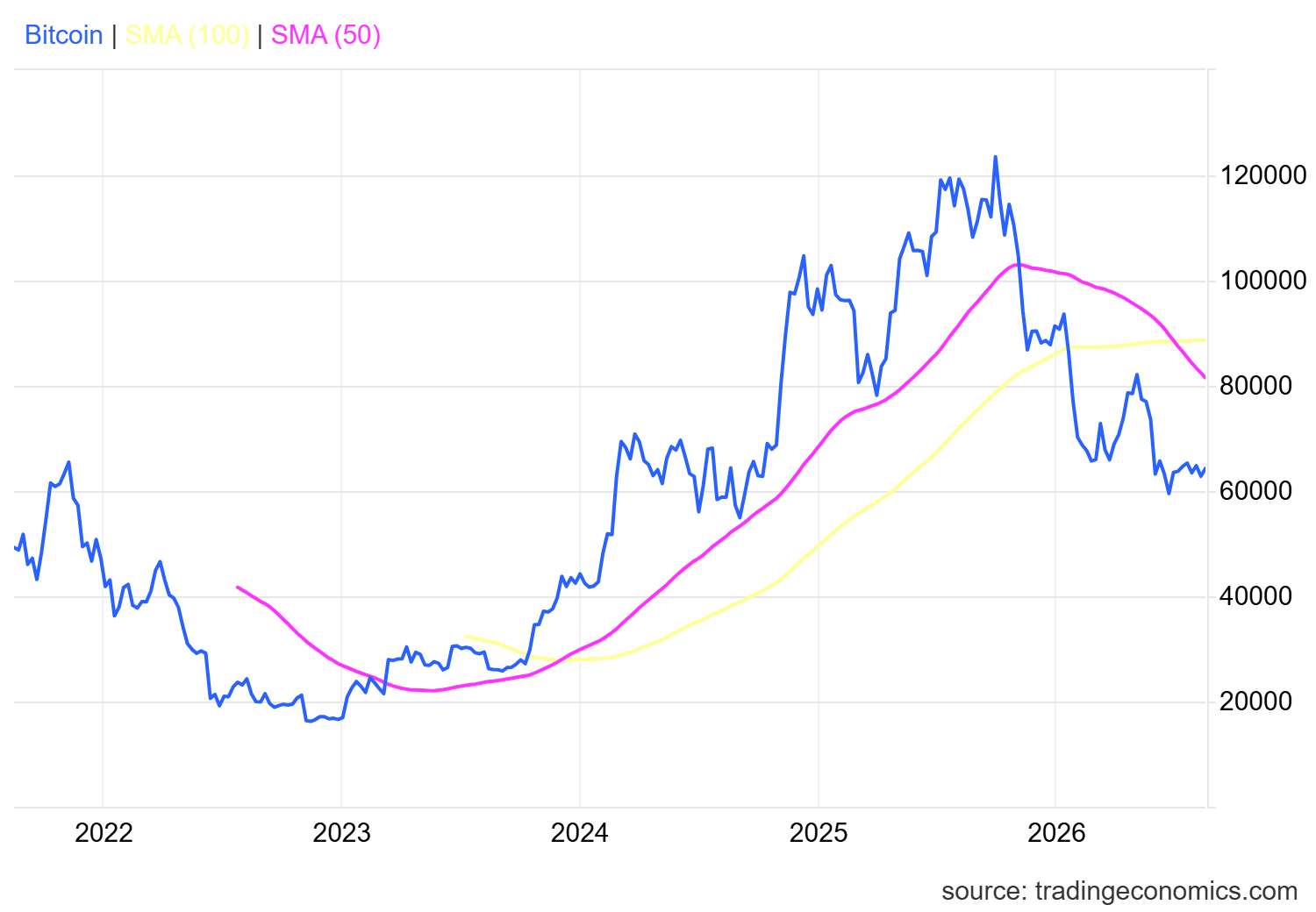
In absolute terms, Bitcoin's maximum drawdown this cycle sits at -53% so far. Priced in gold, though, the decline looks worse — Bitcoin was down -70% against the metal earlier this year, as shown in the chart below. That's a serious downturn, roughly in line with the three previous major down cycles Bitcoin has been through. It's also about the point in prior cycles where opportunities have started to emerge.
Comparing Old Coin (Gold) against New Coin (Bitcoin), both assets rode the same wave of liquidity and currency debasement from 2023 through 2025, with Bitcoin topping out first and gold following later this year.
Gold, as things stand, is rallying hard off support following a -25% correction. Bitcoin, meanwhile, remains range-bound, still clinging to support after a -50% bear market.
There's a reasonable bull case for gold — inflation risk, waning appetite for treasuries, ongoing central bank buying, geopolitical tension, fiscal concerns. But running through my own indicators, valuations still look stretched, sentiment remains consensus-bullish, and positioning is crowded on the long side. A handful of major topping signals have also flashed this year despite the rally. Gold, in other words, needs a lot to go right to push meaningfully past these highs.
Bitcoin's setup isn't much cleaner. Technically, it's broken its long-term uptrend line and is only holding on to support by a thread. Monetary policy is tilting toward tightening, and Bitcoin has decoupled from growth stocks in the wrong direction. On the brighter side, sentiment has been wrung out almost completely, and seasonality tends to turn favorable for Bitcoin come October — which lines up with when the four-year cycle typically bottoms and buyers start stepping back in. Bottom line: Bitcoin still looks like a waiting game.
Weighing the two against each other, Bitcoin has clearly absorbed the larger reset in both price and sentiment, while gold remains a crowded, consensus-bullish trade. Sentiment alone doesn't decide outcomes, but it does tell you something useful: how many minds are open to changing given the right catalyst. On that basis, there's more room for sentiment to swing from bullish to bearish on gold than there is for it to swing further downward on Bitcoin — and more room for bearish Bitcoin holders to turn bullish than the reverse.