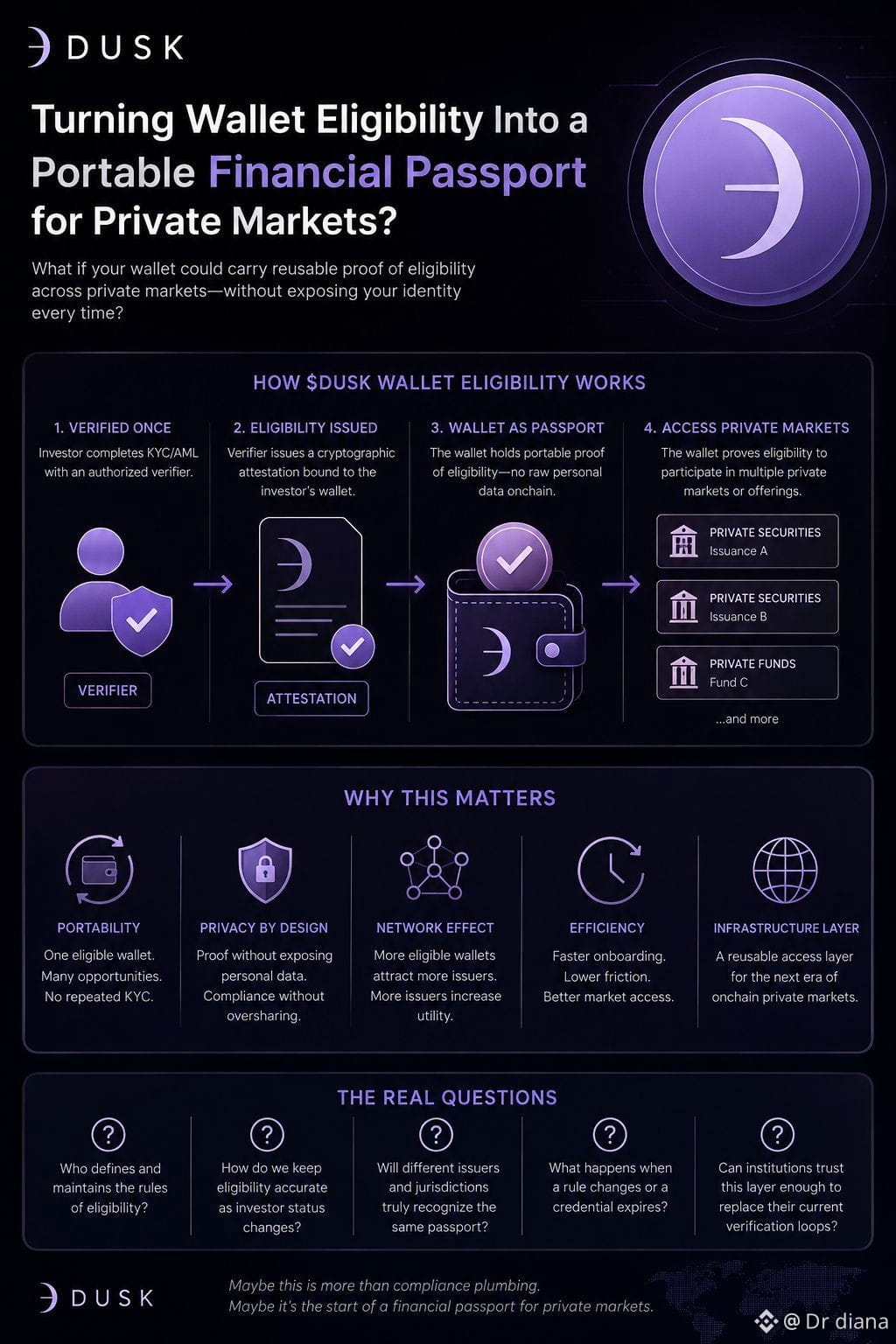
لا أزال أفكر في مدى الغرابة التي ما زالت تشعر بها الهوية في الأسواق الخاصة. أنت تُثبت من تكون، وتُثبت أنك مسموح لك بالاستثمار، ثم تنتقل إلى أصل آخر، وبطريقة ما يبدأ جزء كبير من تلك العملية من جديد. ربما تكون هذه التكرارات ضرورية. لكن في الوقت نفسه يبدو الأمر كأنه بنية تحتية لم تتعلم فعلاً كيفية تذكّر الثقة.
وهنا تصبح فكرة أهلية محفظة DUSK مثيرة للاهتمام بالنسبة إليّ. حسب فهمي، يمكن ربط أهلية المستثمر بمحفظة، بحيث يستطيع الشبكة التحقق مما إذا كانت تلك المحفظة مسموحًا لها بالتفاعل مع أصل مُنظَّم دون وضع كل المعلومات الشخصية الأساسية على السلسلة (onchain).
في البداية رأيت ذلك في الغالب كأنه مجرد بنية امتثال. الآن أتساءل إن كان الشيء الأكثر أهمية هو قابلية النقل.
إذا استطاعت محفظة واحدة مُتحقَّق من أهلّيتها أن تنتقل بين أوراق مالية خاصة مختلفة، ومُصدِرين وأسواق متعددة، وهي تحمل إثبات أهلية قابلًا للاستخدام، فإن المحفظة تبدأ بالتصرف بشكل يشبه جوازًا ماليًا. ليس الهوية نفسها. بل أقرب إلى إذن قابل لإعادة الاستخدام.
لكن مرة أخرى، من الذي يقرر مدى قابلية نقل هذا الإذن فعليًا؟
لدى مختلف المُصدِرين قواعد مختلفة. تتغير الولايات القضائية. يمكن أن تنتهي حالة المستثمر. إن إثباتًا مُقبولًا لأجل ورقة مالية واحدة قد يعني القليل جدًا بالنسبة لورقة أخرى. فجأة لم يعد الجزء الصعب هو إثبات الأهلية مرة واحدة، بل الحفاظ على دقتها بينما تعتمد عليها العديد من الأسواق.
وهذا يخلق أثرًا شبكيًا مثيرًا للاهتمام. قد تجعل المحافظ المؤهلة أكثر عملية إصدارٍ جديدٍ أكثر سهولة في التوزيع، وهو ما يجذب المزيد من المُصدِرين، وبالتالي يمنح تلك المحافظ أماكن أكثر للمشاركة.
ربما لا يحاول DUSK فقط وضع الأصول الخاصة على السلسلة. قد يكون ببناء طبقة وصول قابلة لإعادة الاستخدام حولها.
أما ما إذا كانت المؤسسات تثق فعلاً في هذا الوصول بما يكفي لإيقاف تكرار عمليات تحققها القديمة، فهذا أمر ما زلت غير متأكد منه.
#dusk $DUSK @Dusk $RED
وهنا تصبح فكرة أهلية محفظة DUSK مثيرة للاهتمام بالنسبة إليّ. حسب فهمي، يمكن ربط أهلية المستثمر بمحفظة، بحيث يستطيع الشبكة التحقق مما إذا كانت تلك المحفظة مسموحًا لها بالتفاعل مع أصل مُنظَّم دون وضع كل المعلومات الشخصية الأساسية على السلسلة (onchain).
في البداية رأيت ذلك في الغالب كأنه مجرد بنية امتثال. الآن أتساءل إن كان الشيء الأكثر أهمية هو قابلية النقل.
إذا استطاعت محفظة واحدة مُتحقَّق من أهلّيتها أن تنتقل بين أوراق مالية خاصة مختلفة، ومُصدِرين وأسواق متعددة، وهي تحمل إثبات أهلية قابلًا للاستخدام، فإن المحفظة تبدأ بالتصرف بشكل يشبه جوازًا ماليًا. ليس الهوية نفسها. بل أقرب إلى إذن قابل لإعادة الاستخدام.
لكن مرة أخرى، من الذي يقرر مدى قابلية نقل هذا الإذن فعليًا؟
لدى مختلف المُصدِرين قواعد مختلفة. تتغير الولايات القضائية. يمكن أن تنتهي حالة المستثمر. إن إثباتًا مُقبولًا لأجل ورقة مالية واحدة قد يعني القليل جدًا بالنسبة لورقة أخرى. فجأة لم يعد الجزء الصعب هو إثبات الأهلية مرة واحدة، بل الحفاظ على دقتها بينما تعتمد عليها العديد من الأسواق.
وهذا يخلق أثرًا شبكيًا مثيرًا للاهتمام. قد تجعل المحافظ المؤهلة أكثر عملية إصدارٍ جديدٍ أكثر سهولة في التوزيع، وهو ما يجذب المزيد من المُصدِرين، وبالتالي يمنح تلك المحافظ أماكن أكثر للمشاركة.
ربما لا يحاول DUSK فقط وضع الأصول الخاصة على السلسلة. قد يكون ببناء طبقة وصول قابلة لإعادة الاستخدام حولها.
أما ما إذا كانت المؤسسات تثق فعلاً في هذا الوصول بما يكفي لإيقاف تكرار عمليات تحققها القديمة، فهذا أمر ما زلت غير متأكد منه.
#dusk $DUSK @Dusk $RED