
#dusk $DUSK @Dusk I think about Dusk Protocol less as a blockchain product and more as an execution environment. That framing matters because the real test is not how impressive the architecture sounds, but how predictable the system feels when I use it repeatedly.
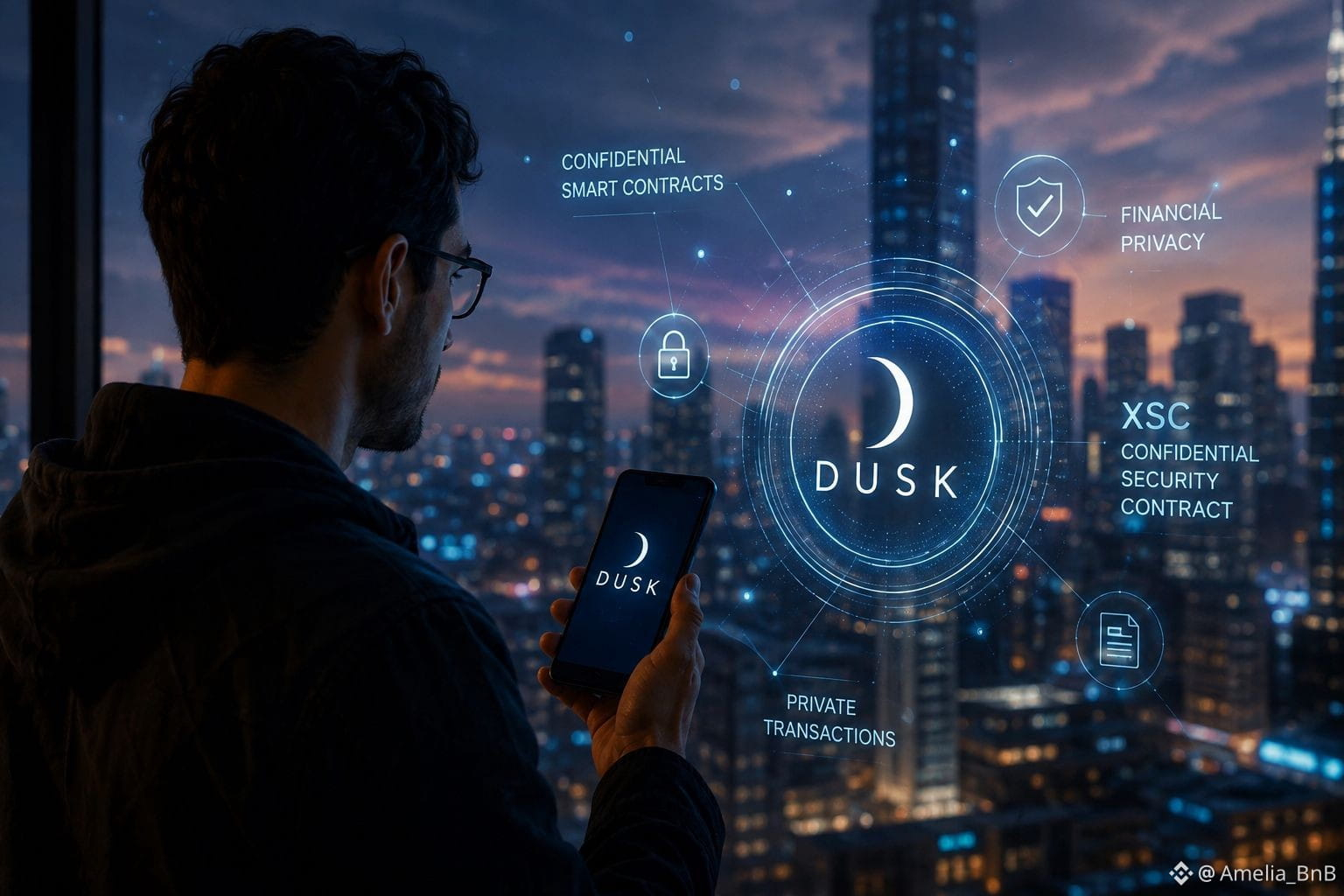
Dusk Protocol is built around privacy-focused financial infrastructure, with confidential smart contracts and the Confidential Security Contract standard. For a user, though, those technical choices only become meaningful when they reduce uncertainty. I want transactions to behave consistently, especially when activity increases and attention is fragmented.
What interests me is the psychological side of execution. When a transaction feels delayed, unclear, or difficult to verify, users hesitate. They retry, refresh, or second-guess whether the first action actually worked. That behavior can create unnecessary activity and make already-busy conditions harder to interpret.
This is why execution variance matters more to me than raw speed. A system that behaves predictably gives users confidence even when they cannot see the underlying machinery. Much of good infrastructure should remain invisible.
There are trade-offs. Privacy can introduce additional complexity, and confidential execution requires users and applications to understand new assumptions. The DUSK token also functions as coordination infrastructure within the network rather than something I need to evaluate through speculation.
What matters to me is whether repeated interaction eventually feels ordinary, because that is usually where infrastructure proves itselfwhen I stop thinking about the machinery and start trusting the execution...
$DUSK
Dusk Protocol is built around privacy-focused financial infrastructure, with confidential smart contracts and the Confidential Security Contract standard. For a user, though, those technical choices only become meaningful when they reduce uncertainty. I want transactions to behave consistently, especially when activity increases and attention is fragmented.
What interests me is the psychological side of execution. When a transaction feels delayed, unclear, or difficult to verify, users hesitate. They retry, refresh, or second-guess whether the first action actually worked. That behavior can create unnecessary activity and make already-busy conditions harder to interpret.
This is why execution variance matters more to me than raw speed. A system that behaves predictably gives users confidence even when they cannot see the underlying machinery. Much of good infrastructure should remain invisible.
There are trade-offs. Privacy can introduce additional complexity, and confidential execution requires users and applications to understand new assumptions. The DUSK token also functions as coordination infrastructure within the network rather than something I need to evaluate through speculation.
What matters to me is whether repeated interaction eventually feels ordinary, because that is usually where infrastructure proves itselfwhen I stop thinking about the machinery and start trusting the execution...
$DUSK