#termmax @TermMax
كلما تعمقت في @TermMax ، ازداد إعجابًا بتصميمه. لا يتعلق الأمر بمجرد بروتوكول إقراض DeFi آخر؛ فكرته الأكبر تتمثل في جعل تكلفة رأس المال ومدته أكثر قابلية للتنبؤ.
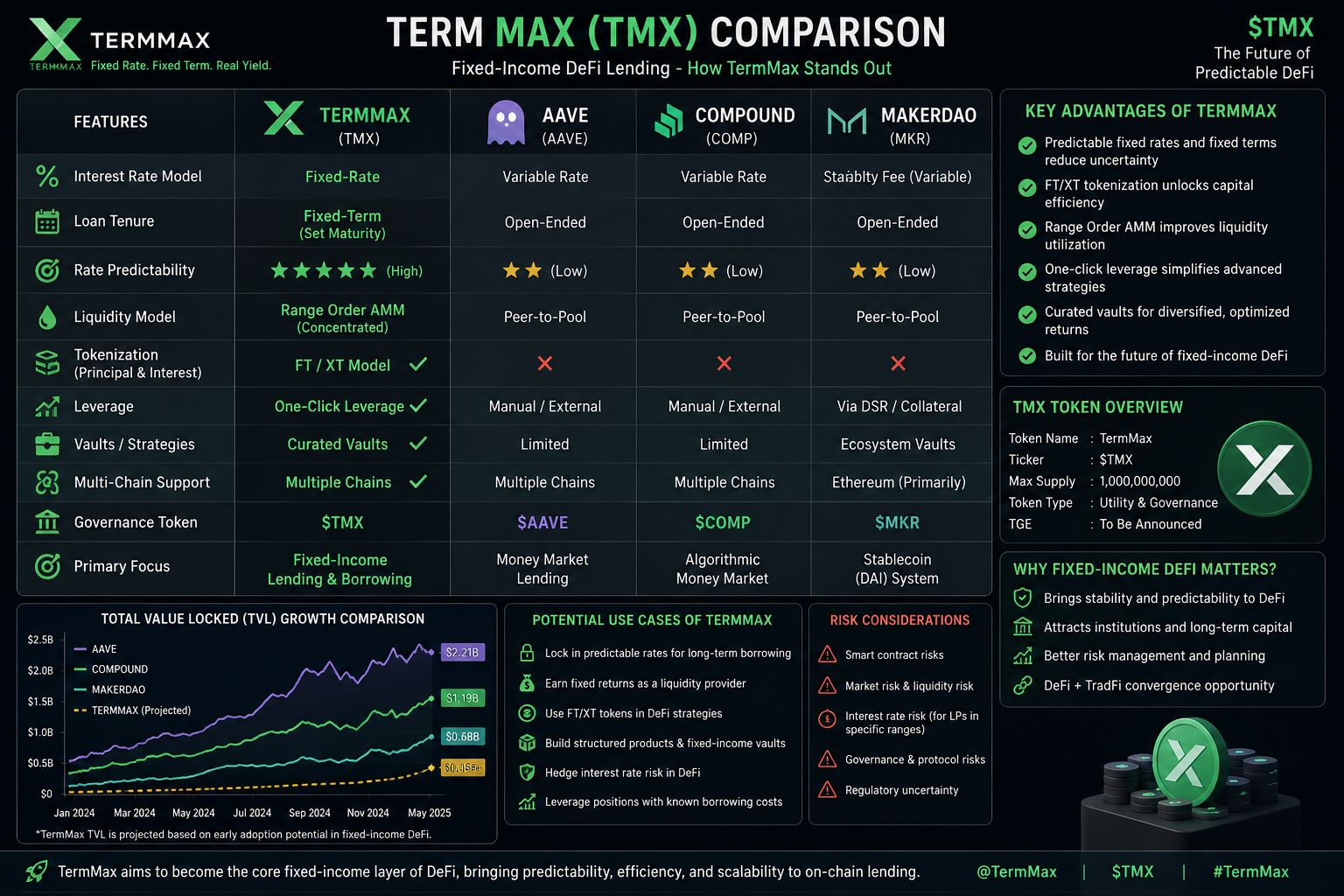
تعتمد معظم أسواق المال في DeFi بشكل كبير على الفوائد المتغيرة. إن هذه المرونة مفيدة، لكنها تُحدث أيضًا حالة من عدم اليقين للمقترضين والمُقرضين. يتعامل TermMax مع الأمر بطريقة مختلفة عبر أسواق إقراض واقتراض بسعر فائدة ثابت ومدة ثابتة، ما يسمح للمستخدمين بمعرفة شروط التمويل ونضج (استحقاق) المركز مسبقًا.
تعد البنية التقنية مثيرة للاهتمام بشكل خاص. يفصل TermMax بين المبدأ والفائدة من خلال نموذج FT/XT، بينما تُدخل آلية أوامر النطاق مفاهيم السيولة المركّزة إلى أسواق ذات أسعار فائدة ثابتة. وقد يتيح ذلك لموفري السيولة استهداف نطاقات محددة من الفائدة بدلًا من التعامل مع كل السيولة على أنها متشابهة.
يضيف البروتوكول أيضًا خزائن مُنسّقة (curated vaults)، واقتراضًا بضمان، ورافعة مالية بنقرة واحدة.
وبالتالي، ليست الأطروحة الحقيقية مجرد “عائد أعلى”. يتمثل السؤال الأهم في ما إذا كانت الأسواق ذات سعر الفائدة الثابت يمكن أن تصبح عنصرًا أساسيًا مهمًا في DeFi. إذا تمكن المستخدمون من إدارة المدة وسعر الفائدة والضمان والرافعة بشكل صريح، فإن DeFi يتحرك نحو بنية تحتية لسندات دخل ثابت قابلة للبرمجة.
يمثل رمز $TMX جزءًا آخر من منظومة المشروع. يصف TermMax TMX بأنه رمز المنفعة والحوكمة الخاص به، مع حد أقصى ثابت للعرض يبلغ 1 مليار توكن. ومع ذلك، يجب أن تعتمد قيمة الرمز في النهاية على مدى اعتماد البروتوكول فعليًا، والمنفعة الحوكمية، والحوافز، ونشاط منظومة مستدامة—وليس على الضجيج وحده.
رأيي: @TermMax أمر مثير للاهتمام لأنه يجرب بنية مالية مختلفة، وليس مجرد منتج عائد آخر. المقاييس الرئيسية التي سأراقبها هي عمق السيولة، والطلب الحقيقي على الاقتراض، واستخدام السوق، وأداء الخزائن، والأمان، والاحتفاظ طويل الأجل بالمستخدمين.
هذا بحث، وليس نصيحة مالية. تحقق دائمًا من المعلومات الرسمية ومخاطر العقود الذكية قبل التفاعل مع أي بروتوكول.
#TermMax
كلما تعمقت في @TermMax ، ازداد إعجابًا بتصميمه. لا يتعلق الأمر بمجرد بروتوكول إقراض DeFi آخر؛ فكرته الأكبر تتمثل في جعل تكلفة رأس المال ومدته أكثر قابلية للتنبؤ.
تعتمد معظم أسواق المال في DeFi بشكل كبير على الفوائد المتغيرة. إن هذه المرونة مفيدة، لكنها تُحدث أيضًا حالة من عدم اليقين للمقترضين والمُقرضين. يتعامل TermMax مع الأمر بطريقة مختلفة عبر أسواق إقراض واقتراض بسعر فائدة ثابت ومدة ثابتة، ما يسمح للمستخدمين بمعرفة شروط التمويل ونضج (استحقاق) المركز مسبقًا.
تعد البنية التقنية مثيرة للاهتمام بشكل خاص. يفصل TermMax بين المبدأ والفائدة من خلال نموذج FT/XT، بينما تُدخل آلية أوامر النطاق مفاهيم السيولة المركّزة إلى أسواق ذات أسعار فائدة ثابتة. وقد يتيح ذلك لموفري السيولة استهداف نطاقات محددة من الفائدة بدلًا من التعامل مع كل السيولة على أنها متشابهة.
يضيف البروتوكول أيضًا خزائن مُنسّقة (curated vaults)، واقتراضًا بضمان، ورافعة مالية بنقرة واحدة.
وبالتالي، ليست الأطروحة الحقيقية مجرد “عائد أعلى”. يتمثل السؤال الأهم في ما إذا كانت الأسواق ذات سعر الفائدة الثابت يمكن أن تصبح عنصرًا أساسيًا مهمًا في DeFi. إذا تمكن المستخدمون من إدارة المدة وسعر الفائدة والضمان والرافعة بشكل صريح، فإن DeFi يتحرك نحو بنية تحتية لسندات دخل ثابت قابلة للبرمجة.
يمثل رمز $TMX جزءًا آخر من منظومة المشروع. يصف TermMax TMX بأنه رمز المنفعة والحوكمة الخاص به، مع حد أقصى ثابت للعرض يبلغ 1 مليار توكن. ومع ذلك، يجب أن تعتمد قيمة الرمز في النهاية على مدى اعتماد البروتوكول فعليًا، والمنفعة الحوكمية، والحوافز، ونشاط منظومة مستدامة—وليس على الضجيج وحده.
رأيي: @TermMax أمر مثير للاهتمام لأنه يجرب بنية مالية مختلفة، وليس مجرد منتج عائد آخر. المقاييس الرئيسية التي سأراقبها هي عمق السيولة، والطلب الحقيقي على الاقتراض، واستخدام السوق، وأداء الخزائن، والأمان، والاحتفاظ طويل الأجل بالمستخدمين.
هذا بحث، وليس نصيحة مالية. تحقق دائمًا من المعلومات الرسمية ومخاطر العقود الذكية قبل التفاعل مع أي بروتوكول.
#TermMax