#dusk $DUSK @Dusk
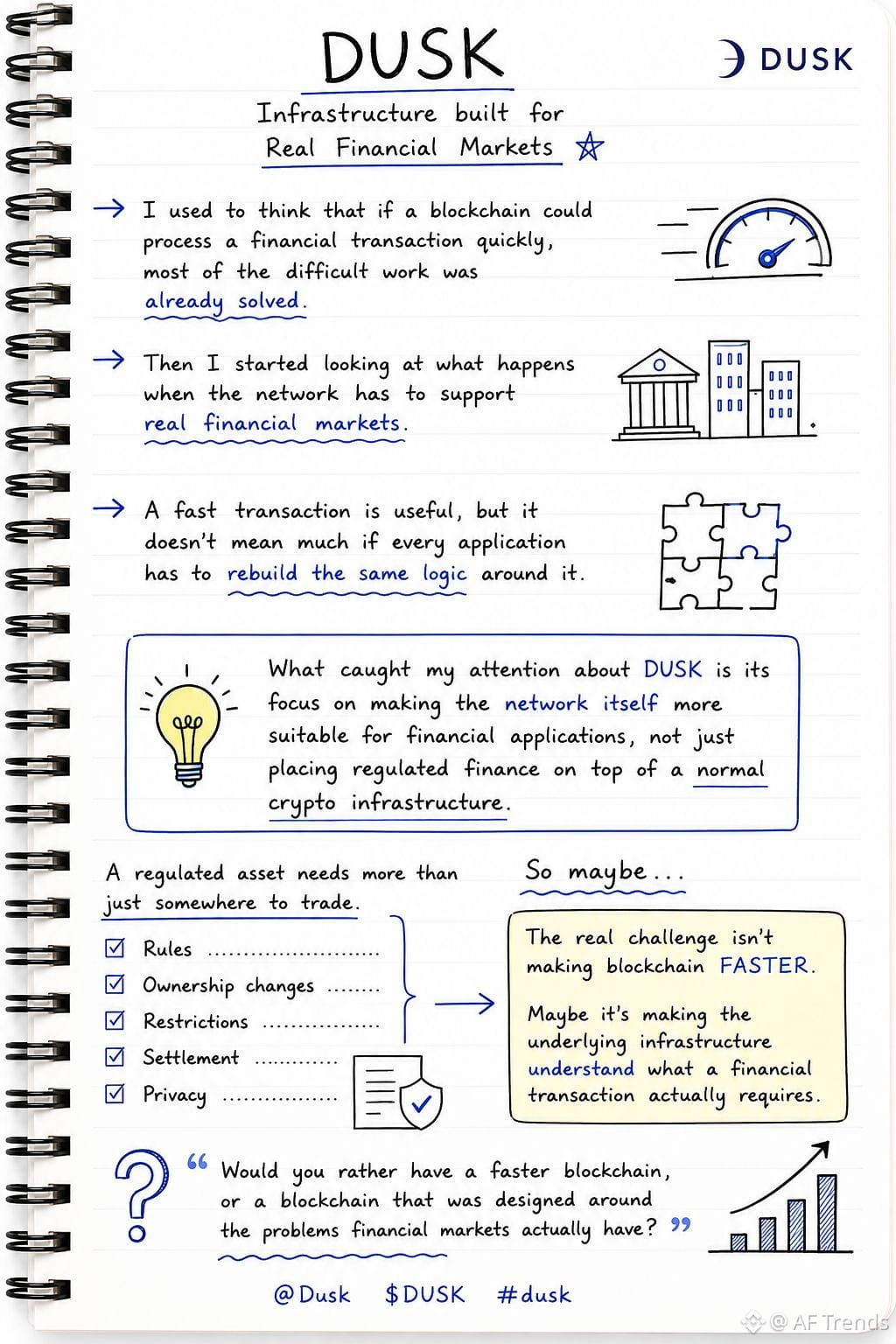
اعتدت أن أعتقد أنه إذا كانت سلسلة الكتل تستطيع معالجة معاملة مالية بسرعة، فمعظم الأعمال الصعبة كانت قد حُلَّت بالفعل.
ثم بدأت أبحث في ما يحدث عندما يتعين على الشبكة دعم أسواق مالية حقيقية.
المعاملة السريعة مفيدة، لكن لا يعني ذلك الكثير إذا كان على كل تطبيق إعادة بناء المنطق نفسه حولها.
ما لفت انتباهي في Dusk هو تركيزها على جعل الشبكة نفسها أكثر ملاءمة للتطبيقات المالية، بدلًا من التعامل مع التمويل المُنظَّم كشيء يمكن ببساطة وضعه فوق بنية تحتية تشفيرية عادية.
يبدو أن هذا الفرق مهم.
فالسند أو الصندوق المتداول ETF أو أي أصل مُنظَّم آخر لا يحتاج فقط إلى مكان للتداول. يجب أن تتعامل الشبكة مع القواعد وتغيّرات الملكية والتسوية والخصوصية المحيطة بذلك.
لذا ربما ليست التحدّي الحقيقي هو جعل سلسلة الكتل أسرع.
ربما يكمن التحدي في جعل البنية التحتية الأساسية تفهم ما تتطلبه المعاملة المالية فعليًا.
ما زلت أتساءل عن مقدار هذه التعقيدات التي يمكن التعامل معها بشكل واقعي على مستوى البروتوكول عندما يكبر حجم السوق كثيرًا.
هل تفضّل سلسلة كتلة أسرع، أم سلسلة كتلة صُمِّمت فعلًا حول المشكلات التي تواجهها الأسواق المالية؟
اعتدت أن أعتقد أنه إذا كانت سلسلة الكتل تستطيع معالجة معاملة مالية بسرعة، فمعظم الأعمال الصعبة كانت قد حُلَّت بالفعل.
ثم بدأت أبحث في ما يحدث عندما يتعين على الشبكة دعم أسواق مالية حقيقية.
المعاملة السريعة مفيدة، لكن لا يعني ذلك الكثير إذا كان على كل تطبيق إعادة بناء المنطق نفسه حولها.
ما لفت انتباهي في Dusk هو تركيزها على جعل الشبكة نفسها أكثر ملاءمة للتطبيقات المالية، بدلًا من التعامل مع التمويل المُنظَّم كشيء يمكن ببساطة وضعه فوق بنية تحتية تشفيرية عادية.
يبدو أن هذا الفرق مهم.
فالسند أو الصندوق المتداول ETF أو أي أصل مُنظَّم آخر لا يحتاج فقط إلى مكان للتداول. يجب أن تتعامل الشبكة مع القواعد وتغيّرات الملكية والتسوية والخصوصية المحيطة بذلك.
لذا ربما ليست التحدّي الحقيقي هو جعل سلسلة الكتل أسرع.
ربما يكمن التحدي في جعل البنية التحتية الأساسية تفهم ما تتطلبه المعاملة المالية فعليًا.
ما زلت أتساءل عن مقدار هذه التعقيدات التي يمكن التعامل معها بشكل واقعي على مستوى البروتوكول عندما يكبر حجم السوق كثيرًا.
هل تفضّل سلسلة كتلة أسرع، أم سلسلة كتلة صُمِّمت فعلًا حول المشكلات التي تواجهها الأسواق المالية؟