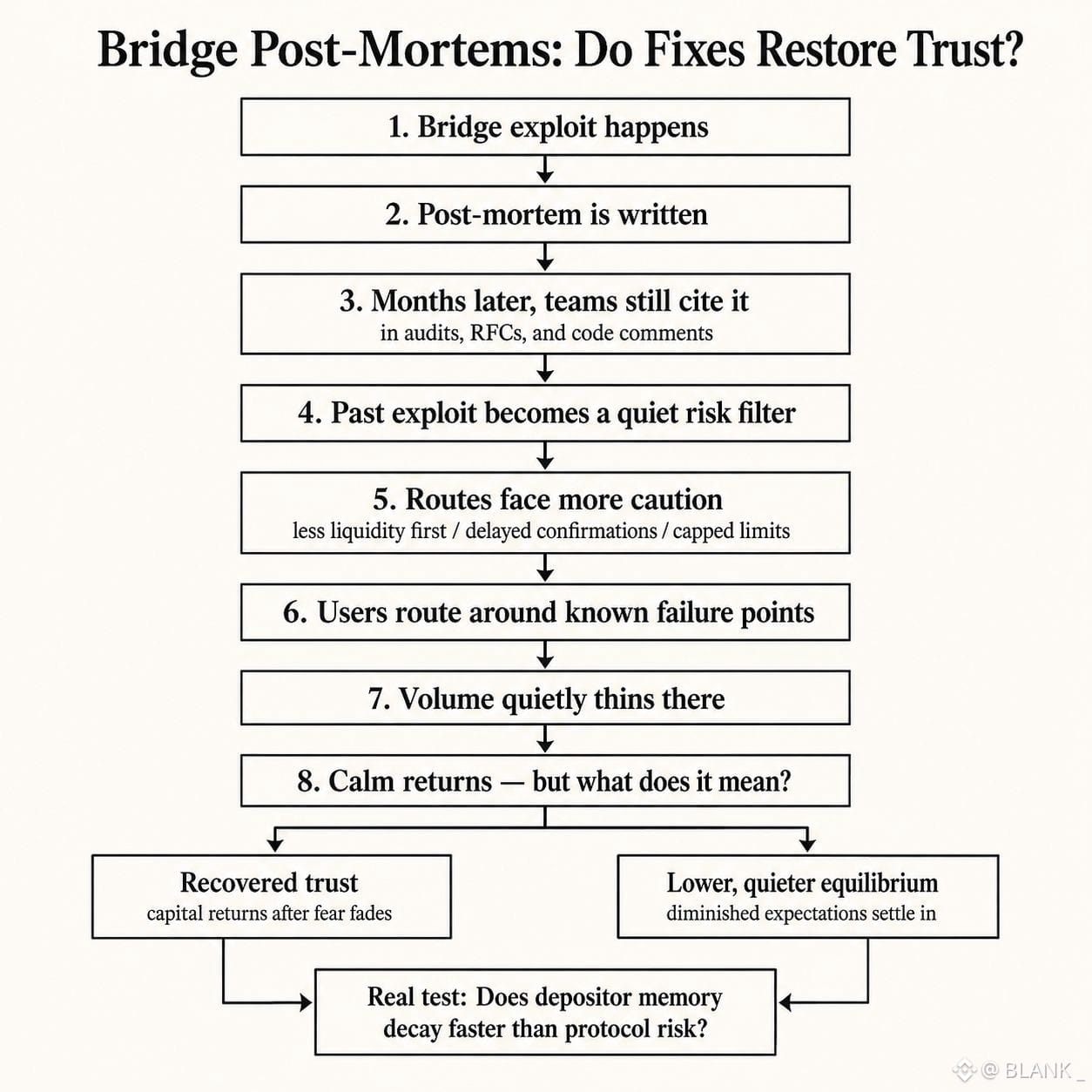

في البداية افترضت أن تقارير ما بعد الوفاة الخاصة بالجسور لا تُقرأ إلا مرة واحدة تقريبًا ثم تُنسى، وتُحفَظ بعيدًا بعد أن يخفت ضوء سلسلة الحوادث. لكن عندما أراقب كيف تستشهد بها الفرق بعد أشهر—في عمليات التدقيق، وفي مناقشات طلبات تغيير المواصفات (RFC)، وفي تعليقات الشيفرة الصامتة—يبدو الأمر أقرب إلى احتكاك بطيء الإطلاق. كل استغلال قديم يصبح فلترًا هادئًا: أي المسارات تحصل على السيولة أولًا، وأيها تتأخر فيه التأكيدات، وأيها تُفرض عليها حدود قصوى قبل أن يثق بها أحد مجددًا. الآليات نادرًا ما تتغير بسرعة. ما يتغير هو الصبر، وأن المستخدمين يتجاوزون نقاط الفشل المعروفة دون الإعلان عن السبب، وأن الحجم ما يلبث أن يتناقص هناك فقط. لا يُثبت الاعتمادية من خلال مخططات التوفر، بل من خلال ما إذا كان رأس المال يعود بعد أن خاف مرة واحدة. هذه هي الاختبار الحقيقي الذي تواجهه دروس ما بعد الوفاة: ليس ما إذا كانت المعالجة تصمد تقنيًا، بل ما إذا كانت ذاكرة المودعين تتلاشى أسرع من ذاكرة البروتوكول. لذلك عندما يبدو أن الجسر عاد هادئًا مرة أخرى، هل هذه ثقة مستعادة، أم مجرد توقعات متراجعة تستقر في توازن أدنى وأكثر هدوءًا؟
@Dusk $DUSK #dusk
@Dusk $DUSK #dusk