لقد أمضيت سنوات وأنا أراقب نفس الحجج وهي تتكرر من جديد عبر كل دورة. كانت الشفافية تُباع دائمًا باعتبارها أنقى ميزة في البلوك تشين—الشيء الذي سيُنظف الأسواق عبر جعل كل شيء مرئيًا. ثم تبدأ في النظر إلى كيفية تحرك رأس المال الحقيقي فعليًا—الأسهم، السندات، الصناديق، والتدفقات المؤسسية الهادئة—وتبدأ هذه الفكرة في الشعور بأنها ناقصة.
لقد رأيت مشاريع تعد بالخصوصية وتنتهي إما بأنها شديدة الغموض بالنسبة للجهات التنظيمية، أو شديدة التسريب بالنسبة لأي شخص يتداول أحجامًا كبيرة. وفي معظم الأحيان، يواصل السوق اختياره بين التعرض الكامل أو الإخفاء الكامل، وكلاهما لا يناسب المساحة الملتبسة في الوسط التي تعيش فيها المالية الحقيقية.
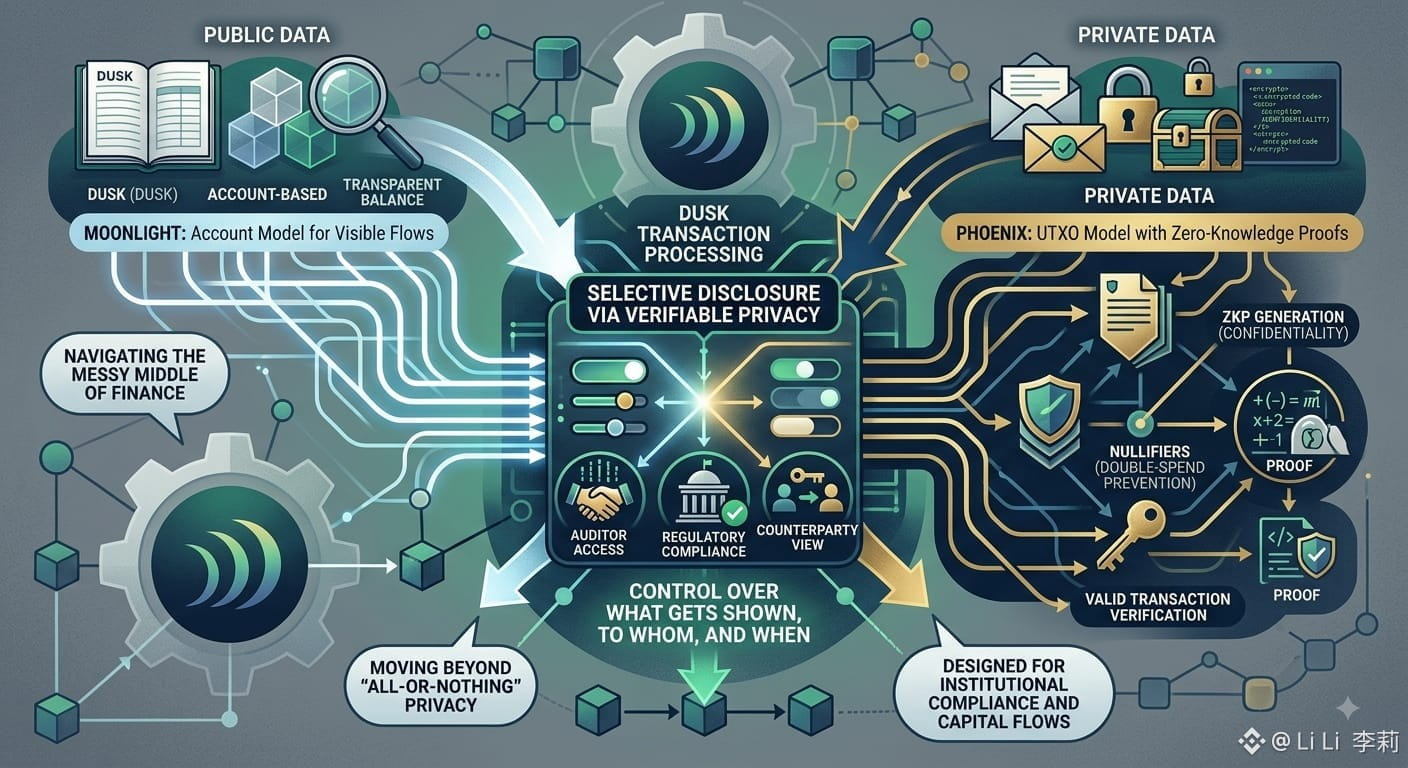
بالعودة مؤخرًا إلى الورقة البيضاء الخاصة بـ Dusk، برزت النماذج المزدوجة. يواصل Moonlight البنية المألوفة للحسابات، ويظل عامًا وقابلًا للتتبع عندما يكون ذلك مطلوبًا. أما Phoenix فينتقل إلى الملاحظات وإثباتات المعرفة الصفرية، للتحقق من صحة المعاملة ومنع عمليات السحب المزدوجة عبر الـ nullifiers مع إبقاء التفاصيل الحساسة خارج نطاق الرؤية. ما يدور في ذهني هو أنهم لم يتعاملوا مع الخصوصية باعتبارها مفتاحًا إما تشغيلًا أو إيقافًا. إن الإفصاح الانتقائي يقع في المنتصف: التحكم فيما يتم عرضه، ولمن، ومتى.
لست متأكدًا بعد من مدى سلاسة ذلك عندما تصل أحجام التداول والضغط المؤسسي الحقيقي. لدى الكريبتو تاريخ طويل من تصاميم أنيقة ما تزال تصطدم بالاحتكاك نفسه بمجرد أن يبدأ الأشخاص الذين لديهم مكاتب امتثال ورأس مال فعلي في استخدامها. لكن شيئًا في الطريقة التي صاغوا بها عبارة “الخصوصية القابلة للتحقق” يبدو أقل شبهاً بالسردية المعتادة وأكثر كونه محاولة للاعتراف بالمقايضات بدل التظاهر بأنها لا وجود لها.
$DUSK @Dusk #dusk
لقد رأيت مشاريع تعد بالخصوصية وتنتهي إما بأنها شديدة الغموض بالنسبة للجهات التنظيمية، أو شديدة التسريب بالنسبة لأي شخص يتداول أحجامًا كبيرة. وفي معظم الأحيان، يواصل السوق اختياره بين التعرض الكامل أو الإخفاء الكامل، وكلاهما لا يناسب المساحة الملتبسة في الوسط التي تعيش فيها المالية الحقيقية.
بالعودة مؤخرًا إلى الورقة البيضاء الخاصة بـ Dusk، برزت النماذج المزدوجة. يواصل Moonlight البنية المألوفة للحسابات، ويظل عامًا وقابلًا للتتبع عندما يكون ذلك مطلوبًا. أما Phoenix فينتقل إلى الملاحظات وإثباتات المعرفة الصفرية، للتحقق من صحة المعاملة ومنع عمليات السحب المزدوجة عبر الـ nullifiers مع إبقاء التفاصيل الحساسة خارج نطاق الرؤية. ما يدور في ذهني هو أنهم لم يتعاملوا مع الخصوصية باعتبارها مفتاحًا إما تشغيلًا أو إيقافًا. إن الإفصاح الانتقائي يقع في المنتصف: التحكم فيما يتم عرضه، ولمن، ومتى.
لست متأكدًا بعد من مدى سلاسة ذلك عندما تصل أحجام التداول والضغط المؤسسي الحقيقي. لدى الكريبتو تاريخ طويل من تصاميم أنيقة ما تزال تصطدم بالاحتكاك نفسه بمجرد أن يبدأ الأشخاص الذين لديهم مكاتب امتثال ورأس مال فعلي في استخدامها. لكن شيئًا في الطريقة التي صاغوا بها عبارة “الخصوصية القابلة للتحقق” يبدو أقل شبهاً بالسردية المعتادة وأكثر كونه محاولة للاعتراف بالمقايضات بدل التظاهر بأنها لا وجود لها.
$DUSK @Dusk #dusk