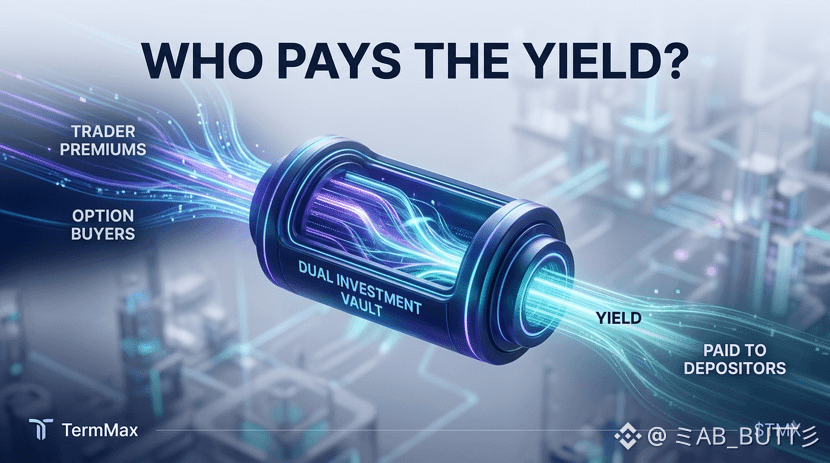
يُثير العائد المرتفع دائمًا سؤالًا واحدًا بالنسبة لي: من يدفعه فعليًا؟
في صناديق الاستثمار الثنائية لدى Alpha @TermMax Alpha’s Dual Investment Vaults، تكون الإجابة مباشرة بشكل مدهش: مشترون خيارات الشراء (Long) والبيع (Short).
يدفع المتداولون علاوات مقدمًا للحصول على تعرض مرفوع الرافعة عبر خيارات شراء أو بيع (Call أو Put). تتحول تلك العلاوات إلى عائد لمزودي سيولة الاستثمار الثنائي الذين يأخذون الجانب المقابل. تُصرّح واجهة Alpha التابعة لـ TermMax صراحةً بأن عوائد القبو يتم دفعها من قِبل مشترّي Long/Short. (TermMax)
إذًا، العائد لا يظهر من العدم. إنه يعكس طلبًا حقيقيًا على المرونة (optionality) والرافعة.
لكن المقابل مهم. فالمودعون في القبو يغطّون تلك الخيارات، ما يعني أن العوائد تأتي مع التعرض لأصلٍ أساسي وشروط التسوية—وليست عائدًا مجانيًا.
وهذا ما أجده مثيرًا للاهتمام: يمكن أن يؤدي ارتفاع الطلب على الخيارات إلى توليد دخل أعلى من العلاوات، لكن يوجد العائد لأن شخصًا ما يتقبل الطرف الآخر من المخاطر. #termmax @TermMax
في صناديق الاستثمار الثنائية لدى Alpha @TermMax Alpha’s Dual Investment Vaults، تكون الإجابة مباشرة بشكل مدهش: مشترون خيارات الشراء (Long) والبيع (Short).
يدفع المتداولون علاوات مقدمًا للحصول على تعرض مرفوع الرافعة عبر خيارات شراء أو بيع (Call أو Put). تتحول تلك العلاوات إلى عائد لمزودي سيولة الاستثمار الثنائي الذين يأخذون الجانب المقابل. تُصرّح واجهة Alpha التابعة لـ TermMax صراحةً بأن عوائد القبو يتم دفعها من قِبل مشترّي Long/Short. (TermMax)
إذًا، العائد لا يظهر من العدم. إنه يعكس طلبًا حقيقيًا على المرونة (optionality) والرافعة.
لكن المقابل مهم. فالمودعون في القبو يغطّون تلك الخيارات، ما يعني أن العوائد تأتي مع التعرض لأصلٍ أساسي وشروط التسوية—وليست عائدًا مجانيًا.
وهذا ما أجده مثيرًا للاهتمام: يمكن أن يؤدي ارتفاع الطلب على الخيارات إلى توليد دخل أعلى من العلاوات، لكن يوجد العائد لأن شخصًا ما يتقبل الطرف الآخر من المخاطر. #termmax @TermMax