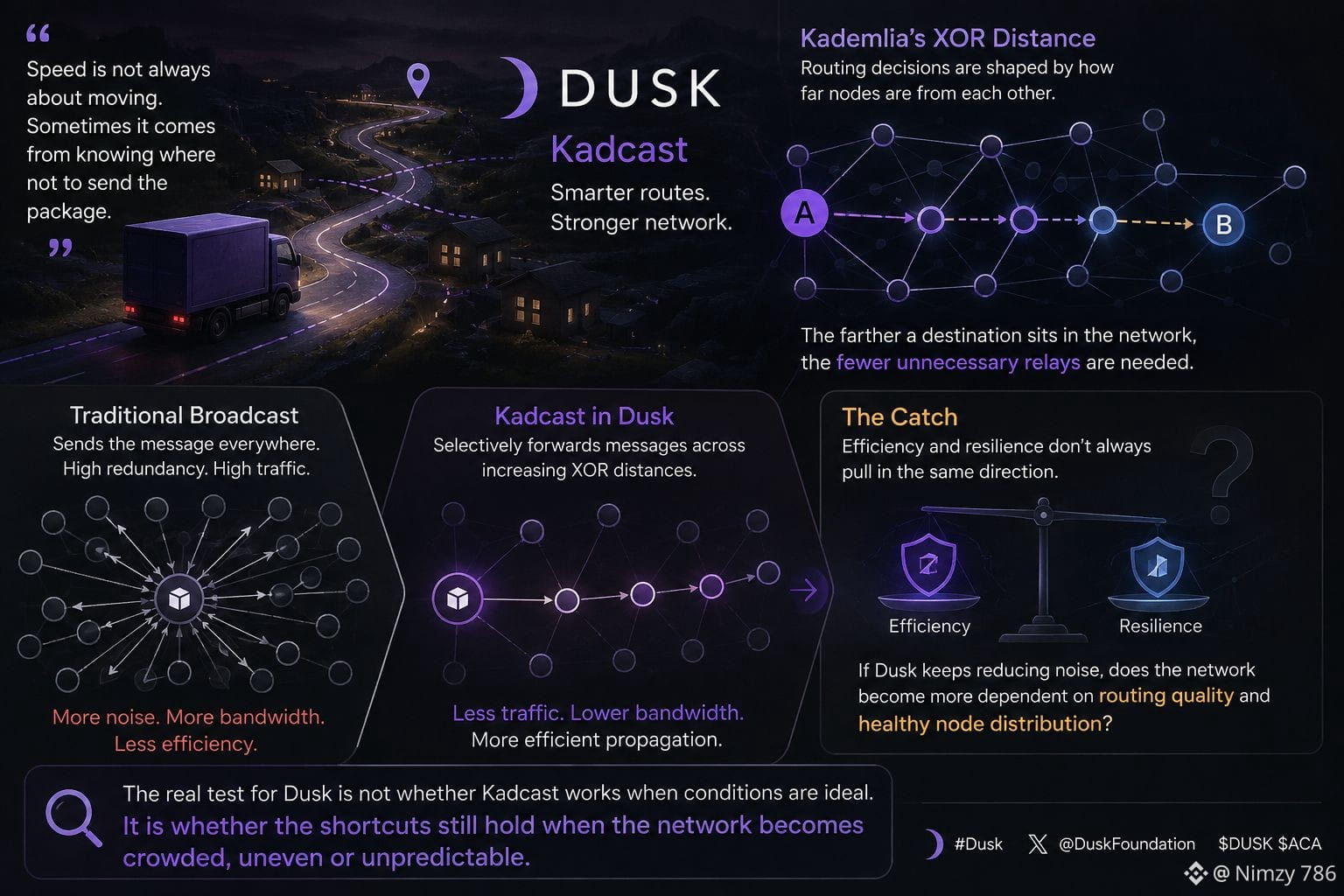
كنت أراقب كيف تتحرك الحزمة عبر شبكة التوصيل. الشيء الغريب هو أن السرعة لا تتعلق دائمًا بالتحرّك. أحيانًا تأتي السرعة من معرفة أين لا ينبغي إرسال الحزمة.
عاد ذلك الفكر إلى ذهني أثناء قراءة معلومات عن Kadcast في Dusk. يرى معظم الناس انتشار الرسائل كتفصيل من تفاصيل الشبكات. لا أعتقد أن هذا صحيح. يعتمد Dusk على مسافة Kademlias XOR، حيث تتشكل قرارات التوجيه بناءً على مدى قرب العقد من بعضها داخل شبكة Dusk. كلما كان موقع الوجهة أبعد داخل شبكة Dusk احتجنا إلى عدد أقل من عمليات الترحيل غير الضرورية في Dusk.
ما يثير اهتمامي هو الضغط الذي يخلقه ذلك تحت سطح Dusk. غالبًا ما تُعالج أساليب البث التقليدية الاعتمادية عبر إرسال الرسالة إلى كل مكان في الشبكة. يتخذ Dusk مسارًا. يقوم Kadcast في Dusk بإعادة توجيه الرسائل بشكل انتقائي عبر مسافات XOR متزايدة في Dusk، مما يقلل حركة المرور واستهلاك عرض النطاق الترددي داخل شبكة Dusk.@Dusk
المفارقة هي أن الكفاءة والمتانة لا تسيران دائمًا في اتجاه واحد في Dusk. إذا كان Dusk يستمر في تقليل الضوضاء في شبكة Dusk، فهل تصبح شبكة Dusk أكثر اعتمادًا على جودة التوجيه وتوزيع العقد السليم في Dusk؟ هذا هو الجزء الذي نادرًا ما أراه يُناقَش بخصوص Dusk.
ربما يكون الاختبار الحقيقي لـ Dusk ليس ما إذا كان Kadcast يعمل عندما تكون الظروف مثالية داخل شبكة Dusk. بل ما إذا كانت الاختصارات لا تزال قائمة عندما تصبح شبكة Dusk مزدحمة أو غير متوازنة أو غير قابلة للتنبؤ. #Dusk @Dusk $DUSK
$ACE
$XOS.US
عاد ذلك الفكر إلى ذهني أثناء قراءة معلومات عن Kadcast في Dusk. يرى معظم الناس انتشار الرسائل كتفصيل من تفاصيل الشبكات. لا أعتقد أن هذا صحيح. يعتمد Dusk على مسافة Kademlias XOR، حيث تتشكل قرارات التوجيه بناءً على مدى قرب العقد من بعضها داخل شبكة Dusk. كلما كان موقع الوجهة أبعد داخل شبكة Dusk احتجنا إلى عدد أقل من عمليات الترحيل غير الضرورية في Dusk.
ما يثير اهتمامي هو الضغط الذي يخلقه ذلك تحت سطح Dusk. غالبًا ما تُعالج أساليب البث التقليدية الاعتمادية عبر إرسال الرسالة إلى كل مكان في الشبكة. يتخذ Dusk مسارًا. يقوم Kadcast في Dusk بإعادة توجيه الرسائل بشكل انتقائي عبر مسافات XOR متزايدة في Dusk، مما يقلل حركة المرور واستهلاك عرض النطاق الترددي داخل شبكة Dusk.@Dusk
المفارقة هي أن الكفاءة والمتانة لا تسيران دائمًا في اتجاه واحد في Dusk. إذا كان Dusk يستمر في تقليل الضوضاء في شبكة Dusk، فهل تصبح شبكة Dusk أكثر اعتمادًا على جودة التوجيه وتوزيع العقد السليم في Dusk؟ هذا هو الجزء الذي نادرًا ما أراه يُناقَش بخصوص Dusk.
ربما يكون الاختبار الحقيقي لـ Dusk ليس ما إذا كان Kadcast يعمل عندما تكون الظروف مثالية داخل شبكة Dusk. بل ما إذا كانت الاختصارات لا تزال قائمة عندما تصبح شبكة Dusk مزدحمة أو غير متوازنة أو غير قابلة للتنبؤ. #Dusk @Dusk $DUSK
$ACE
$XOS.US