
لقد رأيت التمويل اللامركزي (DeFi) لسنوات وهو يعامل السيولة باعتبارها شيئًا سيظل موجودًا دائمًا عندما تكون هناك حاجة لإغلاق المركز. في معظم الأوقات تكون هذه الافتراضات ساكنة في الخلفية. ثم عندما تضرب التقلبات، يريد الجميع الخروج بالطريقة نفسها، وفجأة يصبح الضمان الذي بدا قابلًا للاستخدام تمامًا أكثر صعوبة في البيع بسعر قريب من السعر المتوقع.
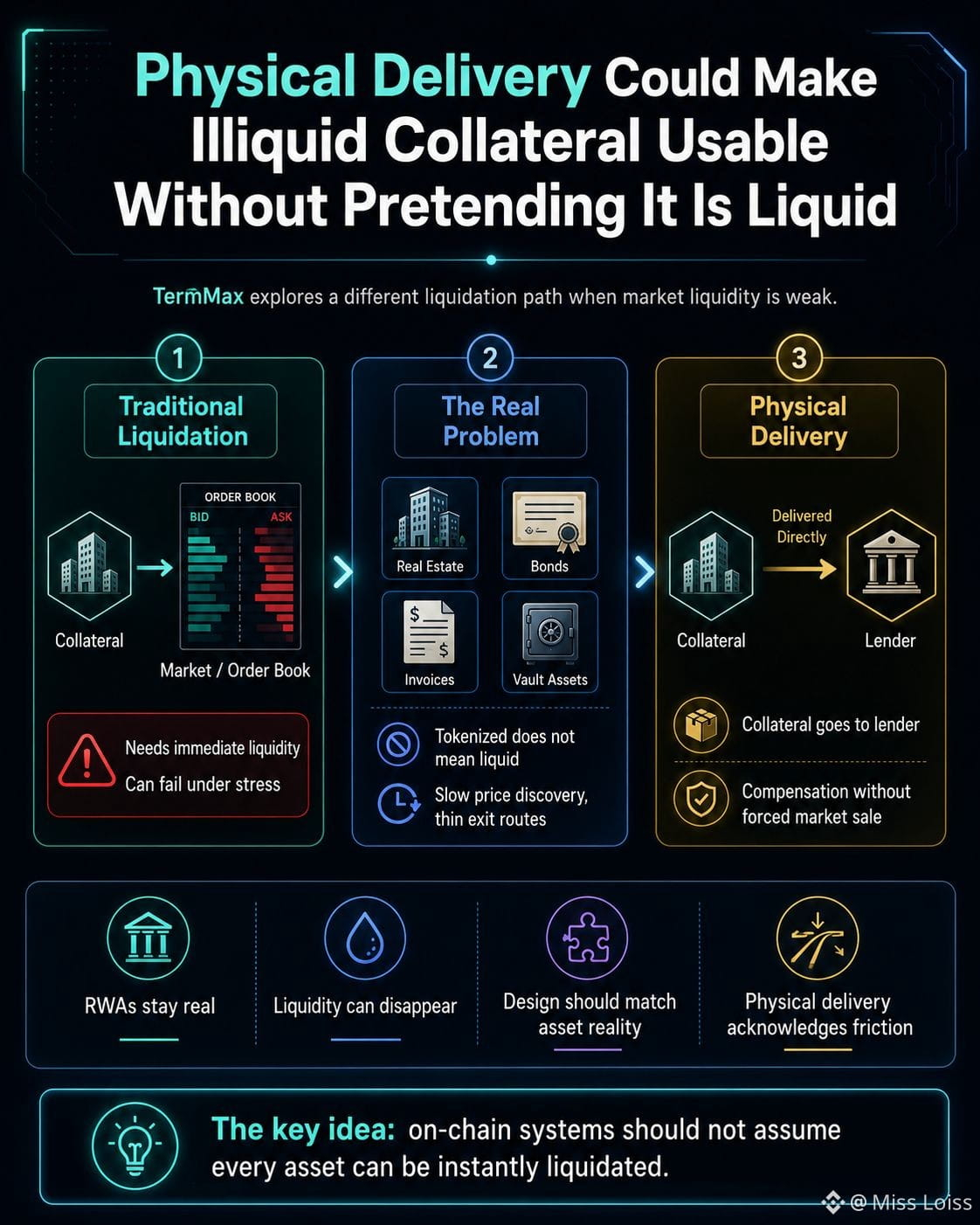
لهذا لفتت آلية التسليم المادي لدى TermMax انتباهي أكثر في البداية من جانب السعر الثابت. إذا كانت سيولة التصفية ضعيفة، يمكن للنظام تسليم الضمان مباشرة إلى المُقرضين بدلًا من التظاهر بأن البيع الفوري في السوق سيعمل دائمًا. قد يبدو الأمر أقل أناقة من التصفية الفورية، لكن ربما هذا تحديدًا ما يجعله أكثر واقعية بالنسبة للأصول الواقعية (RWAs) والأصول الأقل سيولة.
هذه هي النقطة التي أعود إليها باستمرار. الأصل غير السائل لا يصبح سائلًا لمجرد أنه تم ترميزُه. فالتعرض للعقارات أو الائتمان الخاص، أو أي ضمان آخر منخفض التداول، قد يظل لديه اكتشاف أسعار بطيء وخروج صعب. نقل ذلك إلى السلسلة لا يمحو الاحتكاك.
لست متأكدًا بعد من كيفية تقييم المُقرضين لاحتمالية استلامهم فعليًا للضمان، خصوصًا عندما تصبح الحيازة أو التقييم أو إعادة البيع في المستقبل مسؤوليتهم.
لكن على الأقل التصميم يعترف بهذا عدم التطابق بدلًا من إخفائه. ربما تكون التسليمات المادية حقًا هي الطريقة التي تجعل DeFi يعمل مع عدم السيولة دون الادعاء بأن عدم السيولة اختفى.
#termmax @TermMax $GPS
لهذا لفتت آلية التسليم المادي لدى TermMax انتباهي أكثر في البداية من جانب السعر الثابت. إذا كانت سيولة التصفية ضعيفة، يمكن للنظام تسليم الضمان مباشرة إلى المُقرضين بدلًا من التظاهر بأن البيع الفوري في السوق سيعمل دائمًا. قد يبدو الأمر أقل أناقة من التصفية الفورية، لكن ربما هذا تحديدًا ما يجعله أكثر واقعية بالنسبة للأصول الواقعية (RWAs) والأصول الأقل سيولة.
هذه هي النقطة التي أعود إليها باستمرار. الأصل غير السائل لا يصبح سائلًا لمجرد أنه تم ترميزُه. فالتعرض للعقارات أو الائتمان الخاص، أو أي ضمان آخر منخفض التداول، قد يظل لديه اكتشاف أسعار بطيء وخروج صعب. نقل ذلك إلى السلسلة لا يمحو الاحتكاك.
لست متأكدًا بعد من كيفية تقييم المُقرضين لاحتمالية استلامهم فعليًا للضمان، خصوصًا عندما تصبح الحيازة أو التقييم أو إعادة البيع في المستقبل مسؤوليتهم.
لكن على الأقل التصميم يعترف بهذا عدم التطابق بدلًا من إخفائه. ربما تكون التسليمات المادية حقًا هي الطريقة التي تجعل DeFi يعمل مع عدم السيولة دون الادعاء بأن عدم السيولة اختفى.
#termmax @TermMax $GPS