@Dusk مدفوعات المكافآت مقابل وقت الرهان خلال عمليات اعتماد تقديم النطاق: كانت مجموعة صغيرة من عناوين المُوفّرين (provisioner) نشطة لأسابيع ولكنها أظهرت مكافآت توافقية (consensus) معدومة. افترضت أن الأمر كان مجرد تأخر في لوحة المعلومات أو خللًا في الفهرسة، لأن العناوين كانت تحتفظ بالرهان بوضوح فوق الحد الأدنى.
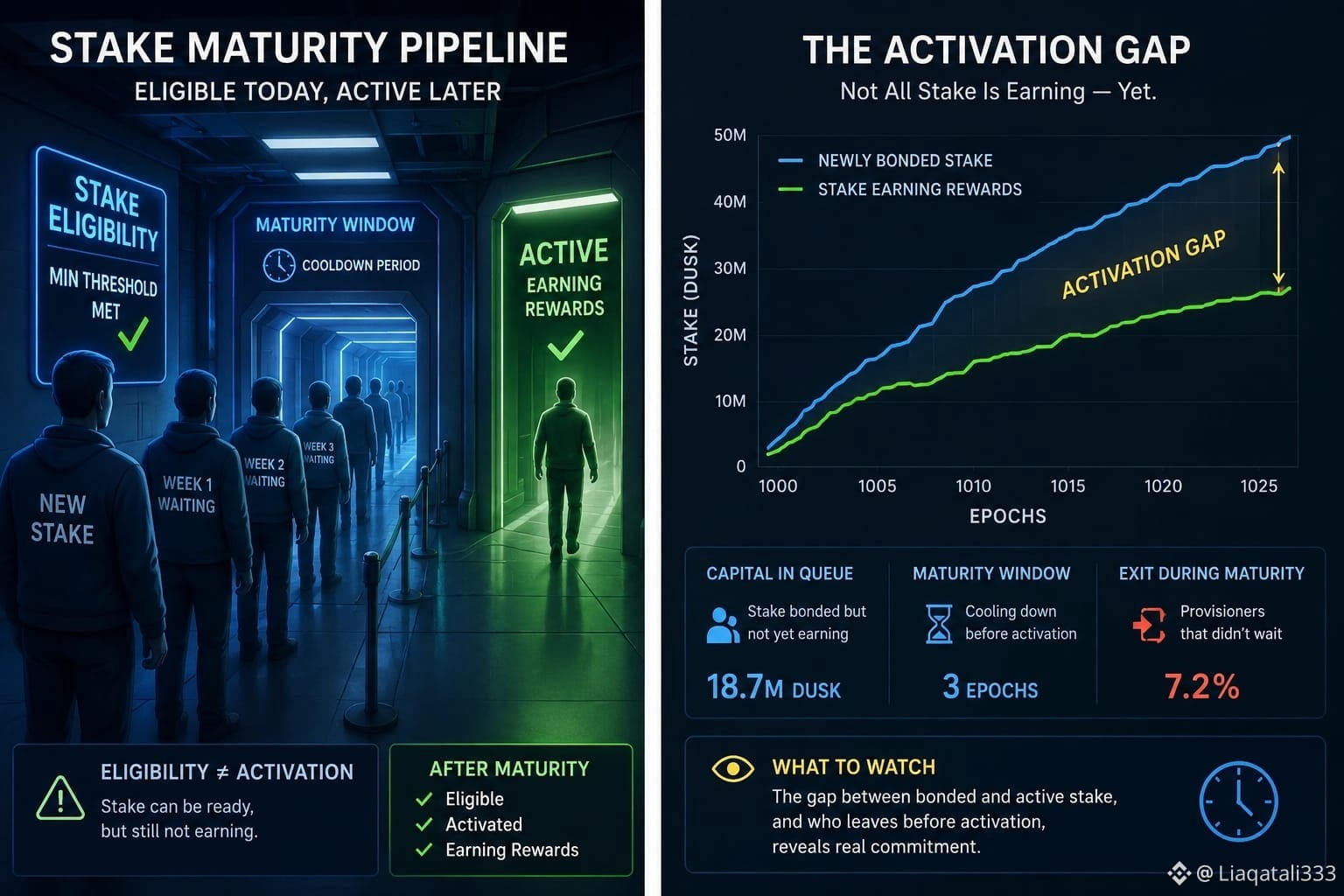
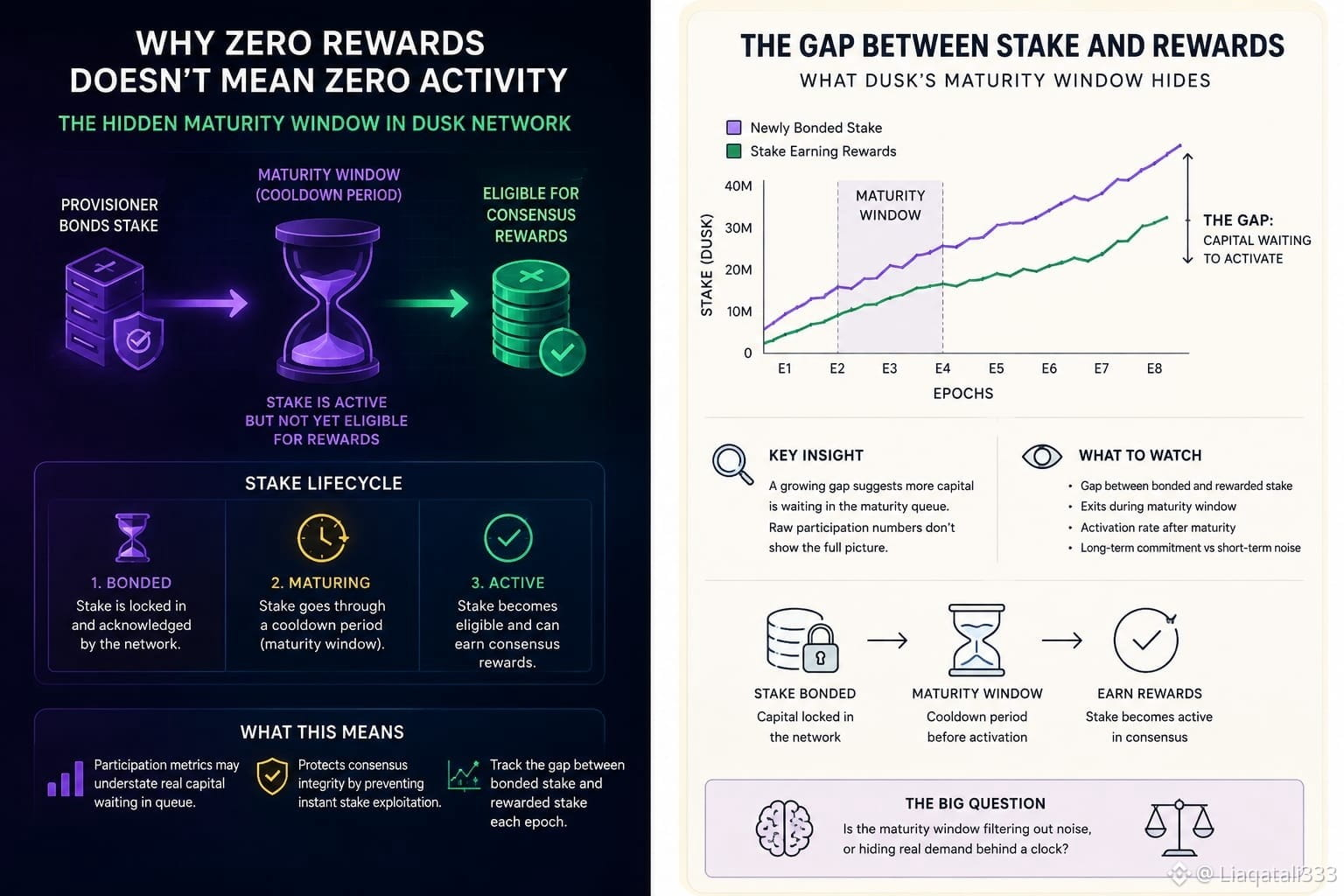
عند التعمق في منطق الحقبة (epoch) اتضح أن التأخير كان بنيويًا: يدخل الرهان الجديد فترة نضج (maturity) قبل أن يصبح مؤهلًا للمشاركة في التوافق. لم يكن هناك شيء معطّل، بل مجرد فترة تهدئة (cool down) لم أكن قد أخذتها في الحسبان. ما لفت انتباهي هو أن هذه الآلية لا تحمي التوافق فقط، بل تقوم بهدوء بفلترة من يمكنه الاستجابة لمحفزات المكافآت في الوقت الحقيقي.
وهنا فصلت بين شيئين كنت أتعامل معهما كأنهما شيء واحد: أهلية الرهان وتنشيط الرهان. الأهلية تتعلق بتحقيق الحد الأدنى وتشغيل العقدة بشكل صحيح. التنشيط يتعلّق بالتوقيت مقارنةً بنافذة النضج. يمكن أن يكون المُوفّر مؤهلًا بالكامل لكنه يظل خامدًا اقتصاديًا لفترة، وهذا يعني أن معدلات المشاركة التي نلاحظها تُقلّل من تقدير مقدار رأس المال الذي ينتظر فعليًا في قائمة الانتظار، بدل أن يكون غير موجود.
$DUSK
ما لا أستطيع حسمه بعد هو ما إذا كانت نافذة النضج تردع فعليًا المشاركين الهامشيين أو أنها فقط تؤخرهم. إذا كان رأس المال صبورًا، فإن الاحتكاك يكاد لا يهم. وإذا لم يكن الأمر كذلك، فقد تكون الشبكة تُقلّل بشكل منهجي من تمثيل الاهتمام الكامن داخل مؤشرات المشاركة الخاصة بها، ولا توجد لدي طريقة واضحة لقياس "رأس المال الذي ينتظر حتى يتم تنشيطه" مقابل "رأس المال الذي لم يظهر أبدًا."
في الفترة المقبلة سأراقب الفجوة بين الرهان المرتبط حديثًا (newly bonded stake) والرهان الذي يبدأ فعليًا في كسب المكافآت كل حقبة (epoch)، بالإضافة إلى ما إذا كان المُوفّرون الذين ينسحبون خلال نافذة النضج يفعلون ذلك بتكرار أعلى من أولئك الذين كانوا نشطين بالفعل. تبدو هذه النسبة مؤشرًا أفضل على الالتزام من النمو الخام في الرهان.
ما زلت لا أعرف إن كان هذا التأخير يفلتر الضجيج فقط أم أنه يخفي الطلب الحقيقي خلف ساعة. وعلى أي حال، فقد غيّر ذلك طريقة شكوكي في أرقام المشاركة التي لا تحدد أي جانب من جانبَي التنشيط يتم احتسابه.#dusk
$PORTAL
$VELVET
عند التعمق في منطق الحقبة (epoch) اتضح أن التأخير كان بنيويًا: يدخل الرهان الجديد فترة نضج (maturity) قبل أن يصبح مؤهلًا للمشاركة في التوافق. لم يكن هناك شيء معطّل، بل مجرد فترة تهدئة (cool down) لم أكن قد أخذتها في الحسبان. ما لفت انتباهي هو أن هذه الآلية لا تحمي التوافق فقط، بل تقوم بهدوء بفلترة من يمكنه الاستجابة لمحفزات المكافآت في الوقت الحقيقي.
وهنا فصلت بين شيئين كنت أتعامل معهما كأنهما شيء واحد: أهلية الرهان وتنشيط الرهان. الأهلية تتعلق بتحقيق الحد الأدنى وتشغيل العقدة بشكل صحيح. التنشيط يتعلّق بالتوقيت مقارنةً بنافذة النضج. يمكن أن يكون المُوفّر مؤهلًا بالكامل لكنه يظل خامدًا اقتصاديًا لفترة، وهذا يعني أن معدلات المشاركة التي نلاحظها تُقلّل من تقدير مقدار رأس المال الذي ينتظر فعليًا في قائمة الانتظار، بدل أن يكون غير موجود.
$DUSK
ما لا أستطيع حسمه بعد هو ما إذا كانت نافذة النضج تردع فعليًا المشاركين الهامشيين أو أنها فقط تؤخرهم. إذا كان رأس المال صبورًا، فإن الاحتكاك يكاد لا يهم. وإذا لم يكن الأمر كذلك، فقد تكون الشبكة تُقلّل بشكل منهجي من تمثيل الاهتمام الكامن داخل مؤشرات المشاركة الخاصة بها، ولا توجد لدي طريقة واضحة لقياس "رأس المال الذي ينتظر حتى يتم تنشيطه" مقابل "رأس المال الذي لم يظهر أبدًا."
في الفترة المقبلة سأراقب الفجوة بين الرهان المرتبط حديثًا (newly bonded stake) والرهان الذي يبدأ فعليًا في كسب المكافآت كل حقبة (epoch)، بالإضافة إلى ما إذا كان المُوفّرون الذين ينسحبون خلال نافذة النضج يفعلون ذلك بتكرار أعلى من أولئك الذين كانوا نشطين بالفعل. تبدو هذه النسبة مؤشرًا أفضل على الالتزام من النمو الخام في الرهان.
ما زلت لا أعرف إن كان هذا التأخير يفلتر الضجيج فقط أم أنه يخفي الطلب الحقيقي خلف ساعة. وعلى أي حال، فقد غيّر ذلك طريقة شكوكي في أرقام المشاركة التي لا تحدد أي جانب من جانبَي التنشيط يتم احتسابه.#dusk
$PORTAL
$VELVET