
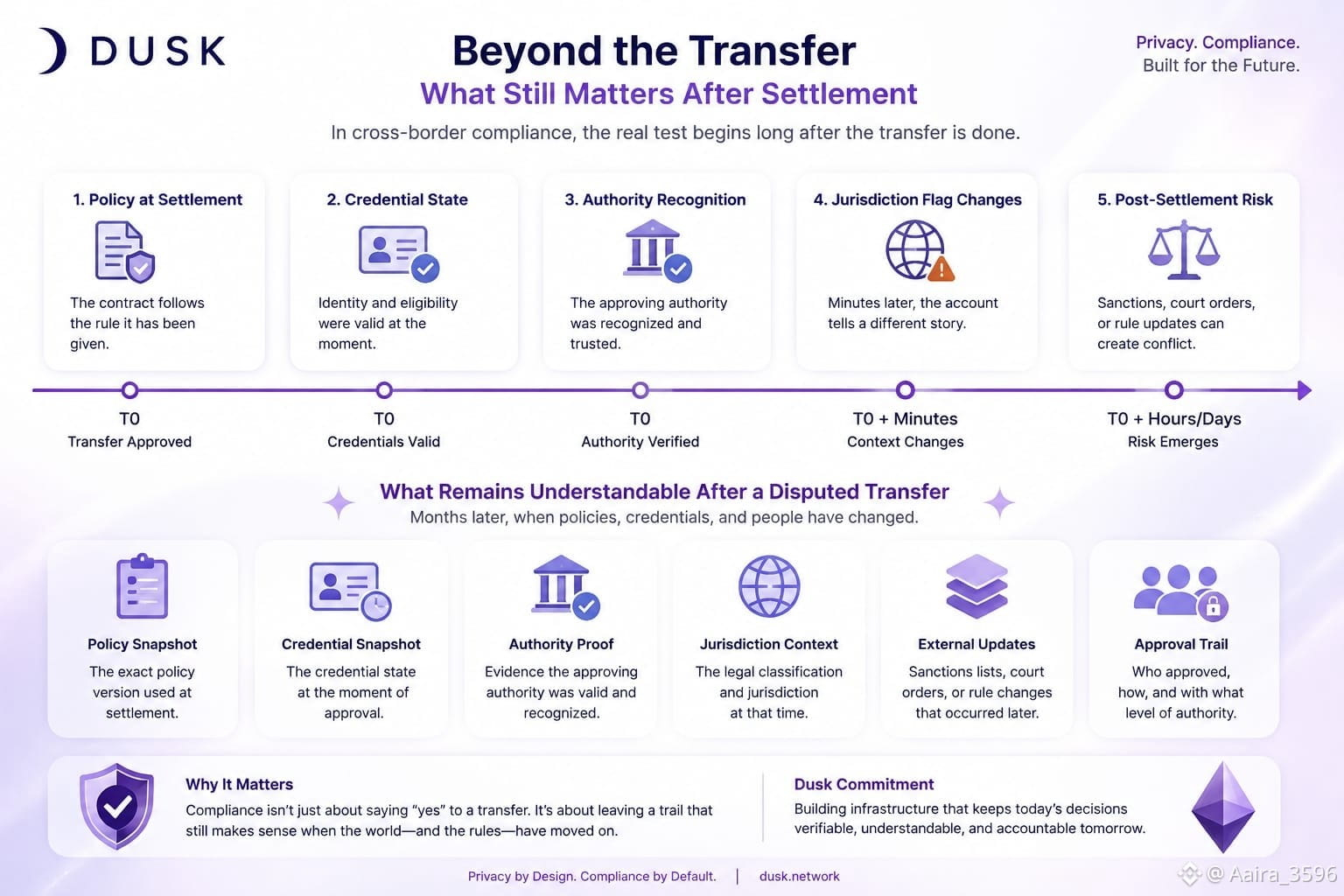
#dusk $DUSK @Dusk I noticed the jurisdiction flag after the transfer had settled. It had changed only minutes later, so the approval was technically correct, but the account now told a different story. Anyone reviewing it next month could easily wonder why the asset had been allowed through. My first thought was that Dusk only needed to retain the policy used at settlement. Then I realized that would not be enough. The reviewer would also need the credential state from that moment and some evidence that the approving authority was still recognized. Maybe more. This is where cross-border compliance starts slipping out of a neat contract model. One country may treat the asset as a security while another treats it as a contractual claim, and those classifications can change without the token moving at all. The contract follows the rule it has been given. It does not know whether that rule still makes legal sense. A sanctions update arriving after settlement makes the gap harder to ignore. A court could demand a freeze while the issuer is already processing redemption somewhere else. Letting one operator override the asset would be fast, but I would not be comfortable with that power sitting quietly in the background. Requiring several approvals feels safer until the response is urgent. I’m less interested in seeing another clean transfer now. I want to see what remains understandable after a disputed one—months later, after the policies, credentials, and people responsible have changed.

نشر
إخلاء مسؤولية: يتضمن آراء جهات خارجية. لا تُعدّ نصيحة. يُمكن استخدام Binance AI دون أي ضمان. اطلع على الشروط والأحكام.