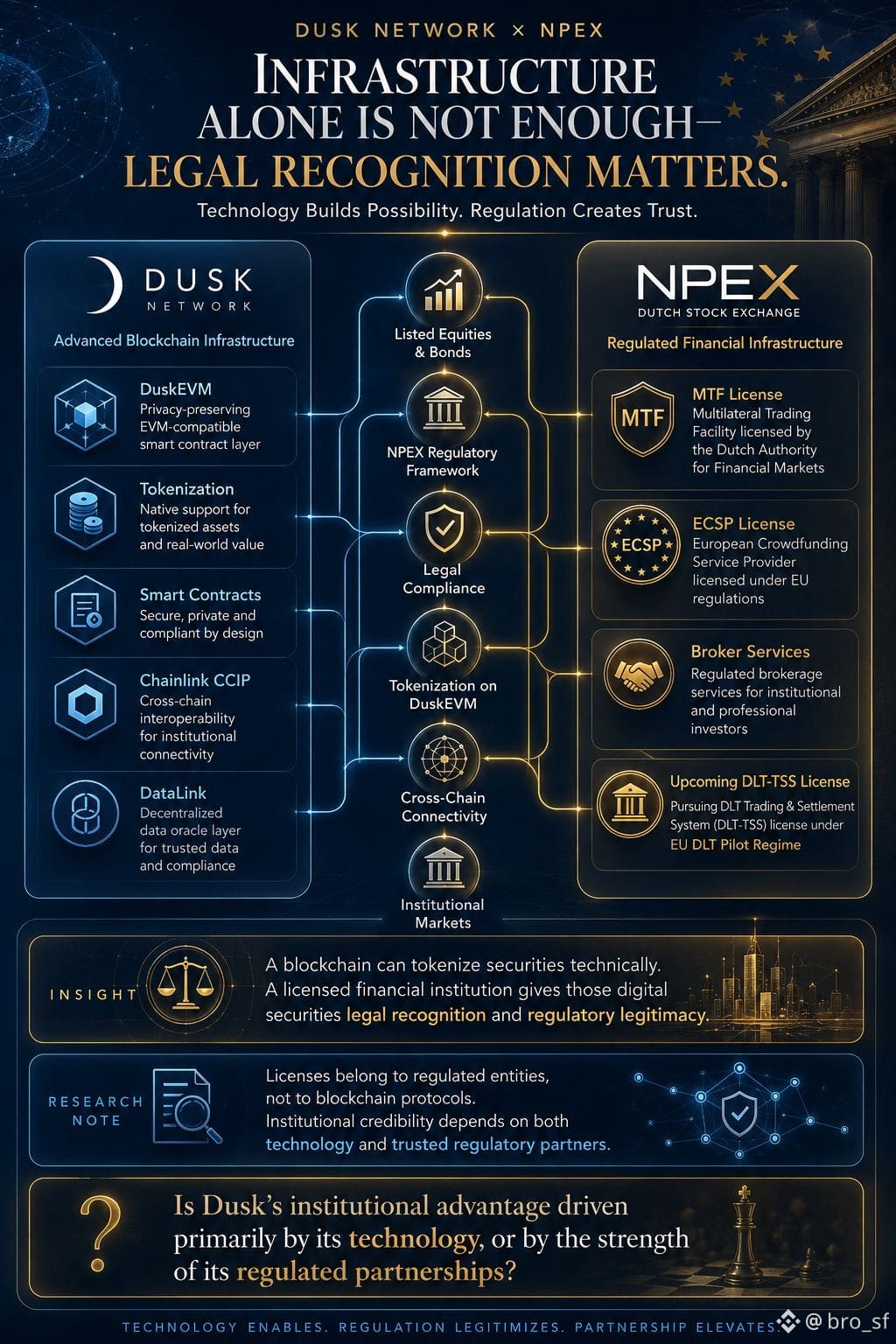
#dusk $DUSK @Dusk NPEX هي بورصة أوراق مالية هولندية، تأسست في عام 2008، وتحمل ترخيص منشأة تداول متعددة الأطراف (MTF) وترخيص مزود خدمات التمويل الجماعي الأوروبي (ECSP) من هيئة AFM. شخصيات عامة استشهد بها Dusk وNPEX تضع التمويل المُيسَّر لديها بما يزيد عن 196–200 مليون يورو عبر 100+ شركة صغيرة ومتوسطة، مع أكثر من 17,500 مستثمر نشط. تعاقد Dusk وNPEX على نقل الأسهم والسندات المُدرجة إلى السلسلة (on-chain)، وتقومان بدمج Chainlink CCIP لتحقيق قابلية التشغيل البيني عبر السلاسل للأصول المُمثَّلة كرموز (tokenized) المُصدَرة على DuskEVM، كما تتبنيان Chainlink DataLink لإحضار بيانات بورصة NPEX إلى السلسلة. يصف Dusk الشراكة بأنها تمنح البروتوكول إمكانية الوصول إلى "مجموعة كاملة من التراخيص المالية" عبر NPEX — MTF وBroker وECSP، وترخيص DLT-TSS قادم بموجب نظام تجريبي خاص بالـ DLT في الاتحاد الأوروبي — مع تشغيل NPEX dApp مُصمَّم بشكل مشترك على DuskEVM بوصفه الواجهة الأمامية.
الميزة التي تستحق الإشارة إليها هي الفرق بين البنية التحتية والمركز القانوني. يمكن لبلوك تشين من الناحية التقنية أن يمثّل سندًا أو حصة ETF كرمز دون أن يحمل ذلك الرمز أي اعتراف تنظيمي — فهو مجرد بيانات ما لم تقف خلف الإصدار والحفظ والتداول جهة مُرخَّصة. ما تقدمه NPEX ليس وظائف العقود الذكية فحسب؛ بل هو هيكل الترخيص الذي يجعل تمثيل الأمان على السلسلة (on-chain) ذا معنى قانونيًا داخل الاتحاد الأوروبي، إضافة إلى سجل تشغيلي يمنح العلاقة مضمونًا فعليًا. تُعد تفاصيل نظام تجريبي الـ DLT Pilot Regime مهمة تحديدًا لأن آلية الاتحاد الأوروبي هذه تُمكّن جهة مثل NPEX (بوصفها MTF) أيضًا من تحمل مسؤوليات ما بعد التداول (post-trade settlement) التي تُعالج عادةً بواسطة مُودع مركزي للأوراق المالية — وهي بالضبط الجزء من المنظومة الذي تتوافر البلوك تشين في موضع مثالي لاستبداله.
يكون الترخيص مرتبطًا بالجهة المُرخَّصة، وليس بالبروتوكول. إذا كان السرد المؤسسي لـ Dusk يميل بشدة إلى علاقة NPEX، فإن شرعية Dusk المؤسسية تكون جزئيًا دالة على المركز التنظيمي لجهة تبادل واحدة واستمرار التزامها ببناء ما على Dusk. إلى أي مدى تُعد "الامتثال المدمج حسب التصميم" خاصية على مستوى البروتوكول، مقابل كونها خاصية لهذه الشراكة تحديدًا؟
الميزة التي تستحق الإشارة إليها هي الفرق بين البنية التحتية والمركز القانوني. يمكن لبلوك تشين من الناحية التقنية أن يمثّل سندًا أو حصة ETF كرمز دون أن يحمل ذلك الرمز أي اعتراف تنظيمي — فهو مجرد بيانات ما لم تقف خلف الإصدار والحفظ والتداول جهة مُرخَّصة. ما تقدمه NPEX ليس وظائف العقود الذكية فحسب؛ بل هو هيكل الترخيص الذي يجعل تمثيل الأمان على السلسلة (on-chain) ذا معنى قانونيًا داخل الاتحاد الأوروبي، إضافة إلى سجل تشغيلي يمنح العلاقة مضمونًا فعليًا. تُعد تفاصيل نظام تجريبي الـ DLT Pilot Regime مهمة تحديدًا لأن آلية الاتحاد الأوروبي هذه تُمكّن جهة مثل NPEX (بوصفها MTF) أيضًا من تحمل مسؤوليات ما بعد التداول (post-trade settlement) التي تُعالج عادةً بواسطة مُودع مركزي للأوراق المالية — وهي بالضبط الجزء من المنظومة الذي تتوافر البلوك تشين في موضع مثالي لاستبداله.
يكون الترخيص مرتبطًا بالجهة المُرخَّصة، وليس بالبروتوكول. إذا كان السرد المؤسسي لـ Dusk يميل بشدة إلى علاقة NPEX، فإن شرعية Dusk المؤسسية تكون جزئيًا دالة على المركز التنظيمي لجهة تبادل واحدة واستمرار التزامها ببناء ما على Dusk. إلى أي مدى تُعد "الامتثال المدمج حسب التصميم" خاصية على مستوى البروتوكول، مقابل كونها خاصية لهذه الشراكة تحديدًا؟