@Dusk : بصراحة، في البداية ظننت أن وضع الأصول في العالم الحقيقي على بلوك تشين هو بالفعل معظم العمل. لكن كلما نظرت أكثر إلى كيفية تعامل Dusk مع هذا الأمر، شعرت أن ذلك ليس سوى نقطة البداية.
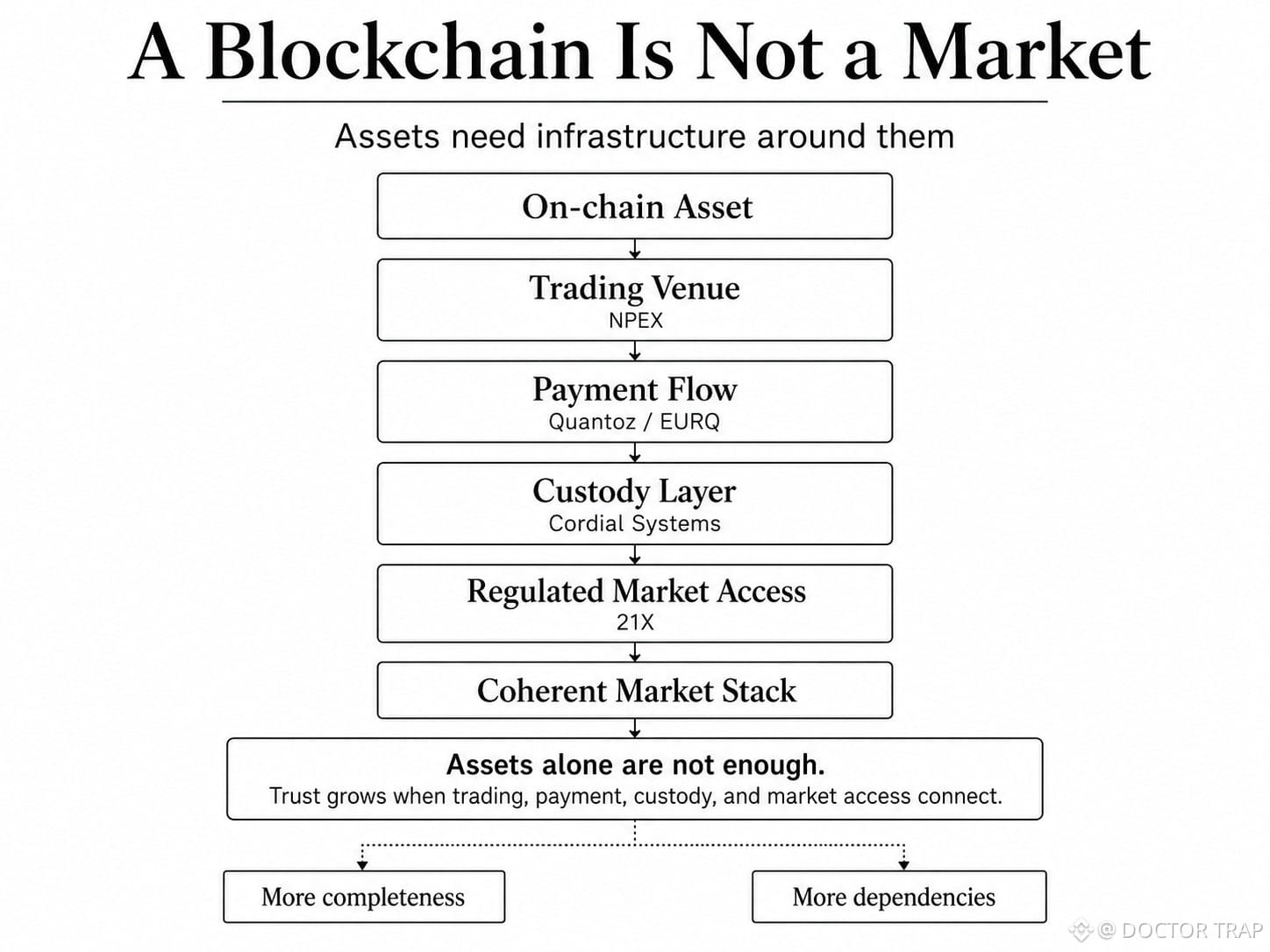
لأن الأصل يمكن أن يكون موجودًا على السلسلة ومع ذلك يظل داخل سوق غير مكتمل. فما يزال يحتاج إلى مكان للتداول، وطريقة لتحرك الأموال، وحلّ الحفظ المناسب، واتصال بالبنية التحتية للأسواق المنظمة. وبدون هذه الأجزاء، فإن وضع الأصل على السلسلة يحل جزءًا واحدًا فقط من المشكلة. وهذا ما غيّر طريقة نظري إلى شراكات Dusk. بدلًا من النظر إلى NPEX وQuantoz وCordial Systems و21X كإعلانات منفصلة. بدأت أراها كأجزاء مختلفة من نفس مكدس السوق.
يقدّم NPEX بنية تحتية لمنصة منظمة للتداول. ويقدّم Quantoz بنية تحتية للـ stablecoin المُنظَّمة حول EURQ وتدفقات الدفع على السلسلة. وتساهم Cordial Systems في بنية تحتية للحفظ المؤسسي. ويضيف 21X اتصالًا إضافيًا ببنية تحتية للأسواق الرقمية المنظمة.
عندما تُجمع الصورة معًا، يتغير الأمر.
يبدأ التداول والمدفوعات والحفظ وإتاحة الوصول إلى السوق في الظهور بشكل أقل كخدمات معزولة وأكثر كأجزاء من مسار مالي واحد. وبالنسبة للمؤسسة، فهذا مهم. فالسلسلة التي تحتها مهمة، لكن كذلك ما يحدث قبل وأثناء وبعد الصفقة.
قد يجعل ذلك النظام البيئي أسهل للتقييم بوصفه بنية تحتية فعلية للسوق، بدلًا من كونه مجرد مكان توجد فيه الأصول المُمَثّلة كرموز.
أعتقد مع ذلك أن هناك مفاضلة. فكل شريك يمكنه أن يملأ جزءًا ناقصًا، لكن كل شريك يضيف أيضًا تبعية إضافية، ونقطة تكامل أخرى، ومكانًا آخر يجب أن تعمل فيه عملية التنفيذ.
لذلك ربما لا تكون القلعة الأكثر صعوبة هي السلسلة نفسها فحسب. ربما تكون هو المكدس الذي بُني حولها.
هل مَوْت RWA الحقيقي هو بلوك تشين أم البنية التحتية المالية التي تم تجميعها حولها؟
@Dusk $DUSK #dusk
لأن الأصل يمكن أن يكون موجودًا على السلسلة ومع ذلك يظل داخل سوق غير مكتمل. فما يزال يحتاج إلى مكان للتداول، وطريقة لتحرك الأموال، وحلّ الحفظ المناسب، واتصال بالبنية التحتية للأسواق المنظمة. وبدون هذه الأجزاء، فإن وضع الأصل على السلسلة يحل جزءًا واحدًا فقط من المشكلة. وهذا ما غيّر طريقة نظري إلى شراكات Dusk. بدلًا من النظر إلى NPEX وQuantoz وCordial Systems و21X كإعلانات منفصلة. بدأت أراها كأجزاء مختلفة من نفس مكدس السوق.
يقدّم NPEX بنية تحتية لمنصة منظمة للتداول. ويقدّم Quantoz بنية تحتية للـ stablecoin المُنظَّمة حول EURQ وتدفقات الدفع على السلسلة. وتساهم Cordial Systems في بنية تحتية للحفظ المؤسسي. ويضيف 21X اتصالًا إضافيًا ببنية تحتية للأسواق الرقمية المنظمة.
عندما تُجمع الصورة معًا، يتغير الأمر.
يبدأ التداول والمدفوعات والحفظ وإتاحة الوصول إلى السوق في الظهور بشكل أقل كخدمات معزولة وأكثر كأجزاء من مسار مالي واحد. وبالنسبة للمؤسسة، فهذا مهم. فالسلسلة التي تحتها مهمة، لكن كذلك ما يحدث قبل وأثناء وبعد الصفقة.
قد يجعل ذلك النظام البيئي أسهل للتقييم بوصفه بنية تحتية فعلية للسوق، بدلًا من كونه مجرد مكان توجد فيه الأصول المُمَثّلة كرموز.
أعتقد مع ذلك أن هناك مفاضلة. فكل شريك يمكنه أن يملأ جزءًا ناقصًا، لكن كل شريك يضيف أيضًا تبعية إضافية، ونقطة تكامل أخرى، ومكانًا آخر يجب أن تعمل فيه عملية التنفيذ.
لذلك ربما لا تكون القلعة الأكثر صعوبة هي السلسلة نفسها فحسب. ربما تكون هو المكدس الذي بُني حولها.
هل مَوْت RWA الحقيقي هو بلوك تشين أم البنية التحتية المالية التي تم تجميعها حولها؟
@Dusk $DUSK #dusk