
جلب دورة الحياة المالية إلى السلسلة
إن وضع أصل مالي على بلوكتشين هو جزء واحد فقط من القصة.
بالنسبة للتمويل المنظّم، يتمثل التحدي الحقيقي في كل ما يحدث قبل إصدار الأصل وبعده.
يجب إنشاء الأصل وإدارته. يحتاج المستثمرون إلى استقطابهم وإجراء التحقق من أهلّيتهم. قد يلزم فرض قيود على عمليات التحويل. تتطلب عملية التداول تنسيقًا بين المشاركين. يجب أن تتم المدفوعات وتسليم الأصل بشكل صحيح. وبعد ذلك، ما زالت تقارير وإفصاحات وإجراءات الشركات تتطلب إدارة.
إذا ظلت هذه العمليات مجزأة عبر أنظمة مختلفة، فقد تكون فوائد وضع أصل على السلسلة محدودة.
هنا تتبنّى @Dusk نهجًا أوسع.
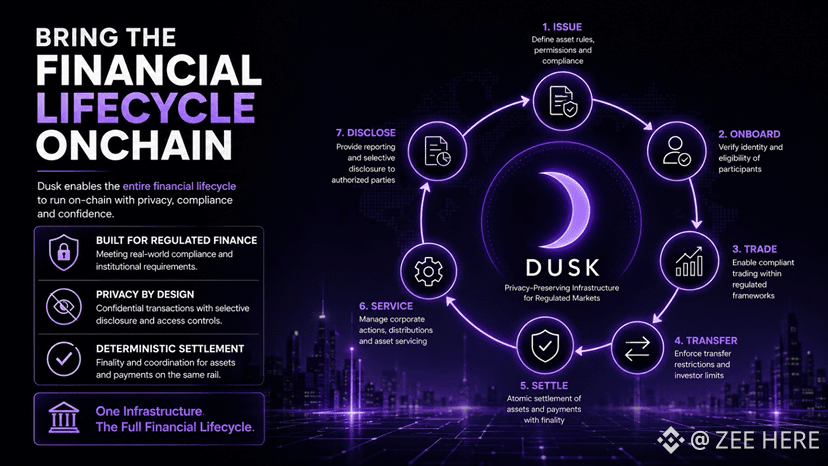
تم تصميم Dusk انطلاقًا من فكرة إحضار دورة الحياة المالية نفسها إلى بنية تحتية مشتركة على السلسلة، وليس مجرد تمثيل أصل قائم كرمز.
يمكن لعملية عمل منظّمة أن تبدأ بالإصدار، حيث يتم تحديد قواعد الأصل ومتطلبات الأهلية.
ومن هناك، يمكن ربط استقطاب المستثمرين وإتاحة الوصول إلى المحافظ بالهوية والتحقق من الأهلية. تساعد ضوابط التحويل على ضمان أن المشاركين المصرح لهم فقط يمكنهم الاحتفاظ بالأصل أو نقله.
بعد ذلك، يمكن أن يحدث التداول ضمن بيئة يمكن فيها للأصل وأذونات المشاركين ومتطلبات التسوية أن تنسق حول البنية التحتية نفسها.
تعدّ التسوية جزءًا مهمًا آخر. تم بناء Dusk بهدف تحقيق حتمية نهائية، ويدعم التنسيق بين جزء تسليم الأصل وجزء الدفع، ما يساعد على تقليل حالة التجزئة القائمة عندما تعتمد أجزاء مختلفة من المعاملة على أنظمة منفصلة.
النتيجة هي رؤية مختلفة لتمويل مُرمّز:
إصدار → استقطاب → تداول → تحويل → تسوية → خدمة → إفصاح
كل ذلك مترابط عبر بنية تحتية مصممة للأسواق المنظّمة.
هذه هي الفرصة الأكبر الكامنة وراء جلب التمويل إلى السلسلة.
ليس الأمر ببساطة هو وضع الأصول على بلوكتشين.
بل هو جعل دورة الحياة المالية بأكملها قابلة للبرمجة، ومُنسّقة، وقابلة للتحقق.
#dusk $DUSK @Dusk
إن وضع أصل مالي على بلوكتشين هو جزء واحد فقط من القصة.
بالنسبة للتمويل المنظّم، يتمثل التحدي الحقيقي في كل ما يحدث قبل إصدار الأصل وبعده.
يجب إنشاء الأصل وإدارته. يحتاج المستثمرون إلى استقطابهم وإجراء التحقق من أهلّيتهم. قد يلزم فرض قيود على عمليات التحويل. تتطلب عملية التداول تنسيقًا بين المشاركين. يجب أن تتم المدفوعات وتسليم الأصل بشكل صحيح. وبعد ذلك، ما زالت تقارير وإفصاحات وإجراءات الشركات تتطلب إدارة.
إذا ظلت هذه العمليات مجزأة عبر أنظمة مختلفة، فقد تكون فوائد وضع أصل على السلسلة محدودة.
هنا تتبنّى @Dusk نهجًا أوسع.
تم تصميم Dusk انطلاقًا من فكرة إحضار دورة الحياة المالية نفسها إلى بنية تحتية مشتركة على السلسلة، وليس مجرد تمثيل أصل قائم كرمز.
يمكن لعملية عمل منظّمة أن تبدأ بالإصدار، حيث يتم تحديد قواعد الأصل ومتطلبات الأهلية.
ومن هناك، يمكن ربط استقطاب المستثمرين وإتاحة الوصول إلى المحافظ بالهوية والتحقق من الأهلية. تساعد ضوابط التحويل على ضمان أن المشاركين المصرح لهم فقط يمكنهم الاحتفاظ بالأصل أو نقله.
بعد ذلك، يمكن أن يحدث التداول ضمن بيئة يمكن فيها للأصل وأذونات المشاركين ومتطلبات التسوية أن تنسق حول البنية التحتية نفسها.
تعدّ التسوية جزءًا مهمًا آخر. تم بناء Dusk بهدف تحقيق حتمية نهائية، ويدعم التنسيق بين جزء تسليم الأصل وجزء الدفع، ما يساعد على تقليل حالة التجزئة القائمة عندما تعتمد أجزاء مختلفة من المعاملة على أنظمة منفصلة.
النتيجة هي رؤية مختلفة لتمويل مُرمّز:
إصدار → استقطاب → تداول → تحويل → تسوية → خدمة → إفصاح
كل ذلك مترابط عبر بنية تحتية مصممة للأسواق المنظّمة.
هذه هي الفرصة الأكبر الكامنة وراء جلب التمويل إلى السلسلة.
ليس الأمر ببساطة هو وضع الأصول على بلوكتشين.
بل هو جعل دورة الحياة المالية بأكملها قابلة للبرمجة، ومُنسّقة، وقابلة للتحقق.
#dusk $DUSK @Dusk