بعد عدد كافٍ من دورات العملات المشفرة، تعلمت أن الجزء الأصعب نادرًا ما يكون اختراع التكنولوجيا. بل هو جعلها تصمد عند الاحتكاك بالمؤسسات والجهات التنظيمية والمستخدمين، وبالاحتكاك المفقود من ورقة بيضاء.
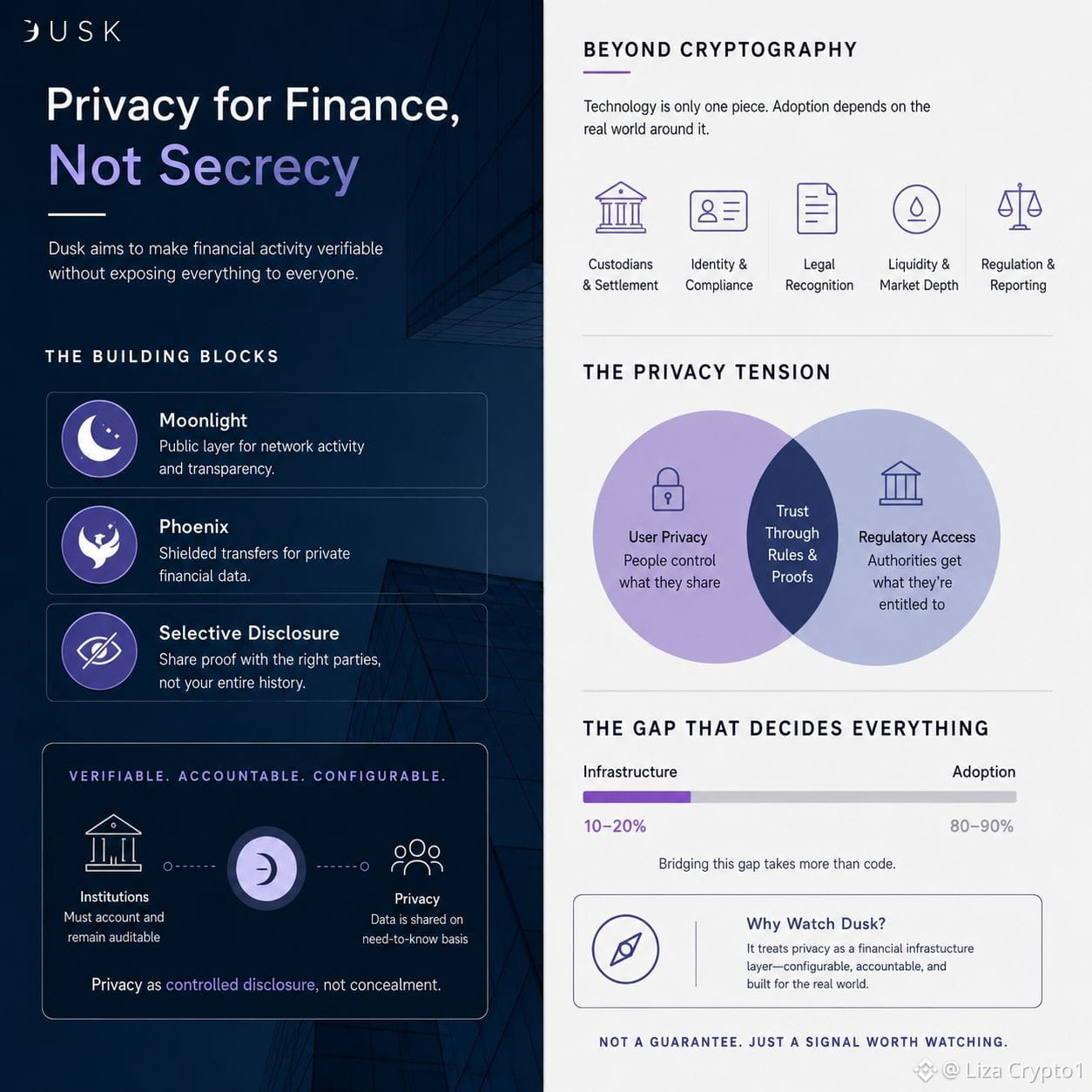
وهذا ما أفكر فيه باستمرار مع Dusk. فطبقة خصوصية موجهة للتمويل تبدو منطقية عندما لا تزال سلاسل الكتل العامة تُربك الناس بين الشفافية وبين كشف كل شيء للجميع. العقود الذكية السرّية ومعيار XSC يشيران إلى فكرة مفيدة: يمكن للأصول أن تظل قابلة للتحقق دون أن تصبح كل أرصدة وهوية ومعاملة مكشوفة للعامة.
ومع ذلك، لست مقتنعًا تمامًا بأن المشكلة الصعبة هي أمرٌ تشفيرا بحتًا. التمويل المُنظّم يعتمد على الأمناء/وسطاء الحفظ، والتحقق من الهوية، والاعتراف القانوني، والسيولة، والإبلاغ، وقبول الناس لطبقة تسوية. الخصوصية تُدخل توتّرًا خاصًا بها. يجب أن يقرر شخص ما من يمكنه رؤية ماذا، وتحت أي ظروف، وما هي القواعد التي تنطبق عندما تختلف الولايات القضائية. قد تحل السرية القابلة للتكوين مشكلةً واحدة، بينما تعيد بناء البوابات (gatekeepers) التي كانت التشفيرات تدّعي سابقًا أنها قادرة على إزالتها.
لقد رأيت شبكاتٍ راقية تنتظر سنوات حتى يلحق بها العالم من حولها. وبعضها لا يمنح المستخدمين سببًا للاهتمام. قد تواجه Dusk الصمت نفسه. لكن التعامل مع الخصوصية باعتبارها إفصاحًا مُتحكَّمًا فيه، لا باعتبارها سريةً مطلقة، يبدو مختلفًا. ما زلت حذرًا لأن الفجوة بين البنية التحتية والتبنّي هائلة. لكن هذه واحدة من تلك الأفكار التي أفضّل مراقبتها بهدوء بدل رفضها مبكرًا.
#dusk $DUSK @Dusk
وهذا ما أفكر فيه باستمرار مع Dusk. فطبقة خصوصية موجهة للتمويل تبدو منطقية عندما لا تزال سلاسل الكتل العامة تُربك الناس بين الشفافية وبين كشف كل شيء للجميع. العقود الذكية السرّية ومعيار XSC يشيران إلى فكرة مفيدة: يمكن للأصول أن تظل قابلة للتحقق دون أن تصبح كل أرصدة وهوية ومعاملة مكشوفة للعامة.
ومع ذلك، لست مقتنعًا تمامًا بأن المشكلة الصعبة هي أمرٌ تشفيرا بحتًا. التمويل المُنظّم يعتمد على الأمناء/وسطاء الحفظ، والتحقق من الهوية، والاعتراف القانوني، والسيولة، والإبلاغ، وقبول الناس لطبقة تسوية. الخصوصية تُدخل توتّرًا خاصًا بها. يجب أن يقرر شخص ما من يمكنه رؤية ماذا، وتحت أي ظروف، وما هي القواعد التي تنطبق عندما تختلف الولايات القضائية. قد تحل السرية القابلة للتكوين مشكلةً واحدة، بينما تعيد بناء البوابات (gatekeepers) التي كانت التشفيرات تدّعي سابقًا أنها قادرة على إزالتها.
لقد رأيت شبكاتٍ راقية تنتظر سنوات حتى يلحق بها العالم من حولها. وبعضها لا يمنح المستخدمين سببًا للاهتمام. قد تواجه Dusk الصمت نفسه. لكن التعامل مع الخصوصية باعتبارها إفصاحًا مُتحكَّمًا فيه، لا باعتبارها سريةً مطلقة، يبدو مختلفًا. ما زلت حذرًا لأن الفجوة بين البنية التحتية والتبنّي هائلة. لكن هذه واحدة من تلك الأفكار التي أفضّل مراقبتها بهدوء بدل رفضها مبكرًا.
#dusk $DUSK @Dusk