
#cardanosplitsdijkstraupgradeintotwophases
أعاد كاردانو رسم خريطته — والتوقيت يحكي قصة
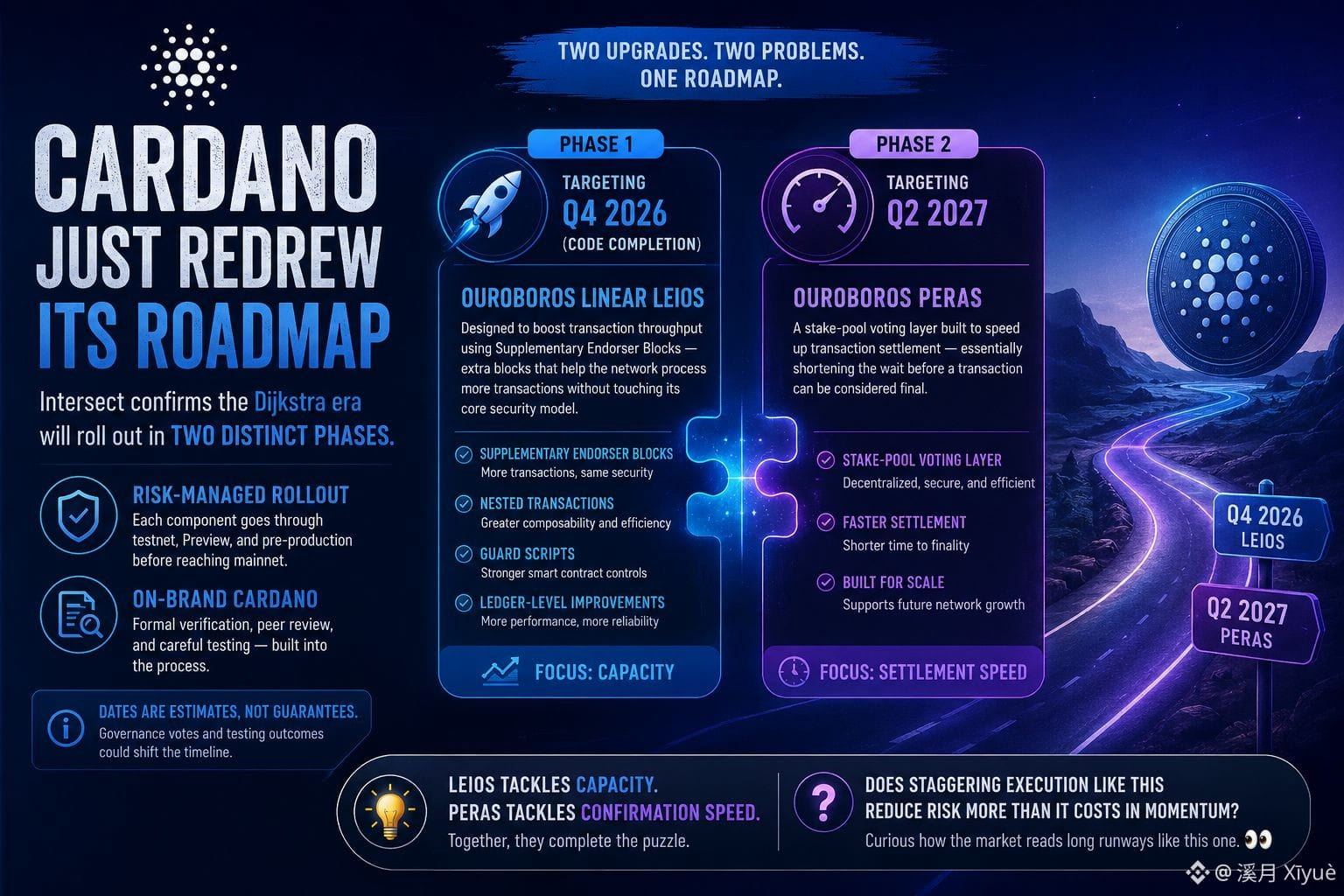
تأتي التحديثات البروتوكولية الكبيرة عادةً على دفعة واحدة نادرة، وخطوة كاردانو القادمة ليست استثناءً. أكّدت Intersect، وهي المنظمة التي تنسّق تطوير كاردانو الأساسي، أن حقبة ديكسترا (Dijkstra) القادمة ستُطرح على مرحلتين منفصلتين بدلًا من شوكة توافقية واحدة شاملة.
التفصيل:
📍 المرحلة 1 — تستهدف الربع الرابع من 2026 (إكمال الكود)
تقدّم Ouroboros Linear Leios، المصمّم لرفع إنتاجية المعاملات عبر Supplementary Endorser Blocks — كتل إضافية تساعد الشبكة على معالجة المزيد من المعاملات دون المساس بنموذج الأمان الأساسي. تجمع هذه المرحلة أيضًا Nested Transactions وGuard Scripts، إلى جانب عدة تحسينات على مستوى الدفتر (ledger).
📍 المرحلة 2 — تستهدف الربع الثاني من 2027
تُفعِّل Ouroboros Peras، وهي طبقة تصويت ضمن مجموعات الحصة (stake-pool voting) صُممت لتسريع تسوية المعاملات — أي تقصير مدة الانتظار قبل اعتبار المعاملة نهائية.
باختصار: Leios يعالج السعة، وPeras يعالج سرعة التأكيد. معًا يُقدَّمان كقطع مكملة للغز واحد.
لماذا هذا مهم:
إن تقسيم ترقية كبرى إلى مراحل ليس مجرد خيار جدولة — بل هو أسلوب لإدارة المخاطر. يحصل كل عنصر على نافذة اختبار خاصة به (testnet وPreview وما قبل الإنتاج) قبل لمس الشبكة الرئيسية (mainnet)، ما يقلل احتمال أن يؤدي خلل واحد إلى زعزعة الشبكة بالكامل. وللسلسلة التي تعتمد بشدة على التحقق الرسمي ومراجعة الأقران، فهذا يتماشى تمامًا مع أسلوبها.
ومن الجدير بالذكر أيضًا: تُصنِّف خريطة Intersect هذه التواريخ صراحةً كتقديرات وليست ضمانات — فقد تتغير المدة بسبب أصوات الحوكمة ونتائج الاختبارات في أي اتجاه.
شيء للتأمل:
ترقيتان، مشكلتان مختلفتان يتم حلّهما — السعة الآن، وسرعة التسوية لاحقًا. هل يؤدي تنفيذ متدرج مثل هذا إلى تقليل المخاطر أكثر مما يكلفه من زخم؟ من المثير للاهتمام كيف يقرأ السوق مثل هذه “المدد الطويلة” على المدى البعيد. 👀
$GPS $TUT $ACE
أعاد كاردانو رسم خريطته — والتوقيت يحكي قصة
تأتي التحديثات البروتوكولية الكبيرة عادةً على دفعة واحدة نادرة، وخطوة كاردانو القادمة ليست استثناءً. أكّدت Intersect، وهي المنظمة التي تنسّق تطوير كاردانو الأساسي، أن حقبة ديكسترا (Dijkstra) القادمة ستُطرح على مرحلتين منفصلتين بدلًا من شوكة توافقية واحدة شاملة.
التفصيل:
📍 المرحلة 1 — تستهدف الربع الرابع من 2026 (إكمال الكود)
تقدّم Ouroboros Linear Leios، المصمّم لرفع إنتاجية المعاملات عبر Supplementary Endorser Blocks — كتل إضافية تساعد الشبكة على معالجة المزيد من المعاملات دون المساس بنموذج الأمان الأساسي. تجمع هذه المرحلة أيضًا Nested Transactions وGuard Scripts، إلى جانب عدة تحسينات على مستوى الدفتر (ledger).
📍 المرحلة 2 — تستهدف الربع الثاني من 2027
تُفعِّل Ouroboros Peras، وهي طبقة تصويت ضمن مجموعات الحصة (stake-pool voting) صُممت لتسريع تسوية المعاملات — أي تقصير مدة الانتظار قبل اعتبار المعاملة نهائية.
باختصار: Leios يعالج السعة، وPeras يعالج سرعة التأكيد. معًا يُقدَّمان كقطع مكملة للغز واحد.
لماذا هذا مهم:
إن تقسيم ترقية كبرى إلى مراحل ليس مجرد خيار جدولة — بل هو أسلوب لإدارة المخاطر. يحصل كل عنصر على نافذة اختبار خاصة به (testnet وPreview وما قبل الإنتاج) قبل لمس الشبكة الرئيسية (mainnet)، ما يقلل احتمال أن يؤدي خلل واحد إلى زعزعة الشبكة بالكامل. وللسلسلة التي تعتمد بشدة على التحقق الرسمي ومراجعة الأقران، فهذا يتماشى تمامًا مع أسلوبها.
ومن الجدير بالذكر أيضًا: تُصنِّف خريطة Intersect هذه التواريخ صراحةً كتقديرات وليست ضمانات — فقد تتغير المدة بسبب أصوات الحوكمة ونتائج الاختبارات في أي اتجاه.
شيء للتأمل:
ترقيتان، مشكلتان مختلفتان يتم حلّهما — السعة الآن، وسرعة التسوية لاحقًا. هل يؤدي تنفيذ متدرج مثل هذا إلى تقليل المخاطر أكثر مما يكلفه من زخم؟ من المثير للاهتمام كيف يقرأ السوق مثل هذه “المدد الطويلة” على المدى البعيد. 👀
$GPS $TUT $ACE