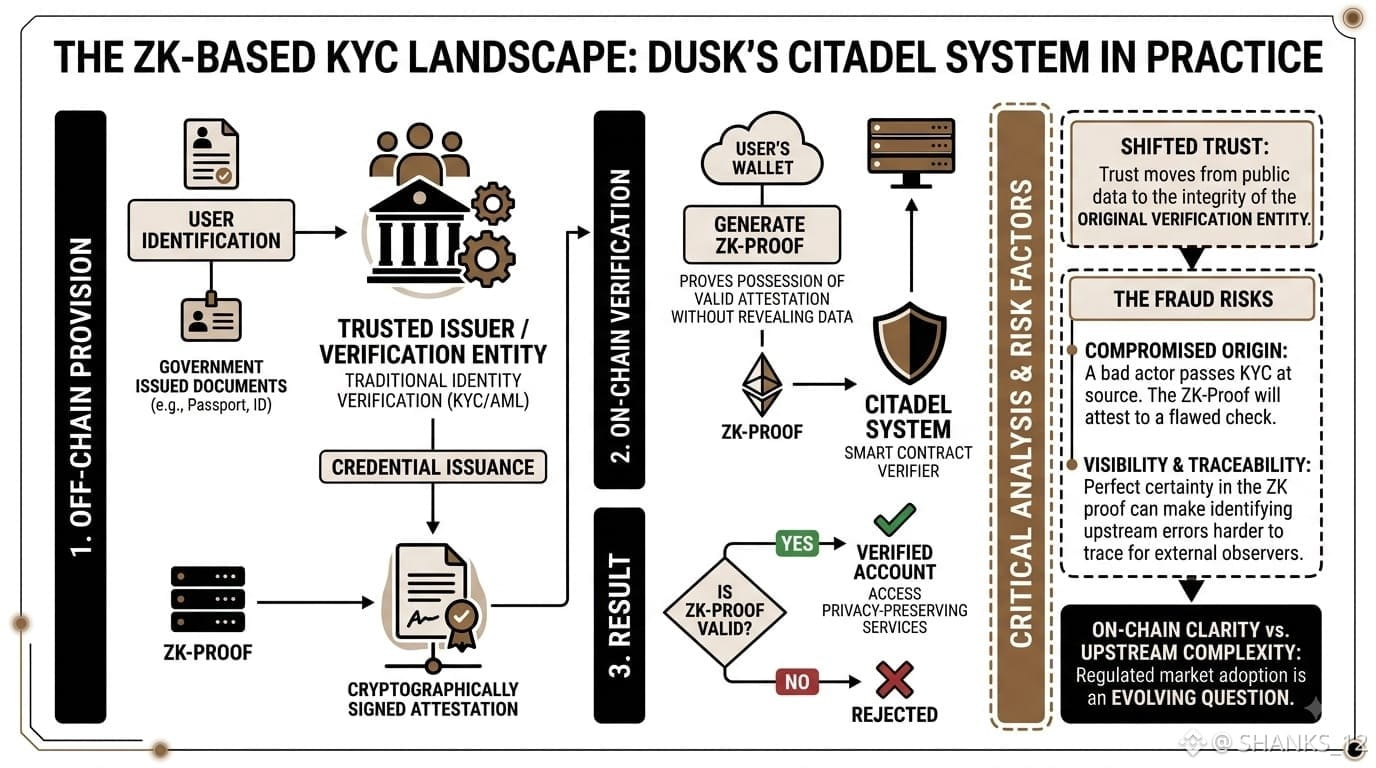
كنت أنظر مؤخرًا إلى نظام قلعة الغسق من Dusk — وهو النهج المعتمد على ZK للتحقق من KYC على سلسلة تهتم بالخصوصية. تتمثل الفكرة الأساسية في أن المستخدمين يمكنهم إثبات أنهم اجتازوا التحقق من الهوية دون الكشف عن بياناتهم الشخصية علنًا على السلسلة. كنت أستمر في التفكير فيما يعنيه ذلك فعليًا على أرض الواقع.
يبدو أن المثير للاهتمام هو مكان تمركز الثقة في هذا النموذج. لا تتحقق إثباتات ZK من الهوية — بل تتحقق من أن شخصًا ما قام بتوثيقها. لست متأكدًا تمامًا من كيفية انتقال المخاطر مقارنة بـ KYC التقليدي، لأن جودة التحقق تعتمد بالكامل على من نفّذ عملية التحقق الأصلية.
السؤال الذي يخطر في بالي هو ماذا يحدث إذا قام فاعل سيئ بإتمام KYC في المؤسسة المصدر واستلم شهادة صالحة. من الخارج، سيشهد إثبات ZK هذا على أن عملية التحقق قد تم اختراقها بدرجة يقين تام — وأحيانًا أتساءل إن كان ذلك يجعل الأخطاء أصعب في التتبع، وليس أسهل.
يدفعني ذلك إلى الاعتقاد بأن أنظمة الهوية المعتمدة على ZK تحوّل مشكلة الثقة بدلًا من إزالتها. تصبح طبقة البلوك تشين نظيفة، لكن عملية التحقق البشرية غير المرتبة في المنبع لا تختفي. ما إذا كان هذا المقايضة ستظل قائمة في الأسواق المنظمة مع مرور الوقت يبقى غير مؤكد بشكل حقيقي — على أي حال، الزمن سيخبرنا 👍
#dusk $DUSK @Dusk
$TUT $GPS
يبدو أن المثير للاهتمام هو مكان تمركز الثقة في هذا النموذج. لا تتحقق إثباتات ZK من الهوية — بل تتحقق من أن شخصًا ما قام بتوثيقها. لست متأكدًا تمامًا من كيفية انتقال المخاطر مقارنة بـ KYC التقليدي، لأن جودة التحقق تعتمد بالكامل على من نفّذ عملية التحقق الأصلية.
السؤال الذي يخطر في بالي هو ماذا يحدث إذا قام فاعل سيئ بإتمام KYC في المؤسسة المصدر واستلم شهادة صالحة. من الخارج، سيشهد إثبات ZK هذا على أن عملية التحقق قد تم اختراقها بدرجة يقين تام — وأحيانًا أتساءل إن كان ذلك يجعل الأخطاء أصعب في التتبع، وليس أسهل.
يدفعني ذلك إلى الاعتقاد بأن أنظمة الهوية المعتمدة على ZK تحوّل مشكلة الثقة بدلًا من إزالتها. تصبح طبقة البلوك تشين نظيفة، لكن عملية التحقق البشرية غير المرتبة في المنبع لا تختفي. ما إذا كان هذا المقايضة ستظل قائمة في الأسواق المنظمة مع مرور الوقت يبقى غير مؤكد بشكل حقيقي — على أي حال، الزمن سيخبرنا 👍
#dusk $DUSK @Dusk
$TUT $GPS