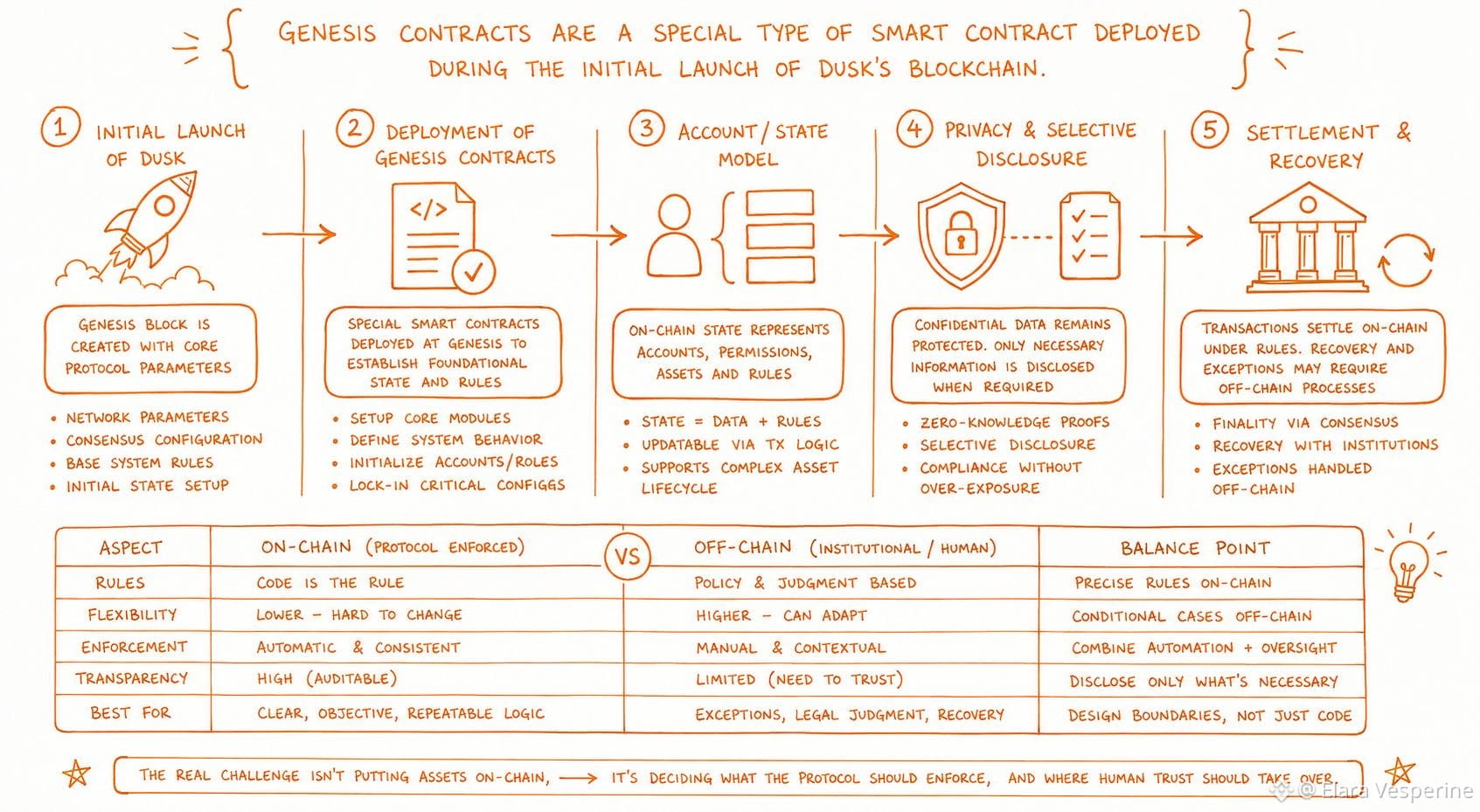
عقود جينيسيس هي نوع مميز من العقود الذكية يتم نشره خلال الإطلاق الأولي لسلسلة بلوكشين الخاصة بـ Dusk.
ما لفت انتباهي هو ما يعنيه ذلك بعيدًا عن التعريف التقني.
في شبكة مُصممة للأصول الخاضعة للضوابط، قد يكون للحالة الأولية أهمية، لأن الأدوات المالية غالبًا ما تحمل شروطًا تتجاوز مجرد الملكية البسيطة. قد تؤثر الأهلية وقيود التحويل والأذونات ومتطلبات الامتثال جميعها في كيفية معالجة تغيّرات الحالة.
يُعد نموذج حساب/حالة Dusk مثيرًا للاهتمام بشكل خاص. بدلًا من التعامل مع الدفتر كونه مجرد سجل للأرصدة، يمكن تمثيل أجزاء من دورة حياة الأصل عبر حالة قابلة للبرمجة. يضيف الخصوصية طبقة أخرى، حيث يمكن الحفاظ على حماية المعلومات الحساسة، بينما يتيح الإفصاح الانتقائي إثبات حقائق محددة عند الحاجة.
لكن توجد هنا حدود صعبة.
يمكن للعقود الذكية فرض قواعد دقيقة وحتمية. غالبًا ما لا تكون التنظيمات في العالم الحقيقي بنفس الدقة. قد تتطلب قرارات الاسترداد والاستثناءات القانونية والمسؤوليات المؤسسية والالتزامات المتغيرة أحكامًا لا يمكن ترميزها ببساطة داخل معاملة.
وهذا يجعل التحدي الأعمق للأصول الرمزية الخاضعة للضوابط (RWAs) أقل متعلقًا بإدخال الأصول إلى السلسلة بقدر ما يتعلق بتحديد أي الالتزامات ينبغي أن تتحول إلى انتقالات حالة مُفروضة عبر البروتوكول، وأيها ينبغي أن تبقى تحت السيطرة المؤسسية.
قد لا تكون أقوى البنية هي تلك التي تُؤتمت كل شيء، بل تلك التي تعرف بالضبط ما الذي يجب أتمتته—وموضع بقاء التدخل البشري.#dusk $DUSK @Dusk
ما لفت انتباهي هو ما يعنيه ذلك بعيدًا عن التعريف التقني.
في شبكة مُصممة للأصول الخاضعة للضوابط، قد يكون للحالة الأولية أهمية، لأن الأدوات المالية غالبًا ما تحمل شروطًا تتجاوز مجرد الملكية البسيطة. قد تؤثر الأهلية وقيود التحويل والأذونات ومتطلبات الامتثال جميعها في كيفية معالجة تغيّرات الحالة.
يُعد نموذج حساب/حالة Dusk مثيرًا للاهتمام بشكل خاص. بدلًا من التعامل مع الدفتر كونه مجرد سجل للأرصدة، يمكن تمثيل أجزاء من دورة حياة الأصل عبر حالة قابلة للبرمجة. يضيف الخصوصية طبقة أخرى، حيث يمكن الحفاظ على حماية المعلومات الحساسة، بينما يتيح الإفصاح الانتقائي إثبات حقائق محددة عند الحاجة.
لكن توجد هنا حدود صعبة.
يمكن للعقود الذكية فرض قواعد دقيقة وحتمية. غالبًا ما لا تكون التنظيمات في العالم الحقيقي بنفس الدقة. قد تتطلب قرارات الاسترداد والاستثناءات القانونية والمسؤوليات المؤسسية والالتزامات المتغيرة أحكامًا لا يمكن ترميزها ببساطة داخل معاملة.
وهذا يجعل التحدي الأعمق للأصول الرمزية الخاضعة للضوابط (RWAs) أقل متعلقًا بإدخال الأصول إلى السلسلة بقدر ما يتعلق بتحديد أي الالتزامات ينبغي أن تتحول إلى انتقالات حالة مُفروضة عبر البروتوكول، وأيها ينبغي أن تبقى تحت السيطرة المؤسسية.
قد لا تكون أقوى البنية هي تلك التي تُؤتمت كل شيء، بل تلك التي تعرف بالضبط ما الذي يجب أتمتته—وموضع بقاء التدخل البشري.#dusk $DUSK @Dusk