
#termmax @TermMax
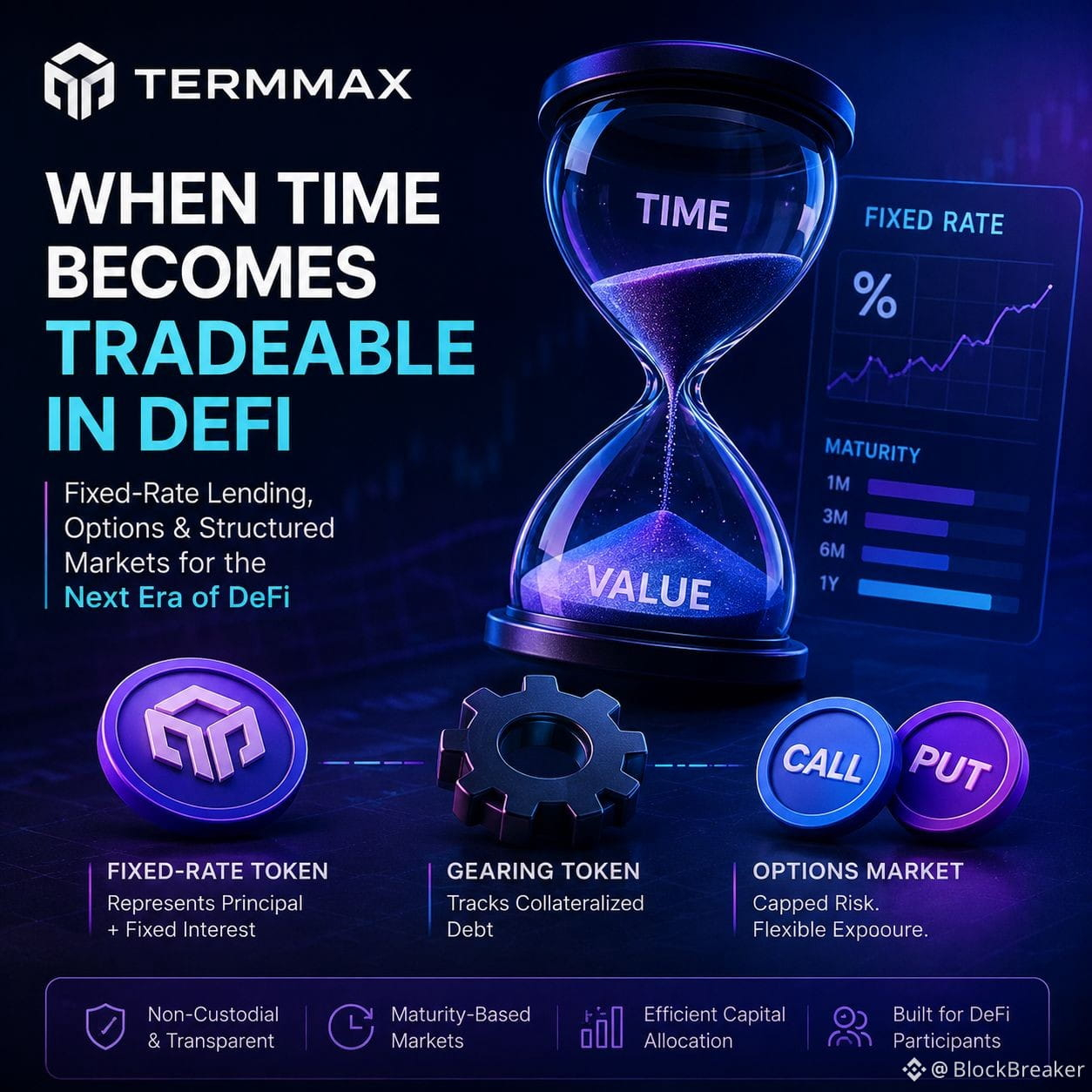
كنت أنظر إلى TermMax أقل باعتباره بروتوكول إقراض آخر، وأكثر باعتباره رهانًا على ما إذا كان بإمكان التمويل اللامركزي (DeFi) جعل الزمن نفسه قابلًا للتداول.
يبدو هذا مجردًا، لكنّه يغيّر طريقة تفكيري في المنتج.
معظم إقراض DeFi مبني حول الفوائد المتغيرة. تتحرك الفائدة، ويتحرك مركزك، ويتغير تقييم السوق باستمرار لتكلفة رأس المال. يتخذ TermMax مسارًا مختلفًا عبر فصل المبلغ الأصلي عن عنصر الفائدة، وتقديم طريقة للمستخدمين للتعبير عن استحقاق ثابت. عمليًا، يجعل ذلك السؤال أقل ارتباطًا بـ“كم العائد؟” وأكثر ارتباطًا بـ“ما قيمة تدفق نقدي حتى تاريخ محدد؟”
لاحظت باستمرار أن هذه هي النقطة التي تبدأ عندها الأمور الشيقة.
السوق بسعر فائدة ثابت يحتاج إلى أكثر من السيولة. يحتاج إلى سيولة بالسعر المناسب، لفترة الاستحقاق المناسبة، مقابل الضمان المناسب. وهذه مشكلة أضيق بكثير من محاولة AMM تقليدية تسعير أصل واحد مقابل أصل آخر.
تبدو لي بنية TermMax بنظام أوامر النطاق مثيرة للاهتمام لأن صناع السوق يمكنهم تحديد المكان الذي يريدون فعلًا فيه توفير السيولة بدلًا من الجلوس بشكل أعمى داخل منحنى تسعير واحد. قد يبدو ذلك تفصيلًا صغيرًا، لكن قد يهم كثيرًا عندما تتغير معدلات الفائدة وظروف الضمان بسرعة.
ثم هناك طبقة الخيارات.
لا أثق تمامًا بأي سوق خيارات لمجرد أنه يقدم أقساطًا جذابة. هناك دائمًا من يتحمل الجانب الآخر من المخاطرة. بالنسبة لي، السؤال الحقيقي هو ما إذا كان TermMax يمكنه جعل تلك المخاطرة شفافة بما يكفي لمقدمي السيولة لكي يسعّروها بشكل عقلاني.
لهذا السبب أراقب البروتوكول من خلال عدسة مختلفة: ليس APY العنوان الرئيسي، ولا الرافعة المالية، ولا عدد المنتجات—بل ما إذا كان بإمكان الاستحقاق الثابت والمخاطر أن يصبحا بدائيّات سيولة حقيقية في DeFi.
هذا الجزء لم يُثبت بعد. وبصراحة، هذا ما يجعل TermMax يستحق المتابعة.
كنت أنظر إلى TermMax أقل باعتباره بروتوكول إقراض آخر، وأكثر باعتباره رهانًا على ما إذا كان بإمكان التمويل اللامركزي (DeFi) جعل الزمن نفسه قابلًا للتداول.
يبدو هذا مجردًا، لكنّه يغيّر طريقة تفكيري في المنتج.
معظم إقراض DeFi مبني حول الفوائد المتغيرة. تتحرك الفائدة، ويتحرك مركزك، ويتغير تقييم السوق باستمرار لتكلفة رأس المال. يتخذ TermMax مسارًا مختلفًا عبر فصل المبلغ الأصلي عن عنصر الفائدة، وتقديم طريقة للمستخدمين للتعبير عن استحقاق ثابت. عمليًا، يجعل ذلك السؤال أقل ارتباطًا بـ“كم العائد؟” وأكثر ارتباطًا بـ“ما قيمة تدفق نقدي حتى تاريخ محدد؟”
لاحظت باستمرار أن هذه هي النقطة التي تبدأ عندها الأمور الشيقة.
السوق بسعر فائدة ثابت يحتاج إلى أكثر من السيولة. يحتاج إلى سيولة بالسعر المناسب، لفترة الاستحقاق المناسبة، مقابل الضمان المناسب. وهذه مشكلة أضيق بكثير من محاولة AMM تقليدية تسعير أصل واحد مقابل أصل آخر.
تبدو لي بنية TermMax بنظام أوامر النطاق مثيرة للاهتمام لأن صناع السوق يمكنهم تحديد المكان الذي يريدون فعلًا فيه توفير السيولة بدلًا من الجلوس بشكل أعمى داخل منحنى تسعير واحد. قد يبدو ذلك تفصيلًا صغيرًا، لكن قد يهم كثيرًا عندما تتغير معدلات الفائدة وظروف الضمان بسرعة.
ثم هناك طبقة الخيارات.
لا أثق تمامًا بأي سوق خيارات لمجرد أنه يقدم أقساطًا جذابة. هناك دائمًا من يتحمل الجانب الآخر من المخاطرة. بالنسبة لي، السؤال الحقيقي هو ما إذا كان TermMax يمكنه جعل تلك المخاطرة شفافة بما يكفي لمقدمي السيولة لكي يسعّروها بشكل عقلاني.
لهذا السبب أراقب البروتوكول من خلال عدسة مختلفة: ليس APY العنوان الرئيسي، ولا الرافعة المالية، ولا عدد المنتجات—بل ما إذا كان بإمكان الاستحقاق الثابت والمخاطر أن يصبحا بدائيّات سيولة حقيقية في DeFi.
هذا الجزء لم يُثبت بعد. وبصراحة، هذا ما يجعل TermMax يستحق المتابعة.