#termmax @TermMax في يناير، افتتح TermMax أول سوق للإقراض بسعر فائدة ثابت باستخدام أسهم مرهونة مُرقمنة، حيث قبل أوراق Ondo المالية المُرقمنة على سلسلة BNB Chain. إن التأطير حول إطلاقات مثل هذه يميل إلى الانحصار في عبارة واحدة: “جسر إلى التمويل التقليدي”. وسأرد بلطف على كلمة “جسر”، لأن الجسر يعني إزالة فجوة، بينما ما يحدث فعليًا هنا هو استبدال افتراض ثقة واحد بآخر.
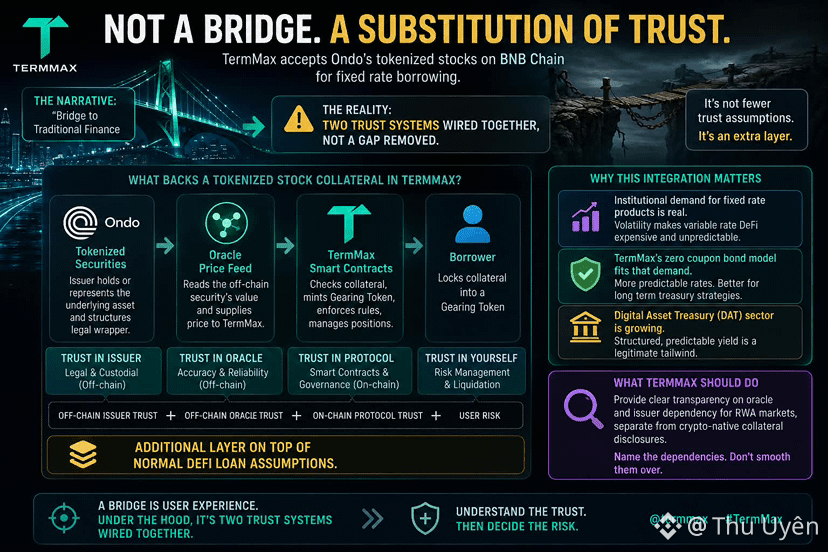
لِنمُرّ على ما يدعم مركز سهم مُرقمن داخل TermMax. تأتي تغذية سعر الضمان من أوراكل تقرأ قيمة ورقة مالية موجودة خارج السلسلة. وجود الورقة المالية نفسها قائم لأن المُصدِر، ويمثل Ondo هنا، يحتفظ بالأصل الأساسي أو يمثّله، وقد صاغ غلافًا قانونيًا حوله. إن المقترض الذي يقفل هذا الضمان داخل TermMax Gearing Token يثق بعقود TermMax الذكية، نعم، لكن تحته أيضًا يثق بدقة الأوراكل وبالهيكل القانوني والهيكل الحافظي الخاص بالمُصدِر—وهذان العنصران موجودان بالكامل خارج السلسلة. هذا ليس افتراض ثقة أقل من قرض DeFi عادي؛ بل هو طبقة إضافية تُضاف فوق الطبقات المعتادة.
هذه ليست حجة لإبعاد التكامل. لقد كانت هناك بالفعل حاجة مؤسسية لمنتجات ذات فائدة ثابتة، مدفوعة تحديدًا بتقلبات السوق التي يعاقبها DeFi ذو السعر المتغير، ونموذج سندات صفر القسيمة لدى TermMax يلائم هذه الحاجة بشكل أفضل من معظم البدائل على السلسلة. إن تنامي شهية قطاع Digital Asset Treasury للعوائد المُهيكلة والمتوقعة هو رياح مساعدة مشروعة، وليس اختراعًا تسويقيًا.
ما أرغب في الحصول عليه من TermMax مع توسع هذا المسار هو شفافية بخصوص الأوراكل واعتماد المُصدِر تحديدًا لأسواق RWA، بشكل منفصل عن الإفصاحات التي تغطي بالفعل الضمان الذي هو أصيل في عالم التشفير. “الجسر” كلمة مناسبة لتجربة المستخدم. أما تحت الغطاء، فالأمر ما زال نظامي ثقة منفصلين مرتبطين معًا، وهذا يستحق أن يُسمّى بدل تليينه أو تلطيفه.
$BTW
لِنمُرّ على ما يدعم مركز سهم مُرقمن داخل TermMax. تأتي تغذية سعر الضمان من أوراكل تقرأ قيمة ورقة مالية موجودة خارج السلسلة. وجود الورقة المالية نفسها قائم لأن المُصدِر، ويمثل Ondo هنا، يحتفظ بالأصل الأساسي أو يمثّله، وقد صاغ غلافًا قانونيًا حوله. إن المقترض الذي يقفل هذا الضمان داخل TermMax Gearing Token يثق بعقود TermMax الذكية، نعم، لكن تحته أيضًا يثق بدقة الأوراكل وبالهيكل القانوني والهيكل الحافظي الخاص بالمُصدِر—وهذان العنصران موجودان بالكامل خارج السلسلة. هذا ليس افتراض ثقة أقل من قرض DeFi عادي؛ بل هو طبقة إضافية تُضاف فوق الطبقات المعتادة.
هذه ليست حجة لإبعاد التكامل. لقد كانت هناك بالفعل حاجة مؤسسية لمنتجات ذات فائدة ثابتة، مدفوعة تحديدًا بتقلبات السوق التي يعاقبها DeFi ذو السعر المتغير، ونموذج سندات صفر القسيمة لدى TermMax يلائم هذه الحاجة بشكل أفضل من معظم البدائل على السلسلة. إن تنامي شهية قطاع Digital Asset Treasury للعوائد المُهيكلة والمتوقعة هو رياح مساعدة مشروعة، وليس اختراعًا تسويقيًا.
ما أرغب في الحصول عليه من TermMax مع توسع هذا المسار هو شفافية بخصوص الأوراكل واعتماد المُصدِر تحديدًا لأسواق RWA، بشكل منفصل عن الإفصاحات التي تغطي بالفعل الضمان الذي هو أصيل في عالم التشفير. “الجسر” كلمة مناسبة لتجربة المستخدم. أما تحت الغطاء، فالأمر ما زال نظامي ثقة منفصلين مرتبطين معًا، وهذا يستحق أن يُسمّى بدل تليينه أو تلطيفه.
$BTW