@TermMax لم أستطع التوقف عن النظر إلى معدل رسوم الإقراض البالغ 2% لدى TermMax لأنه يبدو أثقل بكثير مما يكلفه فعليًا من حيث الاقتصاد الحقيقي.
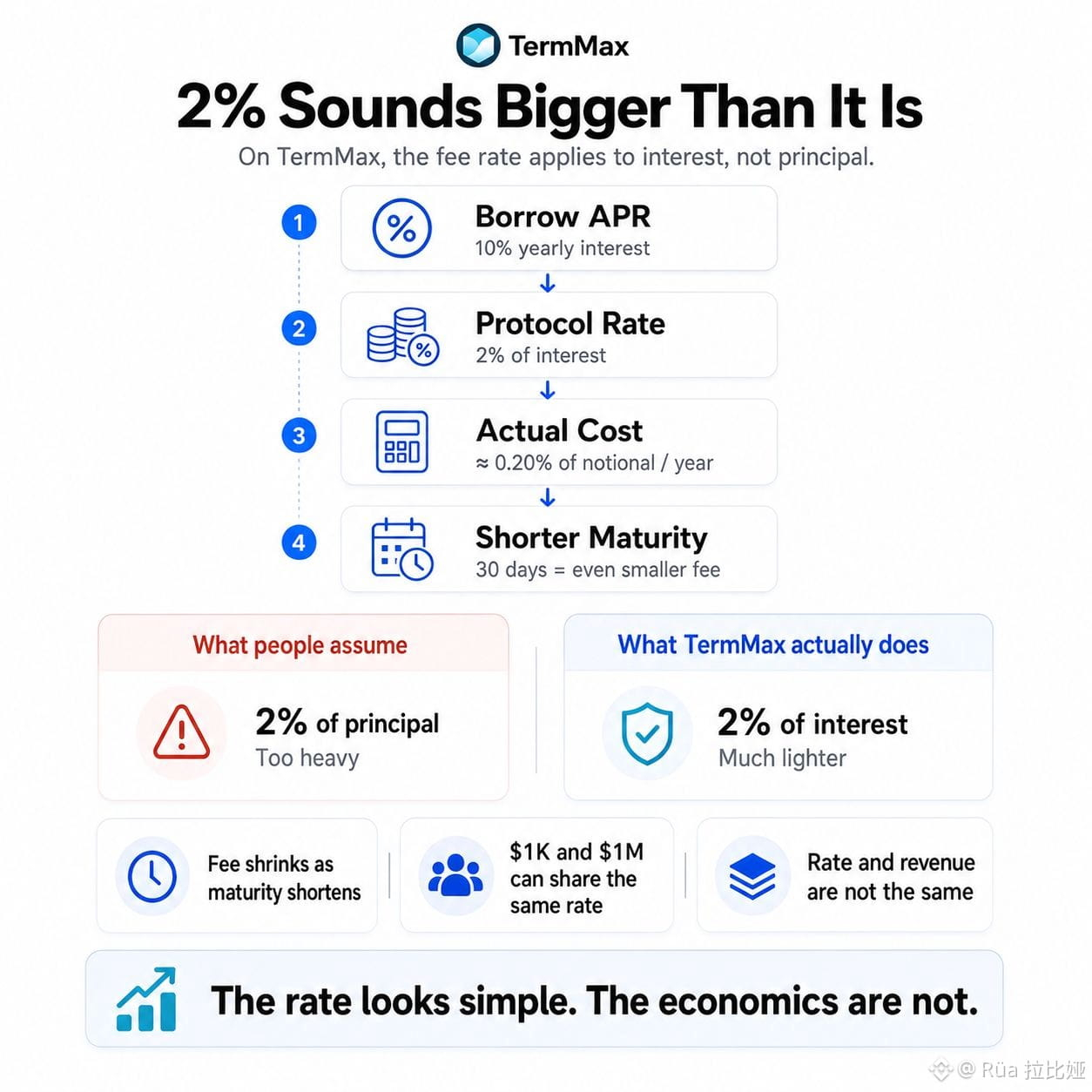
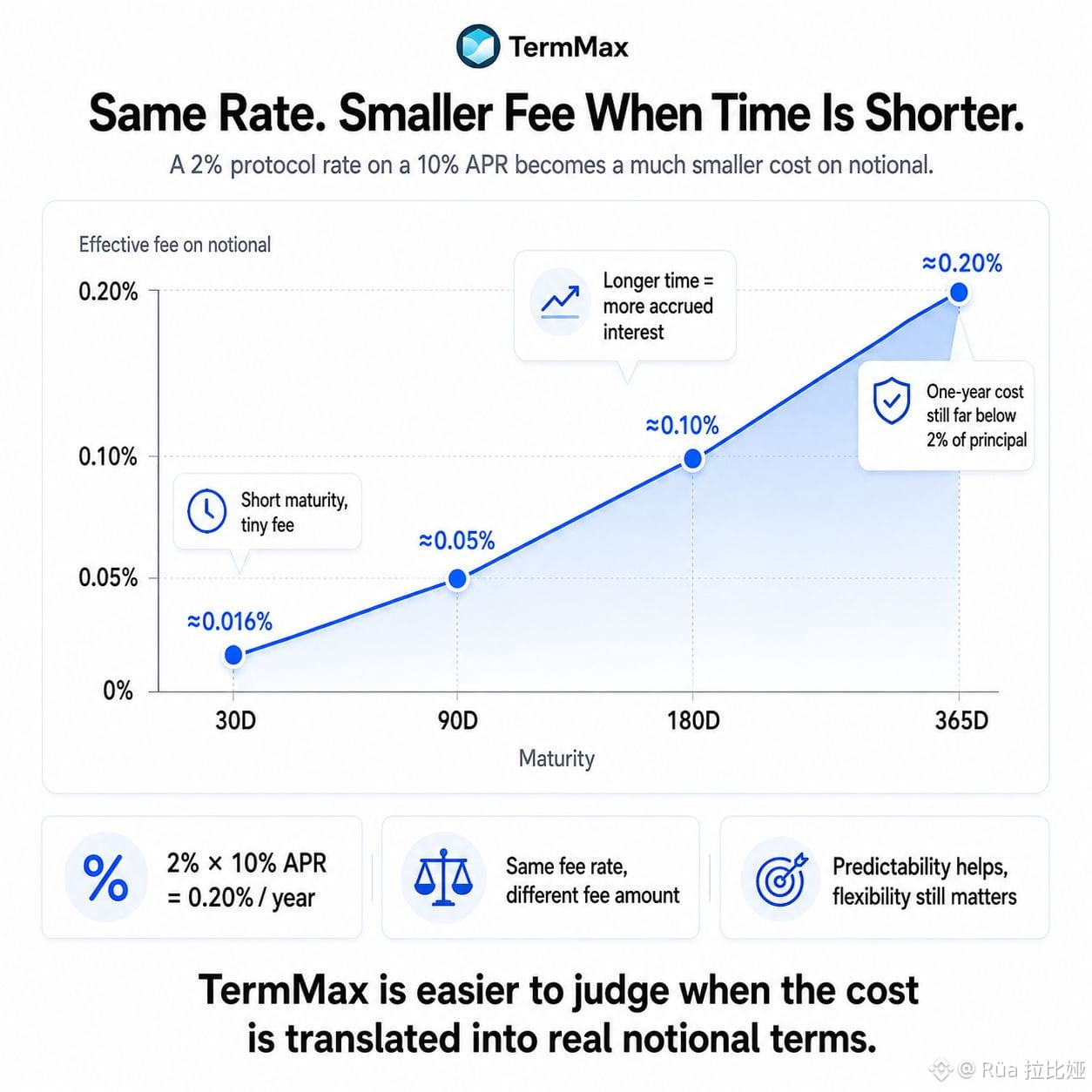
هذا المقياس السطحي مضلل. إذا كان معدل الفائدة السنوي للاقتراض 10%، فإن معدل بروتوكول 2% ليس 2% من أصل المبلغ. بل هو 2% من طبقة الفائدة. وعلى مركز لمدة سنة واحدة، فهذا يعادل تقريبًا 0.20% من القيمة الاسمية. وإذا قُصّرت المدة إلى 30 يومًا، تنخفض الرسوم مرة أخرى لأن الفائدة المتراكمة أقل.
هذا يغيّر كيف أحكم على TermMax. السؤال الحقيقي ليس ما إذا كان معدل الرسوم يبدو مرتفعًا أم منخفضًا، بل ما إذا كان المستخدمون يقدّرون الدَّين القابل للتنبؤ بما يكفي لقبول الاستحقاق الثابت، وتقليل المرونة، والحاجة إلى إدارة توقيت التجديد.
يمكن لقرض بقيمة 1,000 دولار وقرض بقيمة 1 مليون دولار أن يواجها المعدل نفسه مع تحقيق إيرادات رسوم مختلفة تمامًا. النسبة نفسها، لكن اقتصاديات النظام مختلفة جدًا.
وللإنصاف، فإن الاقتراض بسعر ثابت يحل مشكلة تنسيق حقيقية. لكن التسعير الأنظف ليس هو نفسه الطلب الأقوى.
ماذا يحدث عندما يفضّل المقترضون سيولة مرنة خلال الفترات المتقلبة؟ هل يبقون مع TermMax أم يستخدمونه فقط عندما تكون اليقين أهم من قابلية الاختيار؟
هذا هو الجزء الذي سأراقبه. يمكن لتصميم الرسوم أن يكون أنيقًا، لكن سلوك المستخدمين هو ما يحدد ما إذا كان النموذج سيتراكم.
#termmax
هذا المقياس السطحي مضلل. إذا كان معدل الفائدة السنوي للاقتراض 10%، فإن معدل بروتوكول 2% ليس 2% من أصل المبلغ. بل هو 2% من طبقة الفائدة. وعلى مركز لمدة سنة واحدة، فهذا يعادل تقريبًا 0.20% من القيمة الاسمية. وإذا قُصّرت المدة إلى 30 يومًا، تنخفض الرسوم مرة أخرى لأن الفائدة المتراكمة أقل.
هذا يغيّر كيف أحكم على TermMax. السؤال الحقيقي ليس ما إذا كان معدل الرسوم يبدو مرتفعًا أم منخفضًا، بل ما إذا كان المستخدمون يقدّرون الدَّين القابل للتنبؤ بما يكفي لقبول الاستحقاق الثابت، وتقليل المرونة، والحاجة إلى إدارة توقيت التجديد.
يمكن لقرض بقيمة 1,000 دولار وقرض بقيمة 1 مليون دولار أن يواجها المعدل نفسه مع تحقيق إيرادات رسوم مختلفة تمامًا. النسبة نفسها، لكن اقتصاديات النظام مختلفة جدًا.
وللإنصاف، فإن الاقتراض بسعر ثابت يحل مشكلة تنسيق حقيقية. لكن التسعير الأنظف ليس هو نفسه الطلب الأقوى.
ماذا يحدث عندما يفضّل المقترضون سيولة مرنة خلال الفترات المتقلبة؟ هل يبقون مع TermMax أم يستخدمونه فقط عندما تكون اليقين أهم من قابلية الاختيار؟
هذا هو الجزء الذي سأراقبه. يمكن لتصميم الرسوم أن يكون أنيقًا، لكن سلوك المستخدمين هو ما يحدد ما إذا كان النموذج سيتراكم.
#termmax