#termmax @TermMax
I initially assumed @TermMax handled liquidations like most lending protocols: collateral gets pushed into the market, liquidators step in, and the asset is sold under pressure. Simple, familiar, and usually dependent on having enough liquidity to absorb the sale.
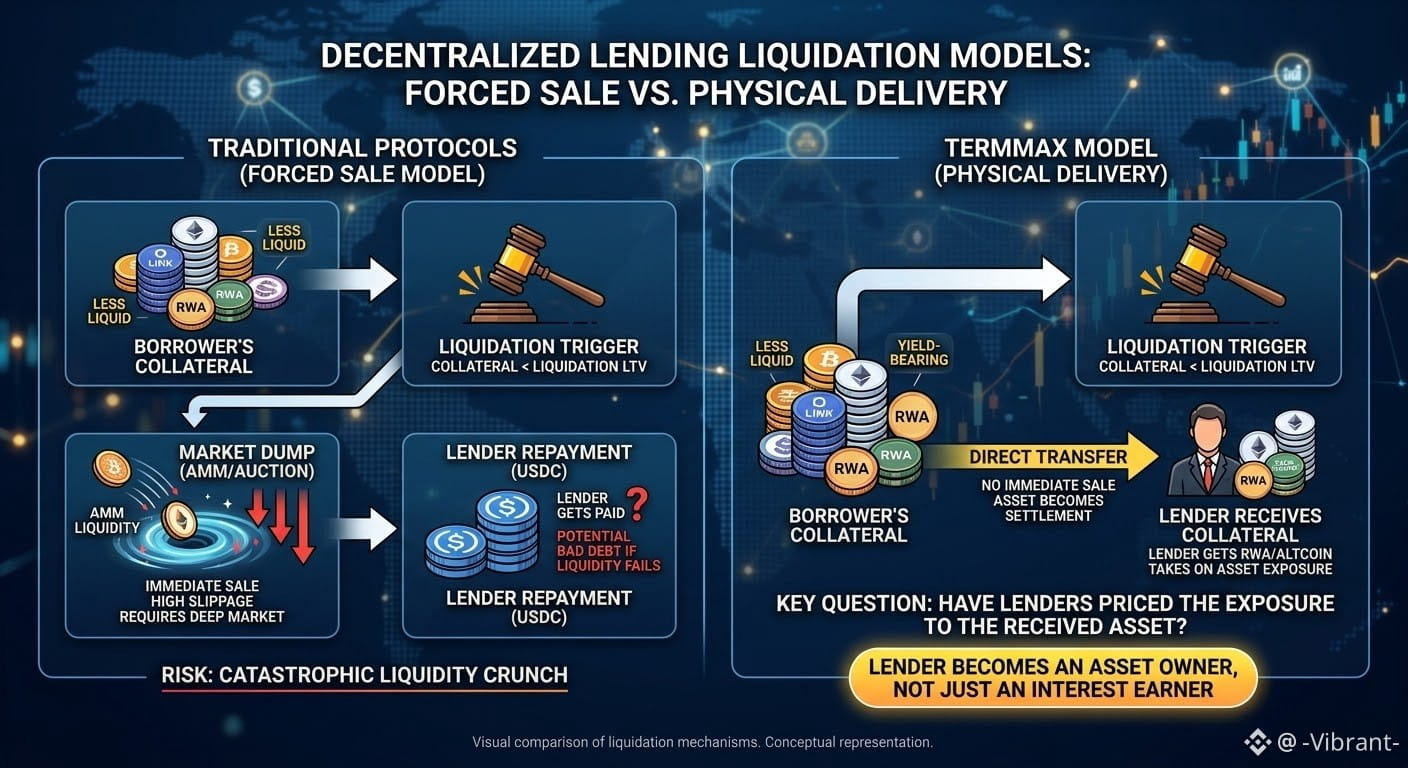
Then I looked closer at TermMax and realized the design is fundamentally different. Once a position crosses the Liquidation LTV, the collateral isn't immediately sold through an AMM or auction. Instead, it can be transferred directly to the lender. The collateral itself becomes the settlement.
That has an interesting consequence for fixed rate lending. Liquidation doesn't necessarily require a deep market for the collateral because there doesn't have to be an immediate buyer. That could make less liquid assets, yield bearing assets, or RWAs more practical as collateral.
But the risk hasn't disappeared. It has moved.
A lender providing USDC may expect predictable fixed rate income, yet liquidation could leave them holding an asset they never planned to own. The protocol avoids a forced sale and the slippage that comes with it, but the lender takes on the resulting asset exposure.
So the bigger question for me isn't simply whether physical delivery is safer.
It's whether lenders are properly pricing the possibility that repayment could arrive in a completely different form than the asset they originally expected.
Fixed interest can be predictable. The asset you ultimately receive may not be.
I initially assumed @TermMax handled liquidations like most lending protocols: collateral gets pushed into the market, liquidators step in, and the asset is sold under pressure. Simple, familiar, and usually dependent on having enough liquidity to absorb the sale.
Then I looked closer at TermMax and realized the design is fundamentally different. Once a position crosses the Liquidation LTV, the collateral isn't immediately sold through an AMM or auction. Instead, it can be transferred directly to the lender. The collateral itself becomes the settlement.
That has an interesting consequence for fixed rate lending. Liquidation doesn't necessarily require a deep market for the collateral because there doesn't have to be an immediate buyer. That could make less liquid assets, yield bearing assets, or RWAs more practical as collateral.
But the risk hasn't disappeared. It has moved.
A lender providing USDC may expect predictable fixed rate income, yet liquidation could leave them holding an asset they never planned to own. The protocol avoids a forced sale and the slippage that comes with it, but the lender takes on the resulting asset exposure.
So the bigger question for me isn't simply whether physical delivery is safer.
It's whether lenders are properly pricing the possibility that repayment could arrive in a completely different form than the asset they originally expected.
Fixed interest can be predictable. The asset you ultimately receive may not be.