كنت أنظر إلى Dusk بوصفه سلسلة بلوك تشين واحدة مع بيئة تنفيذ واحدة. أصبحت المعمارية أكثر إثارة للاهتمام عندما توقفت عن التعامل مع كل جزء من الشبكة على أنه الشيء نفسه.
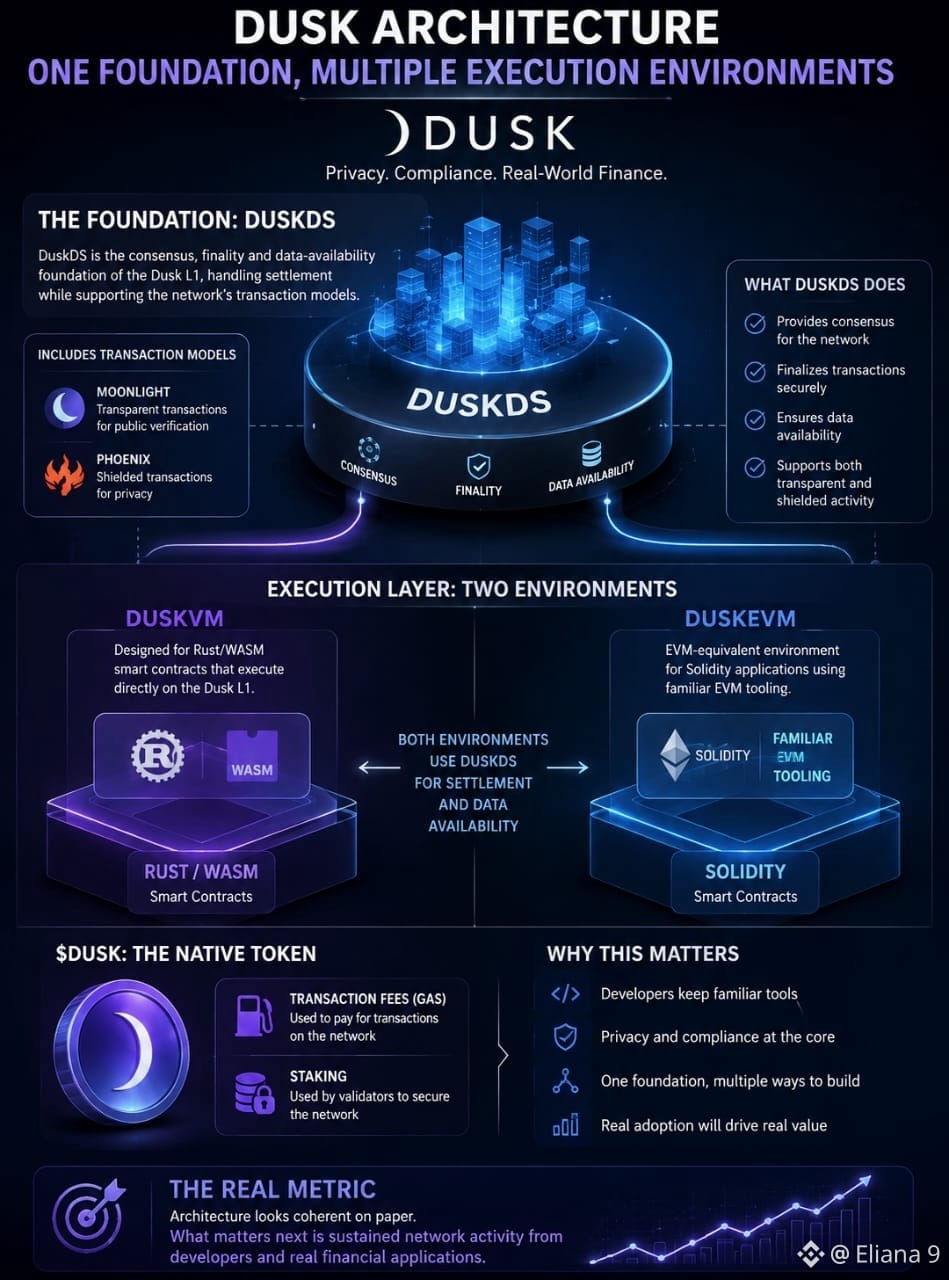
في الأساس توجد DuskDS. يصفها @Dusk بأنها أساس الإجماع والنهائية وتوفّر البيانات الخاص بـ Dusk L1، وتتضمن نماذج معاملات Moonlight وPhoenix الخاصة بالشبكة.
أما التنفيذ فهو جزء منفصل من الصورة. تم تصميم DuskVM لعقود ذكية Rust/WASM التي تنفّذ مباشرة على Dusk L1، بينما يوفّر DuskEVM بيئة مكافئة لـ EVM لتطبيقات Solidity باستخدام أدوات EVM المألوفة. يستخدم DuskEVM DuskDS للتسوية وتوفّر البيانات.
هذا الفصل غيّر طريقة تفكيري في المشروع.
بدلاً من التساؤل عمّا إذا كان على المطورين التخلي عن الأدوات المألوفة لبناء تطبيقات على Dusk، قد يكون السؤال الأفضل هو كيف يمكن لبيئات تنفيذ مختلفة أن تتشارك الأساس نفسه للتسوية وتوفّر البيانات.
$DUSK also لها دور ملموس في هذا الأساس: تحدد الوثائق الرسمية أنها الرمز الأصلي المستخدم لرسوم المعاملات وللرهان (staking).
تبدو المعمارية متماسكة على الورق. ما يهم بعد ذلك هو ما إذا كان المطورون والتطبيقات المالية الواقعية يحوّلون فعلاً هذه المرونة إلى نشاط مستمر على الشبكة.
هذه هي المقاييس التي أرغب في مراقبتها، أكثر من مخططات المعمارية وحدها.
#dusk $DUSK @Dusk
في الأساس توجد DuskDS. يصفها @Dusk بأنها أساس الإجماع والنهائية وتوفّر البيانات الخاص بـ Dusk L1، وتتضمن نماذج معاملات Moonlight وPhoenix الخاصة بالشبكة.
أما التنفيذ فهو جزء منفصل من الصورة. تم تصميم DuskVM لعقود ذكية Rust/WASM التي تنفّذ مباشرة على Dusk L1، بينما يوفّر DuskEVM بيئة مكافئة لـ EVM لتطبيقات Solidity باستخدام أدوات EVM المألوفة. يستخدم DuskEVM DuskDS للتسوية وتوفّر البيانات.
هذا الفصل غيّر طريقة تفكيري في المشروع.
بدلاً من التساؤل عمّا إذا كان على المطورين التخلي عن الأدوات المألوفة لبناء تطبيقات على Dusk، قد يكون السؤال الأفضل هو كيف يمكن لبيئات تنفيذ مختلفة أن تتشارك الأساس نفسه للتسوية وتوفّر البيانات.
$DUSK also لها دور ملموس في هذا الأساس: تحدد الوثائق الرسمية أنها الرمز الأصلي المستخدم لرسوم المعاملات وللرهان (staking).
تبدو المعمارية متماسكة على الورق. ما يهم بعد ذلك هو ما إذا كان المطورون والتطبيقات المالية الواقعية يحوّلون فعلاً هذه المرونة إلى نشاط مستمر على الشبكة.
هذه هي المقاييس التي أرغب في مراقبتها، أكثر من مخططات المعمارية وحدها.
#dusk $DUSK @Dusk