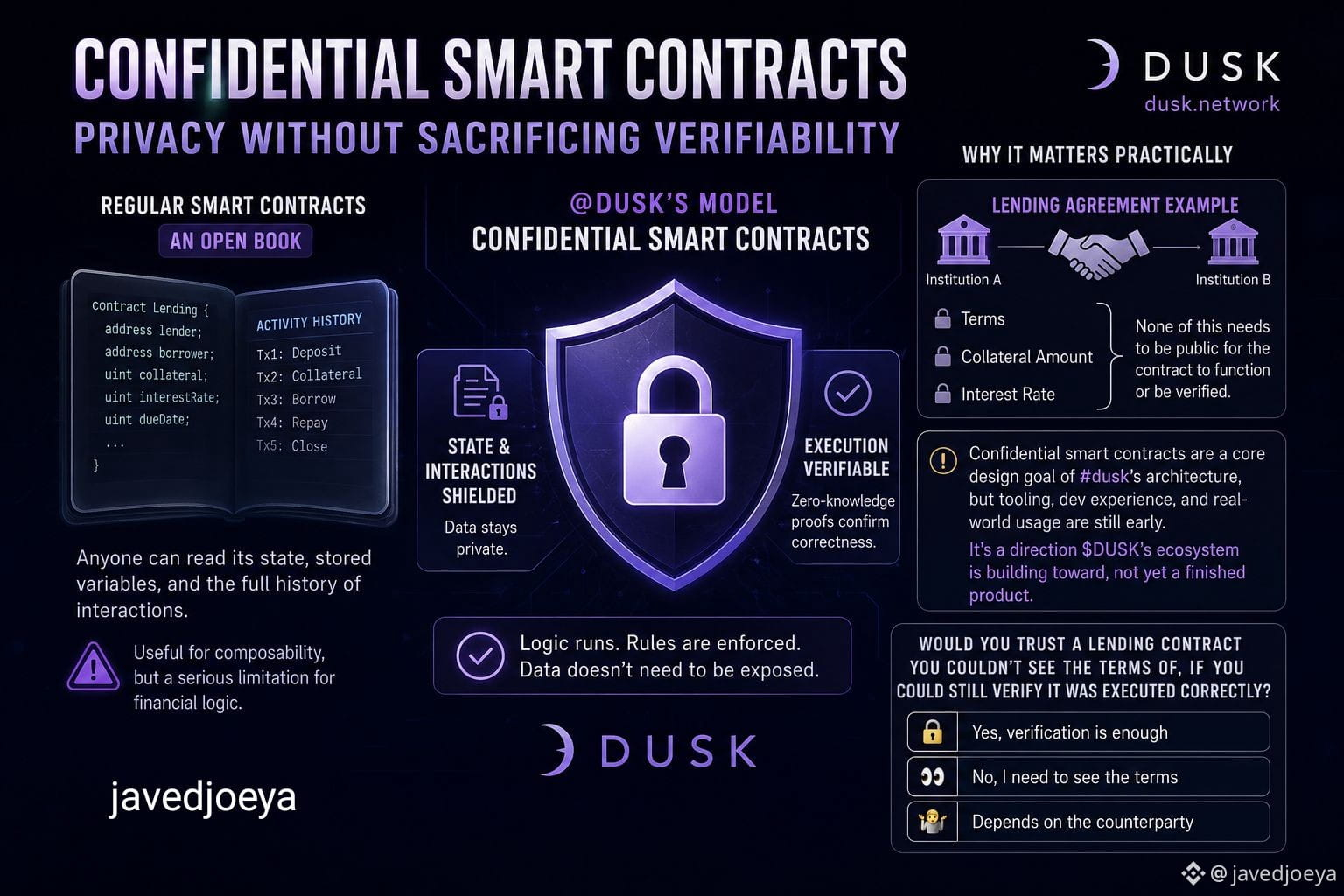
العقد الذكي العادي على أغلب سلاسل الكتل العامة يُعد كتابًا مفتوحًا. يمكن لأي شخص قراءة حالته، والمتغيرات التي يخزنها، وغالبًا السجل الكامل لكل تفاعل تمّ به معه. هذا مفيد من ناحية قابلية الدمج (composability)، لكنه يمثل قيدًا كبيرًا بالنسبة للمنطق المالي.
العقد الذكي السري، وفق نموذج @Dusk ، مُصمم بحيث يمكن إخفاء حالة العقد والتفاعلات عنهما عن العرض العام، بينما ما تزال عملية تنفيذ العقد قابلة للتحقق من صحتها باستخدام إثباتات المعرفة الصفرية. يعمل المنطق، وتُطبق القواعد، لكن البيانات المحددة التي تتضمنها المعاملة لا يلزم كشفها على السلسلة.
لماذا هذا مهم عمليًا؟ تخيل اتفاقية إقراض بين مؤسستين. لا يلزم أن تكون الشروط أو مبلغ الضمان أو سعر الفائدة—أيٌّ منها—عامة حتى يعمل العقد بشكل صحيح أو حتى تؤكد الشبكة أنه تم تنفيذه بأمانة.
أريد أن أكون حذرًا هنا وألا أبالغ في توصيف الوضع. تُعد العقود الذكية السرية هدفًا تصميميًا أساسيًا في بنية #dusk ، لكن تجربة المطورين العملية، ونضج الأدوات (tooling)، واستخدامها في العالم الحقيقي لهذه الإمكانية لا يزال في بداياته. إننا نتجه نحو هذا الهدف ضمن اتجاهات منظومة $DUSK ، لكنه ليس منتجًا مكتملًا بعد.
هل ستثق في عقد إقراض لا يمكنك رؤية شروطه، إذا كنت ما زلت تستطيع التحقق من أنه تم تنفيذه بشكل صحيح؟ 🤔
🔒 نعم، التحقق يكفي
👀 لا، أحتاج أن أرى الشروط
🤷 الأمر يعتمد على الطرف المقابل
العقد الذكي السري، وفق نموذج @Dusk ، مُصمم بحيث يمكن إخفاء حالة العقد والتفاعلات عنهما عن العرض العام، بينما ما تزال عملية تنفيذ العقد قابلة للتحقق من صحتها باستخدام إثباتات المعرفة الصفرية. يعمل المنطق، وتُطبق القواعد، لكن البيانات المحددة التي تتضمنها المعاملة لا يلزم كشفها على السلسلة.
لماذا هذا مهم عمليًا؟ تخيل اتفاقية إقراض بين مؤسستين. لا يلزم أن تكون الشروط أو مبلغ الضمان أو سعر الفائدة—أيٌّ منها—عامة حتى يعمل العقد بشكل صحيح أو حتى تؤكد الشبكة أنه تم تنفيذه بأمانة.
أريد أن أكون حذرًا هنا وألا أبالغ في توصيف الوضع. تُعد العقود الذكية السرية هدفًا تصميميًا أساسيًا في بنية #dusk ، لكن تجربة المطورين العملية، ونضج الأدوات (tooling)، واستخدامها في العالم الحقيقي لهذه الإمكانية لا يزال في بداياته. إننا نتجه نحو هذا الهدف ضمن اتجاهات منظومة $DUSK ، لكنه ليس منتجًا مكتملًا بعد.
هل ستثق في عقد إقراض لا يمكنك رؤية شروطه، إذا كنت ما زلت تستطيع التحقق من أنه تم تنفيذه بشكل صحيح؟ 🤔
🔒 نعم، التحقق يكفي
👀 لا، أحتاج أن أرى الشروط
🤷 الأمر يعتمد على الطرف المقابل