#dusk $DUSK @Dusk
قد تنجح ترقية العقدة تقنيًا ومع ذلك تفشل تشغيليًا.
وهذا ما أعتبره مهمًا في عملية ترقية Dusk.
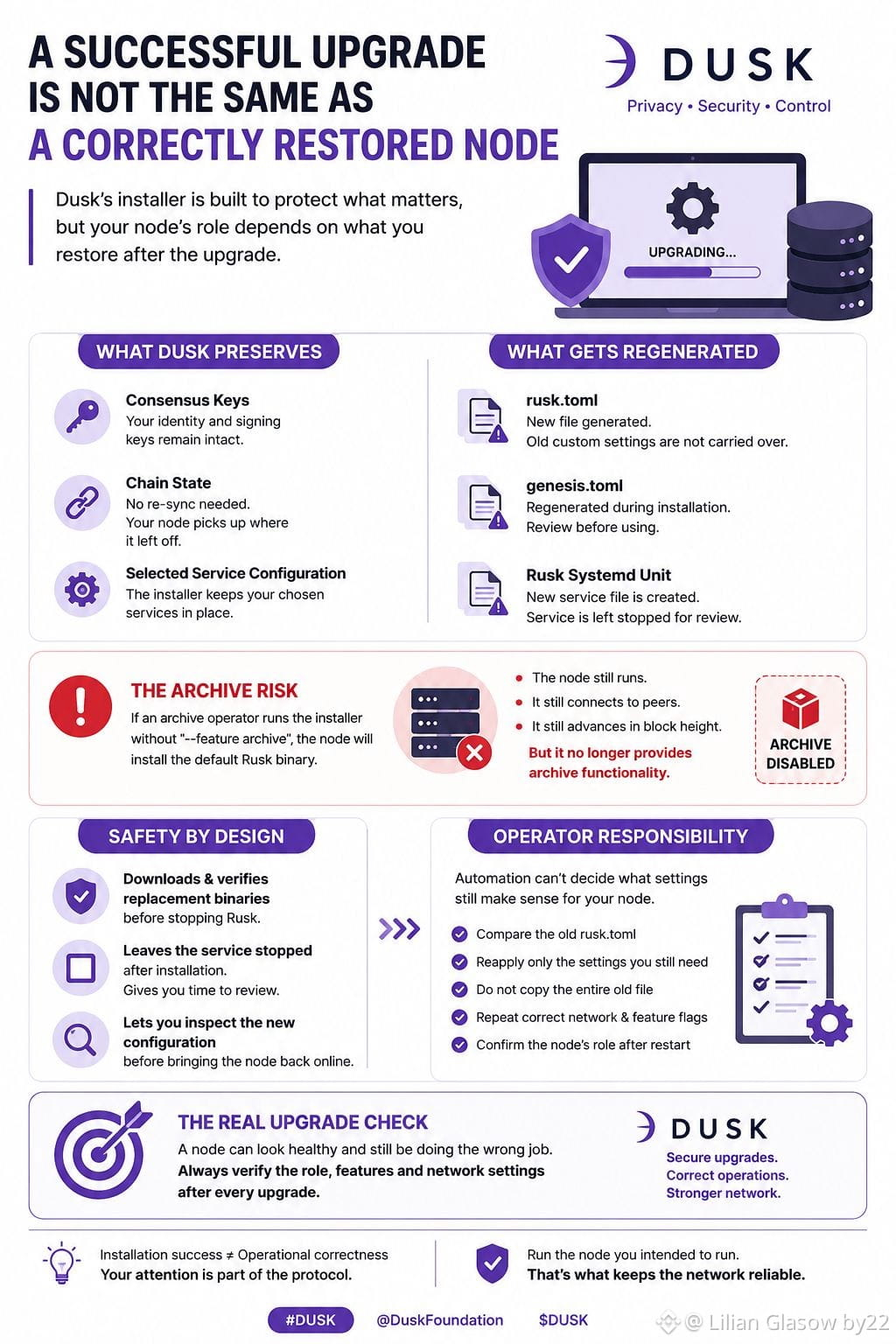
تم تصميم المُثبّت لحماية الأجزاء التي ينبغي أن تعيش الترقية، بما في ذلك مفاتيح الإجماع وحالة السلسلة. وفي الوقت نفسه، تتم إعادة إنشاء بعض ملفات الإعدادات وتعريف خدمة systemd. وهذا يعني أن على المشغّل أن يقوم بشكل صريح باستعادة الإعدادات التي تحدد ما يُفترض أن تفعله الآلة.
بالنسبة للتحقق العادي، قد يكون تفويت علامة ميزة أمرًا مزعجًا. أمّا بالنسبة لمشغّل الأرشيف، فقد يكون الأمر أكثر خطورة بكثير: يمكن أن يظل العقدة متصلًا بالإنترنت، ويُنتج أو يتابع الكتل، ويبدو بحالة جيدة بينما يفقد بهدوء دور الأرشيف الذي تعتمد عليه التطبيقات.
أعجبني أيضًا أن Dusk يتحقق من النسخة الثنائية البديلة قبل إيقاف Rusk ويترك الخدمة متوقفة بعد ذلك. وهذا يمنح المشغّل فرصة لفحص الإعدادات الجديدة بدلًا من إعادة تشغيل كل شيء بشكل أعمى.
لكن هذا يحمّل مسؤولية مهمة على الإنسان.
أكثر الترقية أمانًا ليست بالضرورة تلك التي تتطلب أقل قدر من العمل اليدوي. بل هي الترقية التي يستطيع فيها المشغّل التأكد من أن العقدة عادت بالدور الصحيح والميزات وإعدادات الشبكة.
بالنسبة لي، هذا هو فحص الترقية الحقيقي في Dusk:
هل العقدة تعمل — أم أنها تعمل بالفعل بالمهمة التي تم نشرها من أجلها؟
#DUSK @DuskFoundation $GPS $ACE
قد تنجح ترقية العقدة تقنيًا ومع ذلك تفشل تشغيليًا.
وهذا ما أعتبره مهمًا في عملية ترقية Dusk.
تم تصميم المُثبّت لحماية الأجزاء التي ينبغي أن تعيش الترقية، بما في ذلك مفاتيح الإجماع وحالة السلسلة. وفي الوقت نفسه، تتم إعادة إنشاء بعض ملفات الإعدادات وتعريف خدمة systemd. وهذا يعني أن على المشغّل أن يقوم بشكل صريح باستعادة الإعدادات التي تحدد ما يُفترض أن تفعله الآلة.
بالنسبة للتحقق العادي، قد يكون تفويت علامة ميزة أمرًا مزعجًا. أمّا بالنسبة لمشغّل الأرشيف، فقد يكون الأمر أكثر خطورة بكثير: يمكن أن يظل العقدة متصلًا بالإنترنت، ويُنتج أو يتابع الكتل، ويبدو بحالة جيدة بينما يفقد بهدوء دور الأرشيف الذي تعتمد عليه التطبيقات.
أعجبني أيضًا أن Dusk يتحقق من النسخة الثنائية البديلة قبل إيقاف Rusk ويترك الخدمة متوقفة بعد ذلك. وهذا يمنح المشغّل فرصة لفحص الإعدادات الجديدة بدلًا من إعادة تشغيل كل شيء بشكل أعمى.
لكن هذا يحمّل مسؤولية مهمة على الإنسان.
أكثر الترقية أمانًا ليست بالضرورة تلك التي تتطلب أقل قدر من العمل اليدوي. بل هي الترقية التي يستطيع فيها المشغّل التأكد من أن العقدة عادت بالدور الصحيح والميزات وإعدادات الشبكة.
بالنسبة لي، هذا هو فحص الترقية الحقيقي في Dusk:
هل العقدة تعمل — أم أنها تعمل بالفعل بالمهمة التي تم نشرها من أجلها؟
#DUSK @DuskFoundation $GPS $ACE