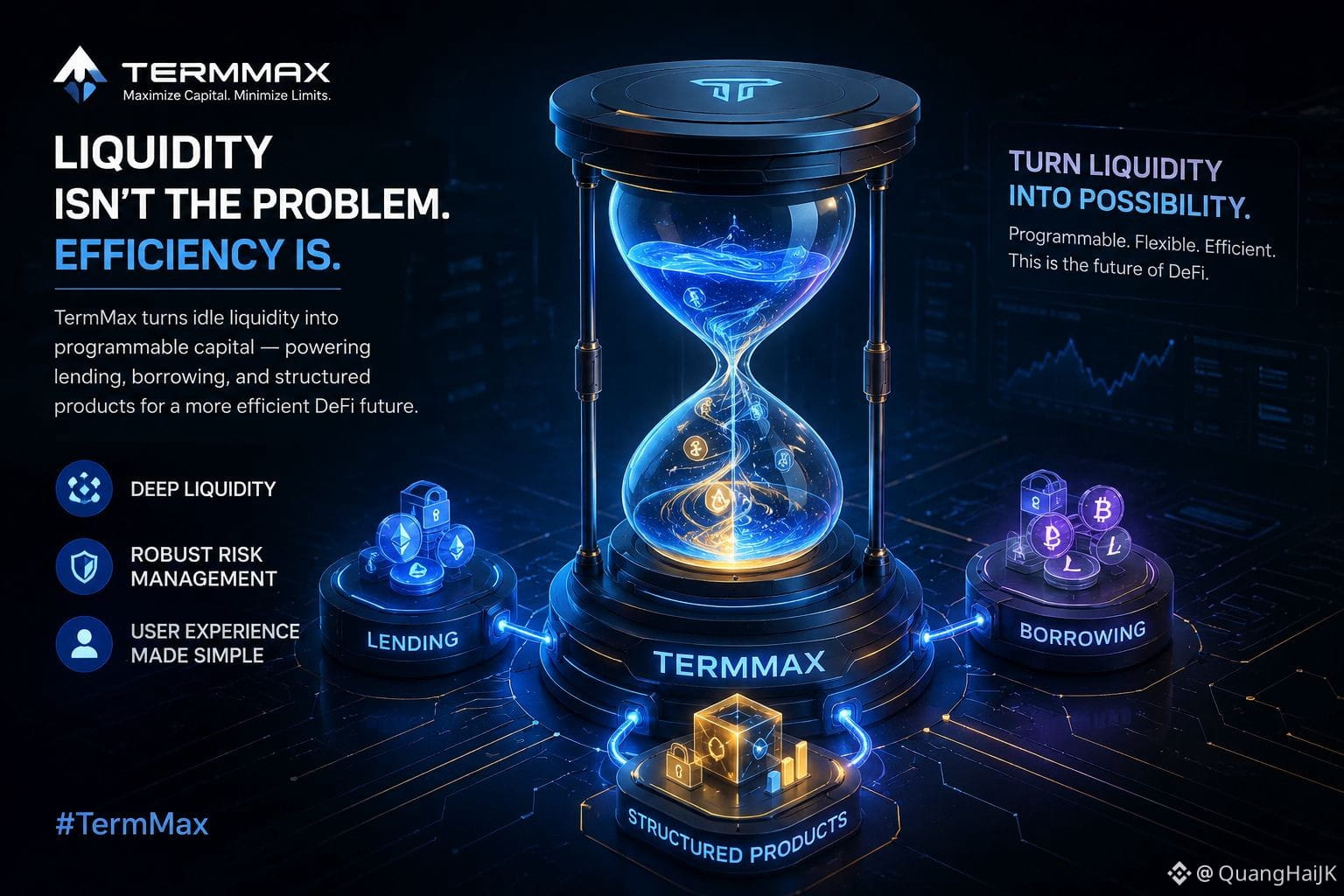
لا يفتقر التمويل اللامركزي (DeFi) إلى السيولة—ما يفتقر إليه هو طريقة أفضل لاستخدام تلك السيولة بكفاءة.
لهذا السبب بدأتُ الانتباه إلى @TermMax .
في عالم DeFi، امتلاك أصل لا يعني بالضرورة أنك تحصل على أكبر قيمة منه. قد يكون رأس المال محصورًا في موضع واحد بينما يحتاج المستخدمون إلى سيولة لاستراتيجية أخرى. التحدي الحقيقي هو إيجاد طرق لجعل رأس المال أكثر مرونة مع إبقاء المخاطر تحت السيطرة.
يعالج TermMax هذه المشكلة عبر بناء بنية تحتية مالية على السلسلة (on-chain) حيث يمكن للإقراض والاقتراض والمنتجات المالية المُهيكلة أن تعمل معًا لخلق المزيد من الطرق لإدارة رأس المال.
ما أراه جديرًا بالملاحظة لا يتمثل فقط في وعد “عوائد مرتفعة”، بل في القدرة على تحويل السيولة إلى شيء قابل للبرمجة وأكثر مرونة للاستخدام.
إذا كان من المقرر أن يتطور DeFi نحو نظام مالي أكثر اكتمالًا، فستحتاج بروتوكولات مثل TermMax إلى إثبات ثلاث أمور: سيولة عميقة، وإدارة مخاطر قوية، وتجربة مستخدم بسيطة بما يكفي لاعتماد حقيقي.
هذه هي القصة طويلة المدى التي أتابعها.
#termmax $RIVER $LIT $VVV
لهذا السبب بدأتُ الانتباه إلى @TermMax .
في عالم DeFi، امتلاك أصل لا يعني بالضرورة أنك تحصل على أكبر قيمة منه. قد يكون رأس المال محصورًا في موضع واحد بينما يحتاج المستخدمون إلى سيولة لاستراتيجية أخرى. التحدي الحقيقي هو إيجاد طرق لجعل رأس المال أكثر مرونة مع إبقاء المخاطر تحت السيطرة.
يعالج TermMax هذه المشكلة عبر بناء بنية تحتية مالية على السلسلة (on-chain) حيث يمكن للإقراض والاقتراض والمنتجات المالية المُهيكلة أن تعمل معًا لخلق المزيد من الطرق لإدارة رأس المال.
ما أراه جديرًا بالملاحظة لا يتمثل فقط في وعد “عوائد مرتفعة”، بل في القدرة على تحويل السيولة إلى شيء قابل للبرمجة وأكثر مرونة للاستخدام.
إذا كان من المقرر أن يتطور DeFi نحو نظام مالي أكثر اكتمالًا، فستحتاج بروتوكولات مثل TermMax إلى إثبات ثلاث أمور: سيولة عميقة، وإدارة مخاطر قوية، وتجربة مستخدم بسيطة بما يكفي لاعتماد حقيقي.
هذه هي القصة طويلة المدى التي أتابعها.
#termmax $RIVER $LIT $VVV