سؤال لم أرَ أحدًا يجيب عنه بشكل صحيح، وأود من شخص ما أن يجيب.
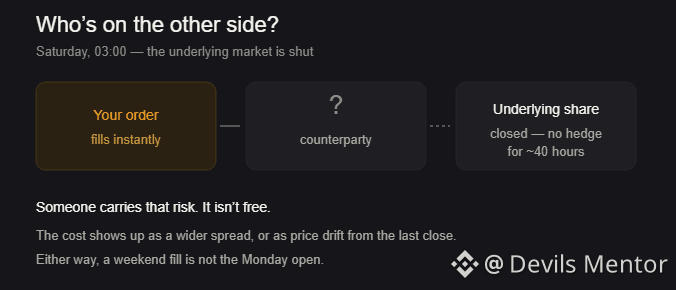
إنه يوم السبت. أسواق الولايات المتحدة مغلقة. لا يمكن شراء السهم الأساسي أو بيعه أو التحوط به أو اقتراضه حتى يوم الاثنين. ومع ذلك، يوجد سجل أوامر (Order Book) لسهم bStock يعمل ويمكنني أن أُستكمل (أُملأ) أمرًا.
فمن يقف في الجهة الأخرى من صفقة تداولي؟
من يَعِدُ بهذا الأمر يكون قد اتخذ مركزًا لا يستطيع تعويضه في السهم الأساسي لمدة 40 ساعة أخرى. هذا ليس تداولًا مجانيًا بالنسبة لهم. هناك من يتحمّل فعليًا مخاطر عطلة نهاية الأسبوع كي يتمكن طلبي من الاكتمال، وهذه التكلفة لا تظهر من العدم — بل تظهر كاتساع في السبريد، أو كتذبذب السعر بعيدًا أكثر عن المكان الذي أُغلق عنده السهم آخر مرة.
وهذا يقود إلى الجزء العملي. عندما تُبلّغ بينانس أن bStocks تمثل 58% من حجم التداول المرتبط بالأسهم خارج ساعات عمل أسواق الولايات المتحدة، وأن عطلة نهاية أسبوع واحدة بلغت 2 مليار دولار، فهذا مبلغ كبير جدًا من المخاطر يتم إيواؤه لدى شخص ما. إما أن صانع السوق (market-making) أكثر تعقيدًا بكثير مما تفترضه محادثات التجزئة، أو أن سعر عطلة نهاية الأسبوع يقوم بعمل أكبر مما يظنه الناس.
لا أعرف أيهما. أفضل أن أقول ذلك بدلًا من اختراع إجابة.
ما أعرفه هو أن الاستنتاج السلوكي يبقى نفسه على أي حال: إن ملء أمر عطلة نهاية الأسبوع على $TSLAB ليس افتتاح يوم الاثنين، والتعامل معه كما لو كان ذلك سيلزمك في النهاية بالتكلفة. حدد الحجم وفقًا لذلك.
إذا كان أي شخص يفهم فعليًا هيكل السيولة خارج أوقات العمل هنا، فأنا أريد قراءته.
تحديثات إقليمية عبر @BinanceCIS
#bStocksCIS
إنه يوم السبت. أسواق الولايات المتحدة مغلقة. لا يمكن شراء السهم الأساسي أو بيعه أو التحوط به أو اقتراضه حتى يوم الاثنين. ومع ذلك، يوجد سجل أوامر (Order Book) لسهم bStock يعمل ويمكنني أن أُستكمل (أُملأ) أمرًا.
فمن يقف في الجهة الأخرى من صفقة تداولي؟
من يَعِدُ بهذا الأمر يكون قد اتخذ مركزًا لا يستطيع تعويضه في السهم الأساسي لمدة 40 ساعة أخرى. هذا ليس تداولًا مجانيًا بالنسبة لهم. هناك من يتحمّل فعليًا مخاطر عطلة نهاية الأسبوع كي يتمكن طلبي من الاكتمال، وهذه التكلفة لا تظهر من العدم — بل تظهر كاتساع في السبريد، أو كتذبذب السعر بعيدًا أكثر عن المكان الذي أُغلق عنده السهم آخر مرة.
وهذا يقود إلى الجزء العملي. عندما تُبلّغ بينانس أن bStocks تمثل 58% من حجم التداول المرتبط بالأسهم خارج ساعات عمل أسواق الولايات المتحدة، وأن عطلة نهاية أسبوع واحدة بلغت 2 مليار دولار، فهذا مبلغ كبير جدًا من المخاطر يتم إيواؤه لدى شخص ما. إما أن صانع السوق (market-making) أكثر تعقيدًا بكثير مما تفترضه محادثات التجزئة، أو أن سعر عطلة نهاية الأسبوع يقوم بعمل أكبر مما يظنه الناس.
لا أعرف أيهما. أفضل أن أقول ذلك بدلًا من اختراع إجابة.
ما أعرفه هو أن الاستنتاج السلوكي يبقى نفسه على أي حال: إن ملء أمر عطلة نهاية الأسبوع على $TSLAB ليس افتتاح يوم الاثنين، والتعامل معه كما لو كان ذلك سيلزمك في النهاية بالتكلفة. حدد الحجم وفقًا لذلك.
إذا كان أي شخص يفهم فعليًا هيكل السيولة خارج أوقات العمل هنا، فأنا أريد قراءته.
تحديثات إقليمية عبر @BinanceCIS
#bStocksCIS