
الجزء من TermMax الذي أجدُه الأكثر إثارة للاهتمام ليس السعر الثابت.
بل ما يحدث عندما تغيّر رأيك.
أنت تُقفل مركزًا.
تحصل على سعرٍ جميل ومتوقَّع.
كل شيء يبدو مرتبًا وواضحًا.
ثم تمرّ بضعة أسابيع.
تتحرك الأسعار.
يتغير مستوى السيولة.
وفجأة تجد نفسك ممسكًا بمركز ما زال يحمل قيمة، لكن ربما لا ترغب في الاحتفاظ به حتى تاريخ الاستحقاق.
هنا تصبح الأمور واقعية.
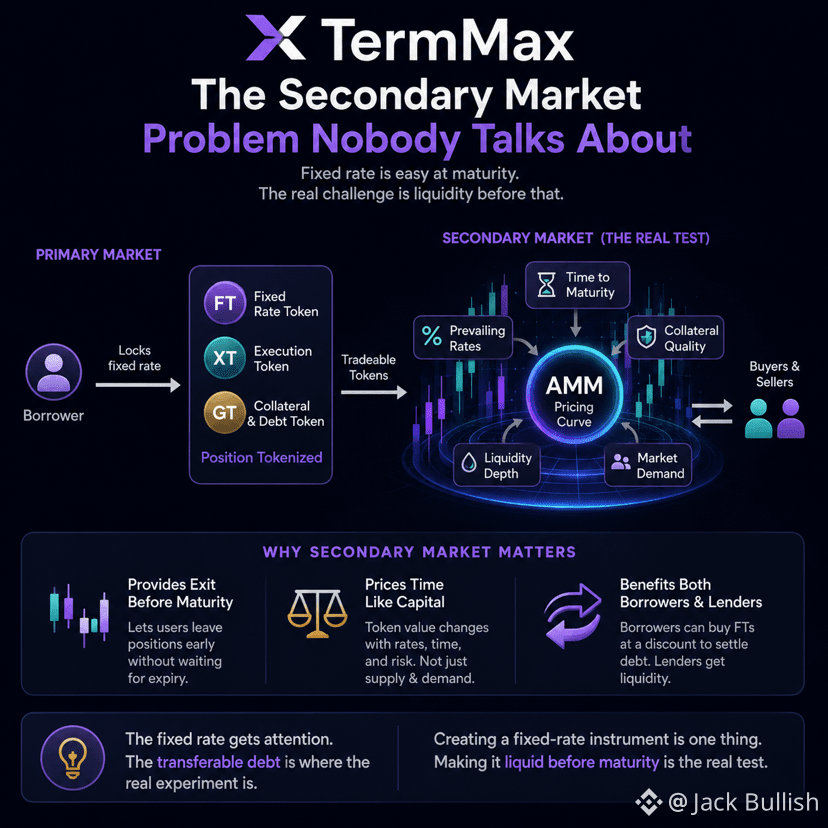
حوّل TermMax مطالبة السعر الثابت إلى ورقة مالية قابلة للتحويل (FT)، بحيث يمكن للمركز نفسه أن ينتقل عبر سوقٍ ثانوية بدلًا من البقاء هناك حتى ينتهي.
على الورق، يبدو الأمر بديهيًا.
لكن في الواقع، يُعدّ واحدًا من أصعب أجزاء التمويل اللامركزي (DeFi) للأدوات ذات الدخل الثابت.
لأن الـ FT ليس مجرد “أصل”.
بل مرتبطٌ به وقتٌ للانتهاء.
يمكن أن تحمل مطلبان متطابقان أسعارًا مختلفة جدًا فقط لأن أحدهما ينتهي خلال 20 يومًا والآخر خلال 200.
ثم أضف تغيّر الأسعار، ومخاطر الضمانات، والسيولة المحدودة.
الآن يجب على السوق أن يكتشف ما قيمة هذه المطالبة فعليًا.
وهذا سبب أهمية نهج TermMax بالـ AMM ومنحنى التسعير أكثر مما يبدو للوهلة الأولى. هو لا يحاول جعل مركز السعر الثابت يتصرف مثل مبادلة توكن عادية. النظام يحتاج إلى تسعير الوقت كما يحتاج إلى تسعير رأس المال.
وهناك أمرٌ دقيق أعتقد أنه يُتغاضى عنه أحيانًا:
يمكن للسوق الثانوية أن يفيد المقترض أيضًا.
إذا بدأ تداول الـ FT الذي يمثل دينك بأقل من القيمة الاسمية، فقد يصبح شراء ذلك الـ FT طريقةً أرخص لتسوية الالتزام.
فجأة لا تكون السوق تمنح المُقرضين فقط خيار الخروج.
قد تمنح المقترضين أيضًا طريقة أخرى لإدارة الدين.
وهذا هو الجزء المثير.
السعر الثابت يحظى بكل الاهتمام.
أما الدين القابل للتحويل، ففيه تكمن التجربة الحقيقية.
لأن إنشاء أداة بسعر ثابت هو مشكلة.
إنشاء أداة لا يزال الناس مستعدين للتداول بها بعد أن تنتهي حماسة القرض الأصلي…
هذه هي المشكلة الأصعب.
وغالبًا هناك تكتشف إن كانت إحدى بدائيات DeFi مفيدة فعلًا.
#termmax @TermMax
بل ما يحدث عندما تغيّر رأيك.
أنت تُقفل مركزًا.
تحصل على سعرٍ جميل ومتوقَّع.
كل شيء يبدو مرتبًا وواضحًا.
ثم تمرّ بضعة أسابيع.
تتحرك الأسعار.
يتغير مستوى السيولة.
وفجأة تجد نفسك ممسكًا بمركز ما زال يحمل قيمة، لكن ربما لا ترغب في الاحتفاظ به حتى تاريخ الاستحقاق.
هنا تصبح الأمور واقعية.
حوّل TermMax مطالبة السعر الثابت إلى ورقة مالية قابلة للتحويل (FT)، بحيث يمكن للمركز نفسه أن ينتقل عبر سوقٍ ثانوية بدلًا من البقاء هناك حتى ينتهي.
على الورق، يبدو الأمر بديهيًا.
لكن في الواقع، يُعدّ واحدًا من أصعب أجزاء التمويل اللامركزي (DeFi) للأدوات ذات الدخل الثابت.
لأن الـ FT ليس مجرد “أصل”.
بل مرتبطٌ به وقتٌ للانتهاء.
يمكن أن تحمل مطلبان متطابقان أسعارًا مختلفة جدًا فقط لأن أحدهما ينتهي خلال 20 يومًا والآخر خلال 200.
ثم أضف تغيّر الأسعار، ومخاطر الضمانات، والسيولة المحدودة.
الآن يجب على السوق أن يكتشف ما قيمة هذه المطالبة فعليًا.
وهذا سبب أهمية نهج TermMax بالـ AMM ومنحنى التسعير أكثر مما يبدو للوهلة الأولى. هو لا يحاول جعل مركز السعر الثابت يتصرف مثل مبادلة توكن عادية. النظام يحتاج إلى تسعير الوقت كما يحتاج إلى تسعير رأس المال.
وهناك أمرٌ دقيق أعتقد أنه يُتغاضى عنه أحيانًا:
يمكن للسوق الثانوية أن يفيد المقترض أيضًا.
إذا بدأ تداول الـ FT الذي يمثل دينك بأقل من القيمة الاسمية، فقد يصبح شراء ذلك الـ FT طريقةً أرخص لتسوية الالتزام.
فجأة لا تكون السوق تمنح المُقرضين فقط خيار الخروج.
قد تمنح المقترضين أيضًا طريقة أخرى لإدارة الدين.
وهذا هو الجزء المثير.
السعر الثابت يحظى بكل الاهتمام.
أما الدين القابل للتحويل، ففيه تكمن التجربة الحقيقية.
لأن إنشاء أداة بسعر ثابت هو مشكلة.
إنشاء أداة لا يزال الناس مستعدين للتداول بها بعد أن تنتهي حماسة القرض الأصلي…
هذه هي المشكلة الأصعب.
وغالبًا هناك تكتشف إن كانت إحدى بدائيات DeFi مفيدة فعلًا.
#termmax @TermMax