واصلت الرجوع إلى تدفق «القلعة» هذا الصباح.
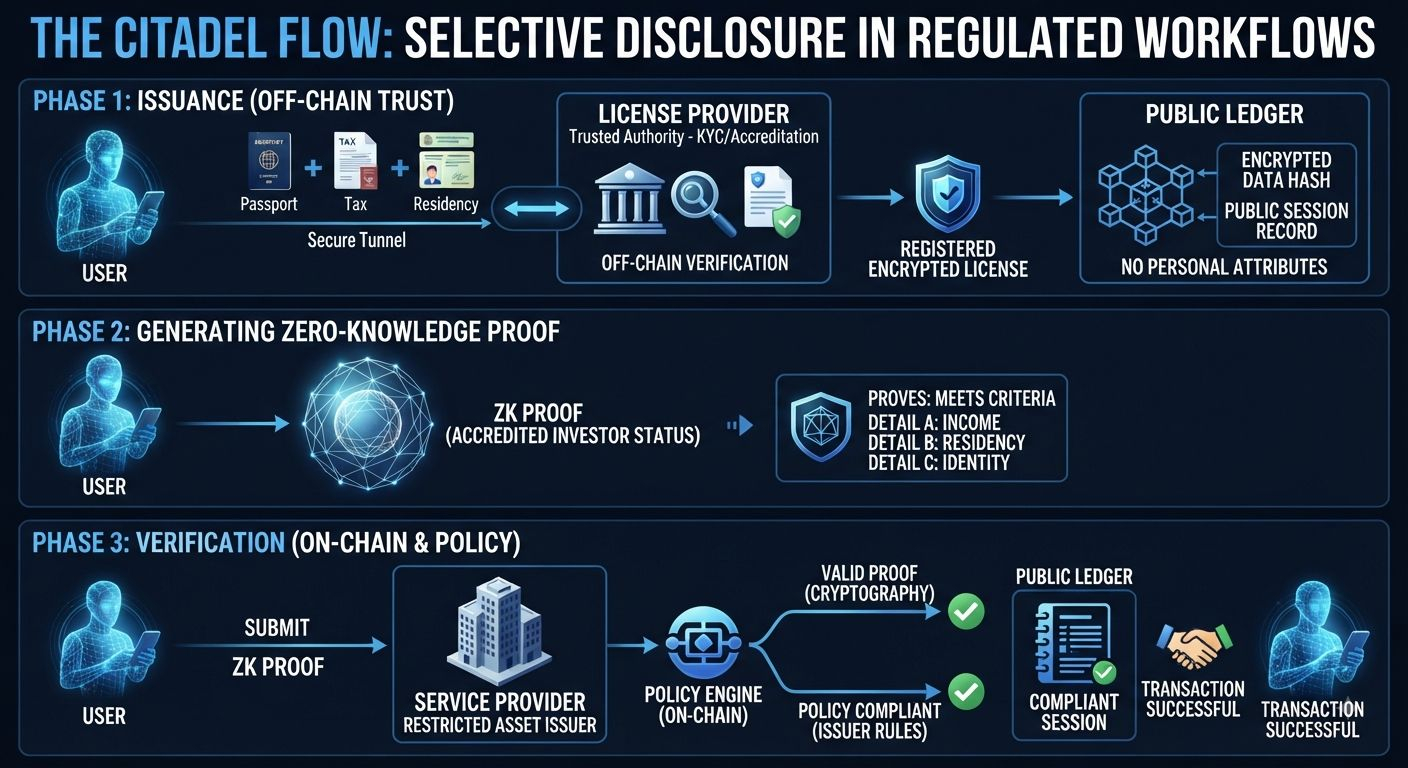
يطلب المستخدم ترخيصًا من «مزود تراخيص». يقوم هذا المزود بالتحقق من الشخص خارج السلسلة، ثم يوقّع السمات ذات الصلة، ويُسجّل ترخيصًا مُشفّرًا. لاحقًا، ينشئ المستخدم إثباتًا ذا معرفة-صفرية يُظهر امتلاكه لترخيص مُسجّل دون وضع التفاصيل الشخصية أو الترخيص المحدد على دفتر الأستاذ. يسجل العقد فقط جلسة عامة.
هذا هو جزء «الإفصاح الانتقائي» كما يعمل عمليًا. لا يرى الشبكة السمات الأساسية أبدًا. يمكن لخدمة ما أن تستقبل فقط الحقل الدقيق الذي تحتاجه إذا اختار المستخدم فتحه.
إحدى الحالات الواقعية التي يرتبط بها ذلك هي أن يكون مستثمر يحاول الدخول في عرض استثماري خاضع للقيود. في العملية التقليدية غالبًا ما يستقبل المُصدِر أو وكيل التحويل مجموعة كاملة من المستندات الشخصية للتحقق من الحالة المعتمدة أو محل الإقامة. في هذا النموذج يمكن للإثبات تأكيد الشرط المطلوب بينما تظل الخانة/الملف الكامل خاصًا ولا يتم تعريضه مرارًا.
هناك نقطتان لا تزالان غير محسومتين بالنسبة لي.
يعتمد النظام بالكامل على «مزودي التراخيص» الذين ستثق بهم المؤسسات فعليًا. تتم أعمال التحقق الصعبة خارج السلسلة أولًا. وإذا ظل هؤلاء المزودون قليلين أو تأخروا في الظهور، فسيكون لنطاق طبقة الخصوصية على السلسلة وصول محدود.
كما أن إثباتًا صالحًا لا يفتح الباب تلقائيًا. لا تزال «جهة الخدمة» تُطبق سياستها الخاصة بعد تسجيل الجلسة. فهي تقرر ما إذا كانت السمة المُفصَح عنها تحقق القاعدة، وما إذا كانت الجلسة ما زالت صالحة، وما إذا كان مزود التراخيص المصدر مقبولًا. تتولى التشفير معالجة مسار الشهادة. لا تزال السياسة هي التي تملك القرار النهائي بنعم أو لا.
يحافظ التصميم على الخصوصية بوصفها الإعداد الافتراضي، وعلى الإفصاح بوصفه خيارًا مقصودًا. السؤال المفتوح هو مدى سلاسة عمل هذا الانقسام عندما تبدأ سير العمل التنظيمية الفعلية في استخدامه على نطاق واسع.
#dusk @Dusk $DUSK
يطلب المستخدم ترخيصًا من «مزود تراخيص». يقوم هذا المزود بالتحقق من الشخص خارج السلسلة، ثم يوقّع السمات ذات الصلة، ويُسجّل ترخيصًا مُشفّرًا. لاحقًا، ينشئ المستخدم إثباتًا ذا معرفة-صفرية يُظهر امتلاكه لترخيص مُسجّل دون وضع التفاصيل الشخصية أو الترخيص المحدد على دفتر الأستاذ. يسجل العقد فقط جلسة عامة.
هذا هو جزء «الإفصاح الانتقائي» كما يعمل عمليًا. لا يرى الشبكة السمات الأساسية أبدًا. يمكن لخدمة ما أن تستقبل فقط الحقل الدقيق الذي تحتاجه إذا اختار المستخدم فتحه.
إحدى الحالات الواقعية التي يرتبط بها ذلك هي أن يكون مستثمر يحاول الدخول في عرض استثماري خاضع للقيود. في العملية التقليدية غالبًا ما يستقبل المُصدِر أو وكيل التحويل مجموعة كاملة من المستندات الشخصية للتحقق من الحالة المعتمدة أو محل الإقامة. في هذا النموذج يمكن للإثبات تأكيد الشرط المطلوب بينما تظل الخانة/الملف الكامل خاصًا ولا يتم تعريضه مرارًا.
هناك نقطتان لا تزالان غير محسومتين بالنسبة لي.
يعتمد النظام بالكامل على «مزودي التراخيص» الذين ستثق بهم المؤسسات فعليًا. تتم أعمال التحقق الصعبة خارج السلسلة أولًا. وإذا ظل هؤلاء المزودون قليلين أو تأخروا في الظهور، فسيكون لنطاق طبقة الخصوصية على السلسلة وصول محدود.
كما أن إثباتًا صالحًا لا يفتح الباب تلقائيًا. لا تزال «جهة الخدمة» تُطبق سياستها الخاصة بعد تسجيل الجلسة. فهي تقرر ما إذا كانت السمة المُفصَح عنها تحقق القاعدة، وما إذا كانت الجلسة ما زالت صالحة، وما إذا كان مزود التراخيص المصدر مقبولًا. تتولى التشفير معالجة مسار الشهادة. لا تزال السياسة هي التي تملك القرار النهائي بنعم أو لا.
يحافظ التصميم على الخصوصية بوصفها الإعداد الافتراضي، وعلى الإفصاح بوصفه خيارًا مقصودًا. السؤال المفتوح هو مدى سلاسة عمل هذا الانقسام عندما تبدأ سير العمل التنظيمية الفعلية في استخدامه على نطاق واسع.
#dusk @Dusk $DUSK