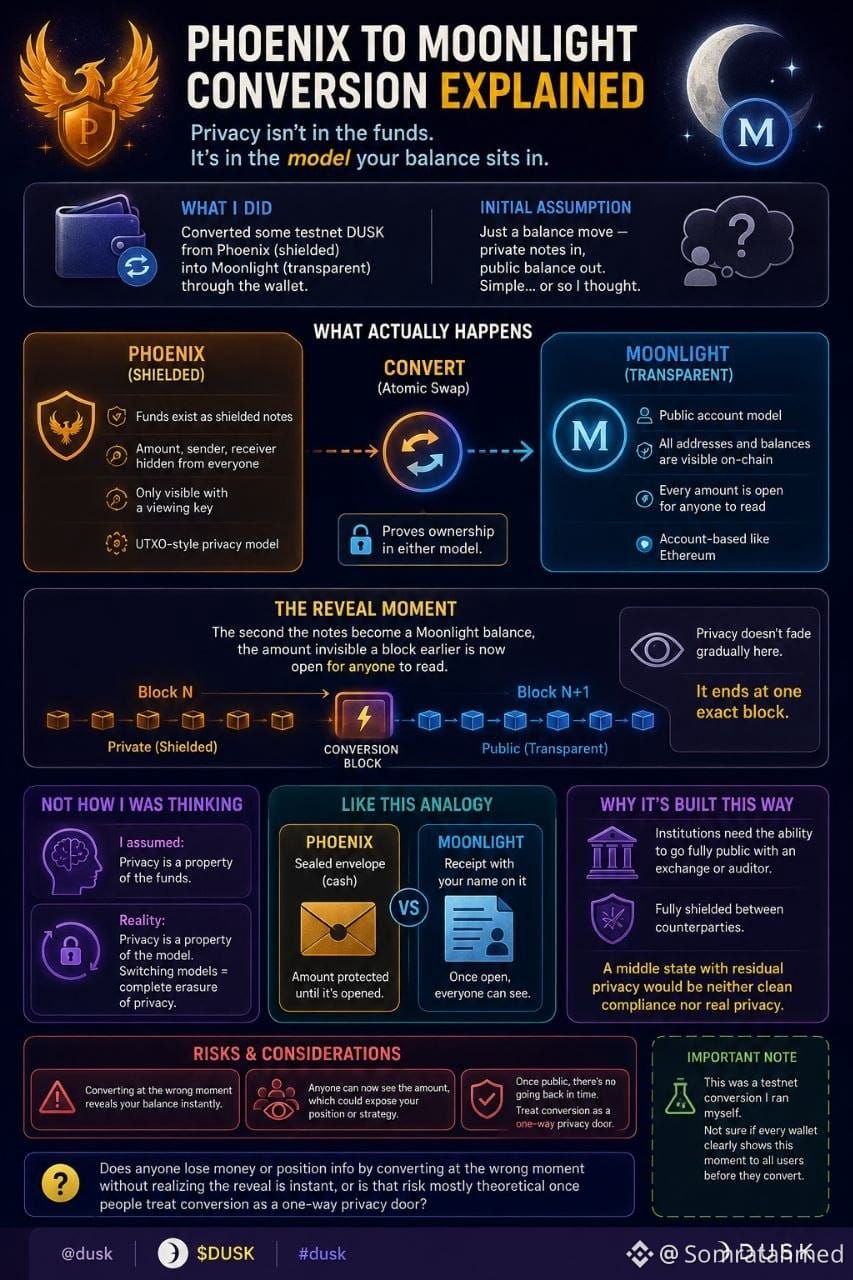
#dusk $DUSK حوّلت بعض DUSK الخاصّة بشبكة الاختبار من Phoenix إلى Moonlight الليلة الماضية عبر المحفظة، وكنت أتساءل ما الذي يحدث فعليًا في تلك اللحظة. افترضت أنه مجرد نقل رصيد—ملاحظات خاصة تدخل، ورصيد عام يخرج، ولا يوجد ما يدعو للتفكير سوى النقر.
لكن مشاهدته وهو يحدث غيّر ذلك. أموال Phoenix تكون مقيّدة كـ ملاحظات (shielded notes)—لا أحد يرى المبلغ أو المُرسِل أو المُستلم إلا من يملك مفتاح العرض. وMoonlight على العكس تمامًا بالتصميم، فهو نموذج حساب عام حيث كل عنوان وكل رصيد يكون مكشوفًا. وظيفة التحويل (convert) تُجري التبديل بين النموذجين بشكل ذري (atomically)، لتُثبت الملكية في كلتا الحالتين. لكن بمجرد أن تصبح تلك الملاحظات رصيدًا في Moonlight، فإن المبلغ الذي كان غير مرئي قبل كتلةٍ (block) يصبح الآن مكشوفًا لأي شخص لقراءته. الخصوصية لا تتلاشى تدريجيًا هنا. تنتهي عند كتلة واحدة بالضبط.
هذا ليس ما كنت أفكر به. كنت أظن أن الخصوصية صفة للأموال نفسها—أن DUSK المحجوب يظل محجوبًا حتى تختار إنفاقه علنًا. لكن الحقيقة أنها صفة للنموذج الذي يقيم فيه رصيدك، والتبديل بين النماذج يمحو أي خصوصية كانت موجودة، دون كشف جزئي.
كختم النقد في ظرف مقابل تسليم شخص ما إيصالًا يحمل اسمك. الظرف يحمي قيمة المبلغ حتى يتم فتحه أمام شخص. بعد ذلك، لا توجد نسخة “مفتوحة جزئيًا”.
يوضح ذلك لماذا بُنيت الأمور بهذه الطريقة بدل دمج الاثنين. المؤسسات تحتاج إلى خيار جعل كل شيء علنيًا بالكامل مع بورصة أو مدقِّق (auditor)، وجعل الأرصدة محجوبة بالكامل بين الأطراف المتعاملة—فالنموذج الذي يحتفظ بخصوصية متبقية عبر التحويل لن يكون امتثالًا واضحًا ولا خصوصية حقيقية، بل مجرد حالة وسطى مُربكة.
ومن الجدير بالذكر أن هذا كان تحويلًا على شبكة اختبار قمت به بنفسي—لم أتحقق مما إذا كانت كل واجهة محفظة تعرض هذه اللحظة بوضوح لمستخدم أقل تقنيًا قبل الضغط على التحويل.
ومع ذلك ما زلت أفكّر في الموضوع—هل يفقد أحد المال أو معلومات عن الوضع (position info) عند التحويل في اللحظة الخاطئة دون أن يدرك أن الكشف فوري، أم أن هذا الخطر نظري غالبًا عندما يبدأ الناس التعامل مع التحويل كباب خصوصية أحادي الاتجاه؟@Dusk
لكن مشاهدته وهو يحدث غيّر ذلك. أموال Phoenix تكون مقيّدة كـ ملاحظات (shielded notes)—لا أحد يرى المبلغ أو المُرسِل أو المُستلم إلا من يملك مفتاح العرض. وMoonlight على العكس تمامًا بالتصميم، فهو نموذج حساب عام حيث كل عنوان وكل رصيد يكون مكشوفًا. وظيفة التحويل (convert) تُجري التبديل بين النموذجين بشكل ذري (atomically)، لتُثبت الملكية في كلتا الحالتين. لكن بمجرد أن تصبح تلك الملاحظات رصيدًا في Moonlight، فإن المبلغ الذي كان غير مرئي قبل كتلةٍ (block) يصبح الآن مكشوفًا لأي شخص لقراءته. الخصوصية لا تتلاشى تدريجيًا هنا. تنتهي عند كتلة واحدة بالضبط.
هذا ليس ما كنت أفكر به. كنت أظن أن الخصوصية صفة للأموال نفسها—أن DUSK المحجوب يظل محجوبًا حتى تختار إنفاقه علنًا. لكن الحقيقة أنها صفة للنموذج الذي يقيم فيه رصيدك، والتبديل بين النماذج يمحو أي خصوصية كانت موجودة، دون كشف جزئي.
كختم النقد في ظرف مقابل تسليم شخص ما إيصالًا يحمل اسمك. الظرف يحمي قيمة المبلغ حتى يتم فتحه أمام شخص. بعد ذلك، لا توجد نسخة “مفتوحة جزئيًا”.
يوضح ذلك لماذا بُنيت الأمور بهذه الطريقة بدل دمج الاثنين. المؤسسات تحتاج إلى خيار جعل كل شيء علنيًا بالكامل مع بورصة أو مدقِّق (auditor)، وجعل الأرصدة محجوبة بالكامل بين الأطراف المتعاملة—فالنموذج الذي يحتفظ بخصوصية متبقية عبر التحويل لن يكون امتثالًا واضحًا ولا خصوصية حقيقية، بل مجرد حالة وسطى مُربكة.
ومن الجدير بالذكر أن هذا كان تحويلًا على شبكة اختبار قمت به بنفسي—لم أتحقق مما إذا كانت كل واجهة محفظة تعرض هذه اللحظة بوضوح لمستخدم أقل تقنيًا قبل الضغط على التحويل.
ومع ذلك ما زلت أفكّر في الموضوع—هل يفقد أحد المال أو معلومات عن الوضع (position info) عند التحويل في اللحظة الخاطئة دون أن يدرك أن الكشف فوري، أم أن هذا الخطر نظري غالبًا عندما يبدأ الناس التعامل مع التحويل كباب خصوصية أحادي الاتجاه؟@Dusk