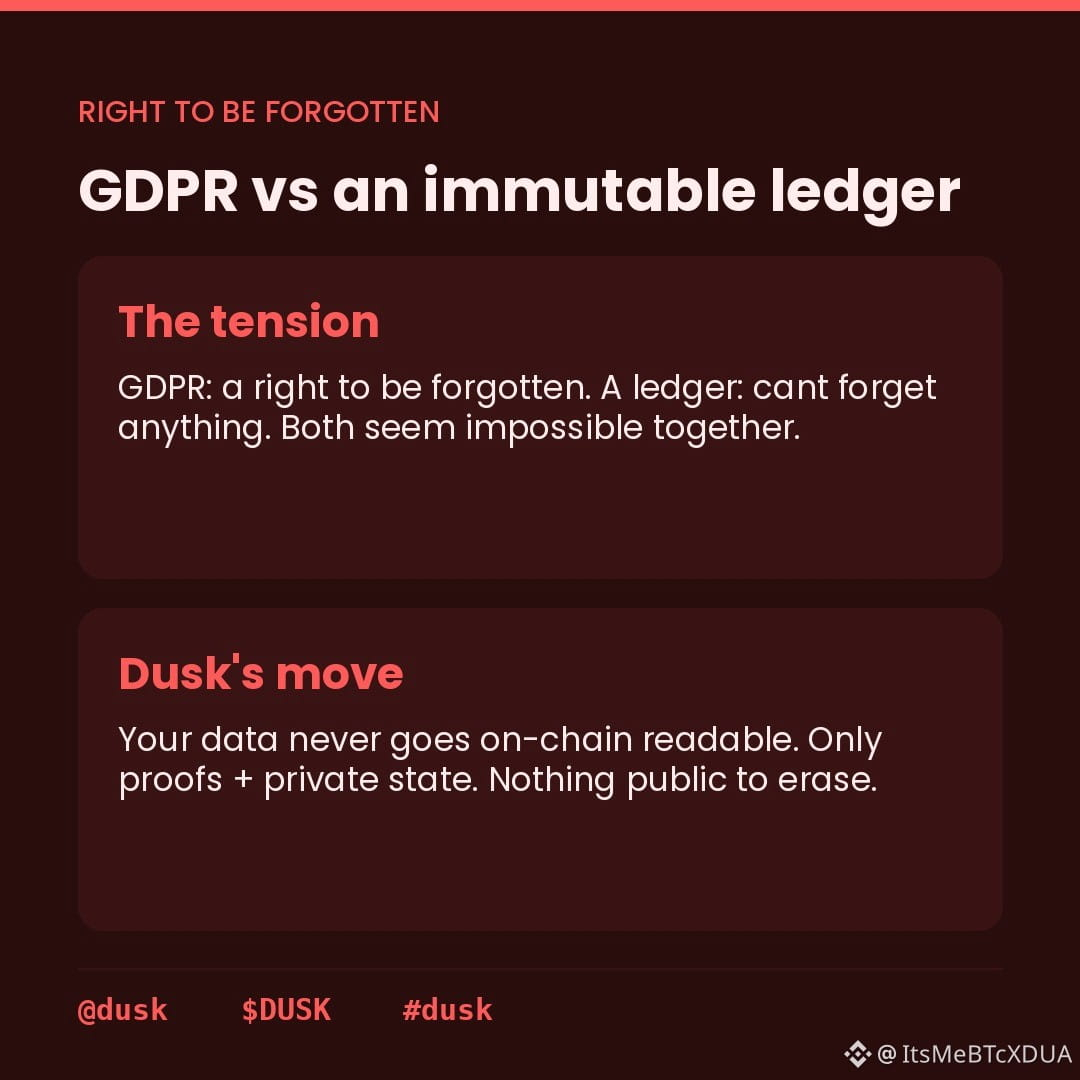
شيء كان دائمًا يربكني بشأن "سلاسل الكتل المتوافقة": تمنح اتفاقية حماية البيانات العامة (GDPR) الناس حقًا في النسيان، والسلاسل الكتل مشهورة بأنها من المستحيل نسيان أي شيء عليها. تبدو الفكرتان وكأنهما لا يمكن أن تكونا صحيحتين معًا. هذا الأسبوع فهمت أخيرًا كيف يوفق «داسك» بينهما.
التوقع الساذج هو أن سلسلة الخصوصية يجب أن تمتلك نوعًا ما من وظيفة الحذف الذكية، طريقة للعودة ومحو بياناتك عندما تطلب. لكنها لا تفعل ذلك، ولا يمكنها فعلاً ذلك؛ فخاصية عدم القابلية للتغيير هي جوهر سجلّ الحسابات.
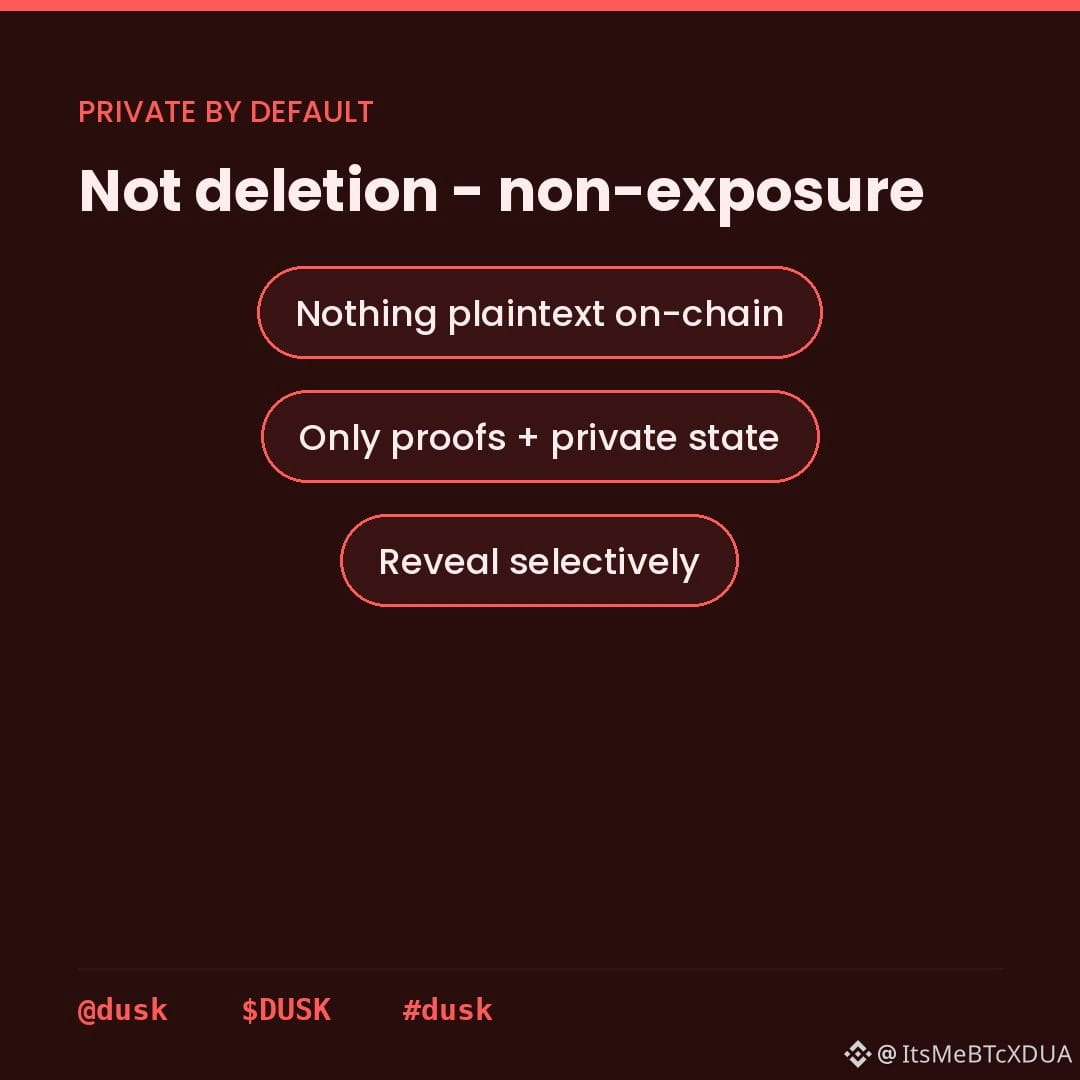
إجابة «داسك» هي عكس الحذف. الحيلة هي أن بياناتك الشخصية والمالية لا تُكتب على السلسلة أبدًا بصيغ قابلة للقراءة من الأساس. الأرصدة، والهوّيات، وتفاصيل المعاملات—كلها تبقى مشفّرة أو كحالة خاصة، مع بقاء فقط الأدلة ووجهات نظر يتم الكشف عنها بشكل انتقائي. يحتفظ السجلّ العام بالتزاماتٍ تشفيرية، لا باسمك ولا بما تملكه.
لذا فإن سؤال "الحق في النسيان" يزول إلى حد كبير. لا يمكن أن يُطلب منك محو ما لم يكن مكتوبًا علنًا أصلًا. لا توجد أصلًا سجلات شخصية بنصّ صريح موجودة هناك بشكل ثابت وغير قابل للتغيير.
عندما تُعرض بهذه الطريقة، تنقلب الصياغة المعتادة. تحاول معظم السلاسل إضافة الخصوصية فوق سجلّ شفاف افتراضيًا. يبدأ «داسك» بالخصوصية ثم يكشف بشكل انتقائي—وهذا بالضبط الشكل الذي تتطلبه قواعد نمط GDPR.
التحفّظ الصريح هو أن "مشفّر وليس محذوفًا" و"محوٌ قانوني" ليستا بالضرورة الشيء نفسه بالنسبة للجهة التنظيمية. لا تزال المفاتيح والبيانات الوصفية ونسخ موجودة خارج السلسلة في مكان ما.
هل رأى أحد كيف تتعامل جهة تنظيمية فعلًا مع عبارة "البيانات لم تكن علنية أصلًا" مقابل "البيانات تم حذفها"؟ أنا متشوق لمعرفة إن كان التشفير بدلًا من الحذف قد اختُبر فعلاً في مواجهة طلب GDPR حقيقي بعد، أم أنه ما يزال مجرد نظرية. @Dusk
$DUSK #dusk
التوقع الساذج هو أن سلسلة الخصوصية يجب أن تمتلك نوعًا ما من وظيفة الحذف الذكية، طريقة للعودة ومحو بياناتك عندما تطلب. لكنها لا تفعل ذلك، ولا يمكنها فعلاً ذلك؛ فخاصية عدم القابلية للتغيير هي جوهر سجلّ الحسابات.
إجابة «داسك» هي عكس الحذف. الحيلة هي أن بياناتك الشخصية والمالية لا تُكتب على السلسلة أبدًا بصيغ قابلة للقراءة من الأساس. الأرصدة، والهوّيات، وتفاصيل المعاملات—كلها تبقى مشفّرة أو كحالة خاصة، مع بقاء فقط الأدلة ووجهات نظر يتم الكشف عنها بشكل انتقائي. يحتفظ السجلّ العام بالتزاماتٍ تشفيرية، لا باسمك ولا بما تملكه.
لذا فإن سؤال "الحق في النسيان" يزول إلى حد كبير. لا يمكن أن يُطلب منك محو ما لم يكن مكتوبًا علنًا أصلًا. لا توجد أصلًا سجلات شخصية بنصّ صريح موجودة هناك بشكل ثابت وغير قابل للتغيير.
عندما تُعرض بهذه الطريقة، تنقلب الصياغة المعتادة. تحاول معظم السلاسل إضافة الخصوصية فوق سجلّ شفاف افتراضيًا. يبدأ «داسك» بالخصوصية ثم يكشف بشكل انتقائي—وهذا بالضبط الشكل الذي تتطلبه قواعد نمط GDPR.
التحفّظ الصريح هو أن "مشفّر وليس محذوفًا" و"محوٌ قانوني" ليستا بالضرورة الشيء نفسه بالنسبة للجهة التنظيمية. لا تزال المفاتيح والبيانات الوصفية ونسخ موجودة خارج السلسلة في مكان ما.
هل رأى أحد كيف تتعامل جهة تنظيمية فعلًا مع عبارة "البيانات لم تكن علنية أصلًا" مقابل "البيانات تم حذفها"؟ أنا متشوق لمعرفة إن كان التشفير بدلًا من الحذف قد اختُبر فعلاً في مواجهة طلب GDPR حقيقي بعد، أم أنه ما يزال مجرد نظرية. @Dusk
$DUSK #dusk