كنت أظن أن الخصوصية على البلوكشين تتعلق في الغالب بإخفاء المعلومات. لكن قراءة Dusk غيّرت السؤال بالنسبة لي: ربما تكمن المشكلة الحقيقية في تحديد من ينبغي له أن يرى ماذا، ومتى.
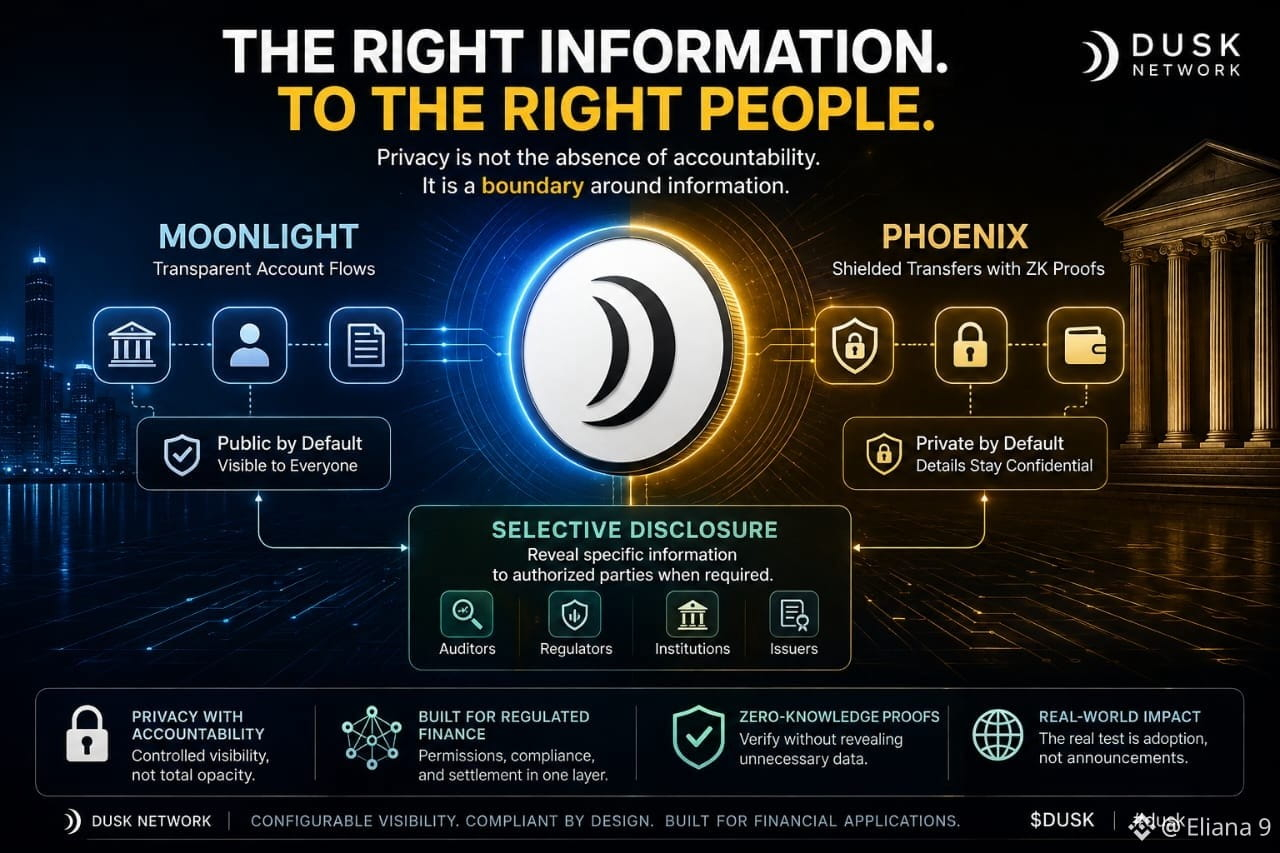
هذا التمييز مهم في التمويل. صُممت Dusk لتدفقات أصول رقمية منظمة، حيث تحتاج أذونات المشاركين ومتطلبات الخصوصية والتسوية إلى التوافق ضمن نفس البنية التحتية. يدعم نموذج Phoenix عمليات تحويل مُشفّرة باستخدام إثباتات المعرفة الصفرية، بينما يتولى Moonlight التعامل مع التدفقات الخاصة بالحسابات العامة الشفافة.
ما أجده مثيرًا للاهتمام هو الفلسفة الكامنة وراء هذا التقسيم. لا تحتاج المنظومة المالية دائمًا إلى أقصى قدر من السرية، ولا تحتاج دائمًا إلى أقصى قدر من الشفافية أيضًا. قد يحتاج المدققون إلى أدلة. وقد يحتاج المنظمون إلى معلومات محددة. وقد لا يحتاج الجمهور إلى كل رصيد أو كل طرف مقابل أو كل تفاصيل المعاملة.
الإفصاح الانتقائي هو إجابة Dusk عن هذا التوتر: كشف معلومات محددة للأطراف المصرّح لها عند الحاجة، دون جعل كل شيء عامًا افتراضيًا.
بالنسبة لي، هذا أقرب إلى كيفية عمل الخصوصية المالية في العالم الحقيقي. الخصوصية ليست غياب المساءلة؛ إنها حدود تُحيط بالمعلومات.
يمكن للتقنية أن تخلق تلك الحدود. والاختبار الأصعب هو ما إذا كانت المؤسسات والجهات المُصدِّرة والمستخدمون سيثقون بها فعلًا ويستخدمونها على نطاق واسع.
هل سيساعد التحكم الأفضل في وضوح الرؤية المالية على جعل الأسواق على السلسلة أكثر عملية؟
@Dusk $DUSK #dusk
هذا التمييز مهم في التمويل. صُممت Dusk لتدفقات أصول رقمية منظمة، حيث تحتاج أذونات المشاركين ومتطلبات الخصوصية والتسوية إلى التوافق ضمن نفس البنية التحتية. يدعم نموذج Phoenix عمليات تحويل مُشفّرة باستخدام إثباتات المعرفة الصفرية، بينما يتولى Moonlight التعامل مع التدفقات الخاصة بالحسابات العامة الشفافة.
ما أجده مثيرًا للاهتمام هو الفلسفة الكامنة وراء هذا التقسيم. لا تحتاج المنظومة المالية دائمًا إلى أقصى قدر من السرية، ولا تحتاج دائمًا إلى أقصى قدر من الشفافية أيضًا. قد يحتاج المدققون إلى أدلة. وقد يحتاج المنظمون إلى معلومات محددة. وقد لا يحتاج الجمهور إلى كل رصيد أو كل طرف مقابل أو كل تفاصيل المعاملة.
الإفصاح الانتقائي هو إجابة Dusk عن هذا التوتر: كشف معلومات محددة للأطراف المصرّح لها عند الحاجة، دون جعل كل شيء عامًا افتراضيًا.
بالنسبة لي، هذا أقرب إلى كيفية عمل الخصوصية المالية في العالم الحقيقي. الخصوصية ليست غياب المساءلة؛ إنها حدود تُحيط بالمعلومات.
يمكن للتقنية أن تخلق تلك الحدود. والاختبار الأصعب هو ما إذا كانت المؤسسات والجهات المُصدِّرة والمستخدمون سيثقون بها فعلًا ويستخدمونها على نطاق واسع.
هل سيساعد التحكم الأفضل في وضوح الرؤية المالية على جعل الأسواق على السلسلة أكثر عملية؟
@Dusk $DUSK #dusk