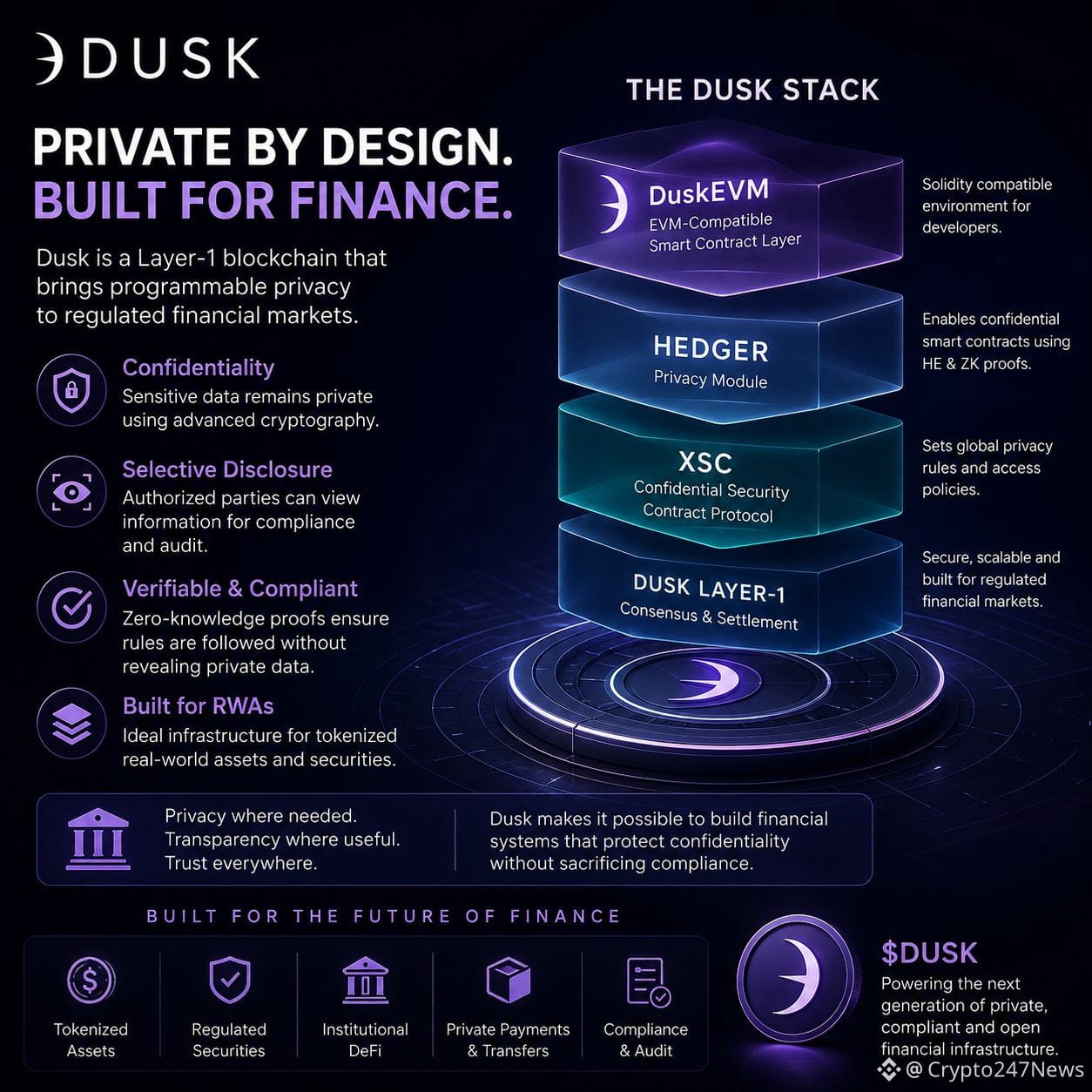
#dusk @Dusk أمضيت بعض الوقت في الاطلاع على التطورات المتعلقة بـ Dusk، وما لفت انتباهي هو أن المشروع يبدو وكأنه يتجاوز الفكرة المعتادة لـ "بلوك تشين الخصوصية".
الجزء الأكثر إثارة للاهتمام بالنسبة لي هو DuskEVM. إذ يوفّر بيئة EVM يستطيع المطوّرون الذين اعتادوا بالفعل على Solidity البناء على Dusk دون الاضطرار إلى تغيير كامل لطريقة تعاملهم مع العقود الذكية.
السؤال الأكبر بالنسبة لي هو ماذا يحدث عندما تصبح الخصوصية جزءًا من تلك التطبيقات.
وهنا يصبح Hedger مثيرًا للاهتمام. تتمثل الفكرة في الحفاظ على معلومات المعاملة بسرّية مع السماح في الوقت نفسه للنظام بإنتاج إثباتات يمكن مراجعتها عند الحاجة. بالنسبة للتطبيقات التي قد يُحدث هذا الفارق فيها أثرًا كبيرًا. عادةً لا تستطيع المؤسسات وضع كل تفاصيل الرصيد أو المراكز أو المعاملات في بيئة عامة، لكن ما زالت بحاجة إلى طريقة لإثبات أن النشاط يتبع القواعد المطلوبة.
لذلك أنا أنظر إلى Dusk بدرجة أقل من منظور "ما مدى خصوصيته؟". بل من منظور مدى قابلية استخدام هذه الخصوصية في التمويل الخاضع للتنظيم.
لا يزال لدي الكثير لأفهمه حول افتراضات الأمان والإفصاح الانتقائي وكيفية تعامل الحوكمة مع التغييرات التي تطرأ على آليات الخصوصية هذه.
إذا كان Dusk يحاول ربط البنية التحتية المالية بأسواق على السلسلة، فأعتقد أن هذه التفاصيل قد تصبح في النهاية أكثر أهمية من الميزات الرئيسية.
أي جزء ستفحصه أولًا: DuskEVM أم تصميم خصوصية Hedger أم طبقة الحوكمة والامتثال؟
@Dusk Foundation #dusk $DUSK @Dusk
الجزء الأكثر إثارة للاهتمام بالنسبة لي هو DuskEVM. إذ يوفّر بيئة EVM يستطيع المطوّرون الذين اعتادوا بالفعل على Solidity البناء على Dusk دون الاضطرار إلى تغيير كامل لطريقة تعاملهم مع العقود الذكية.
السؤال الأكبر بالنسبة لي هو ماذا يحدث عندما تصبح الخصوصية جزءًا من تلك التطبيقات.
وهنا يصبح Hedger مثيرًا للاهتمام. تتمثل الفكرة في الحفاظ على معلومات المعاملة بسرّية مع السماح في الوقت نفسه للنظام بإنتاج إثباتات يمكن مراجعتها عند الحاجة. بالنسبة للتطبيقات التي قد يُحدث هذا الفارق فيها أثرًا كبيرًا. عادةً لا تستطيع المؤسسات وضع كل تفاصيل الرصيد أو المراكز أو المعاملات في بيئة عامة، لكن ما زالت بحاجة إلى طريقة لإثبات أن النشاط يتبع القواعد المطلوبة.
لذلك أنا أنظر إلى Dusk بدرجة أقل من منظور "ما مدى خصوصيته؟". بل من منظور مدى قابلية استخدام هذه الخصوصية في التمويل الخاضع للتنظيم.
لا يزال لدي الكثير لأفهمه حول افتراضات الأمان والإفصاح الانتقائي وكيفية تعامل الحوكمة مع التغييرات التي تطرأ على آليات الخصوصية هذه.
إذا كان Dusk يحاول ربط البنية التحتية المالية بأسواق على السلسلة، فأعتقد أن هذه التفاصيل قد تصبح في النهاية أكثر أهمية من الميزات الرئيسية.
أي جزء ستفحصه أولًا: DuskEVM أم تصميم خصوصية Hedger أم طبقة الحوكمة والامتثال؟
@Dusk Foundation #dusk $DUSK @Dusk