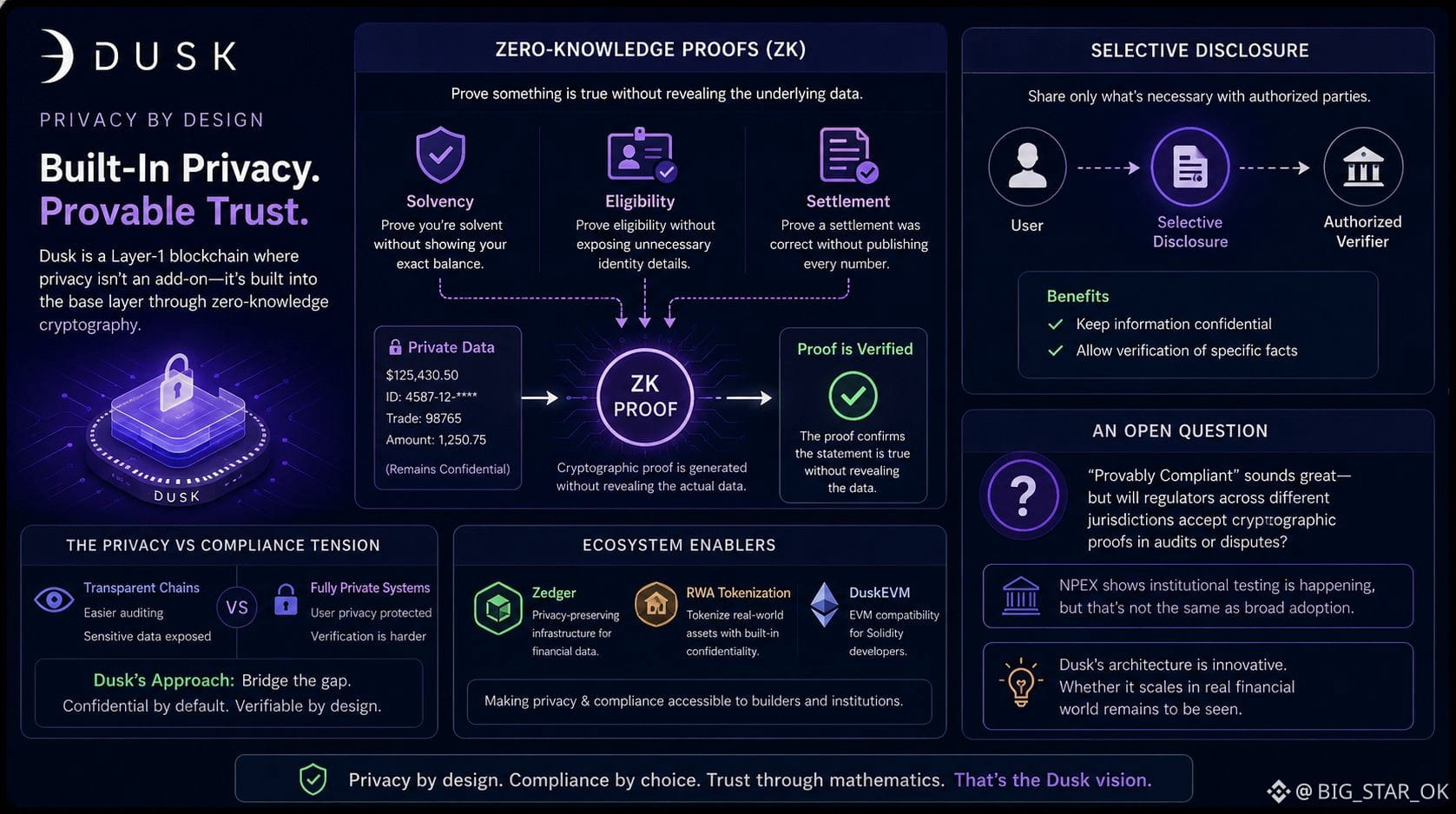
قضيت صباحي في التعمّق في Dusk، ولفت انتباهي تفصيل مهم: الخصوصية ليست مجرد ميزة على مستوى التطبيقات. بل تُبنى في الطبقة الأساسية عبر التشفير باستخدام المعرفة الصفرية.
الفكرة البسيطة وراء إثبات ZK قوية: البرهنة على شيء ما دون كشف البيانات الأساسية. يمكنك إثبات أنك تملك سيولة دون إظهار رصيدك الدقيق، أو إثبات أهليتك دون كشف تفاصيل هوية غير ضرورية، أو إثبات أن التسوية كانت صحيحة دون نشر كل رقم.
وهذا يخلق توتراً حقيقياً بين الخصوصية والامتثال. السلاسل الشفافة تجعل عمليات التدقيق أسهل لكنها تكشف معلومات مالية حساسة. الأنظمة شديدة الخصوصية تحمي المستخدمين لكنها قد تجعل التحقق أصعب. يحاول نهج Dusk الخاص بالإفصاح الانتقائي سدّ هذه الفجوة: إبقاء المعلومات سرية مع السماح للأطراف المصرّح لها بالتحقق من حقائق محددة.
وهذا يجعل اهتمام Zedger وtokenization للـ RWA أمراً يستحق المتابعة، في حين قد يجعل DuskEVM هذه الأفكار أكثر سهولة لمطوري Solidity.
ومع ذلك، ما زلت متشككاً بشأن عبارة «امتثال قابل للإثبات». هل سيقبل المنظّمون في ولايات قضائية مختلفة فعلاً إثباتاتٍ تشفيرية أثناء عمليات التدقيق أو النزاعات؟ يشير NPEX إلى أن التكنولوجيا يجري اختبارها مؤسسياً، لكن ذلك لا يُعدّ دليلاً على تبنٍّ واسع النطاق.
بنية Dusk مثيرة للاهتمام. يبقى سؤال ما إذا كانت ستنجح على نطاق مالي حقيقي.
@Dusk #dusk $DUSK
الفكرة البسيطة وراء إثبات ZK قوية: البرهنة على شيء ما دون كشف البيانات الأساسية. يمكنك إثبات أنك تملك سيولة دون إظهار رصيدك الدقيق، أو إثبات أهليتك دون كشف تفاصيل هوية غير ضرورية، أو إثبات أن التسوية كانت صحيحة دون نشر كل رقم.
وهذا يخلق توتراً حقيقياً بين الخصوصية والامتثال. السلاسل الشفافة تجعل عمليات التدقيق أسهل لكنها تكشف معلومات مالية حساسة. الأنظمة شديدة الخصوصية تحمي المستخدمين لكنها قد تجعل التحقق أصعب. يحاول نهج Dusk الخاص بالإفصاح الانتقائي سدّ هذه الفجوة: إبقاء المعلومات سرية مع السماح للأطراف المصرّح لها بالتحقق من حقائق محددة.
وهذا يجعل اهتمام Zedger وtokenization للـ RWA أمراً يستحق المتابعة، في حين قد يجعل DuskEVM هذه الأفكار أكثر سهولة لمطوري Solidity.
ومع ذلك، ما زلت متشككاً بشأن عبارة «امتثال قابل للإثبات». هل سيقبل المنظّمون في ولايات قضائية مختلفة فعلاً إثباتاتٍ تشفيرية أثناء عمليات التدقيق أو النزاعات؟ يشير NPEX إلى أن التكنولوجيا يجري اختبارها مؤسسياً، لكن ذلك لا يُعدّ دليلاً على تبنٍّ واسع النطاق.
بنية Dusk مثيرة للاهتمام. يبقى سؤال ما إذا كانت ستنجح على نطاق مالي حقيقي.
@Dusk #dusk $DUSK