
كنت أفتش في مكدس ZK لدى DUSK، والجزء الذي أجد نفسي أعود إليه باستمرار ليس “بلوك تشين الخصوصية”.
بل هذا:
يمكن للشبكة التحقق من شيء ما دون الحاجة إلى معرفة القصة كاملة.
يبدو الأمر بسيطًا حتى تفكر فيما يعنيه ذلك بالنسبة للنشاط المالي الحقيقي.
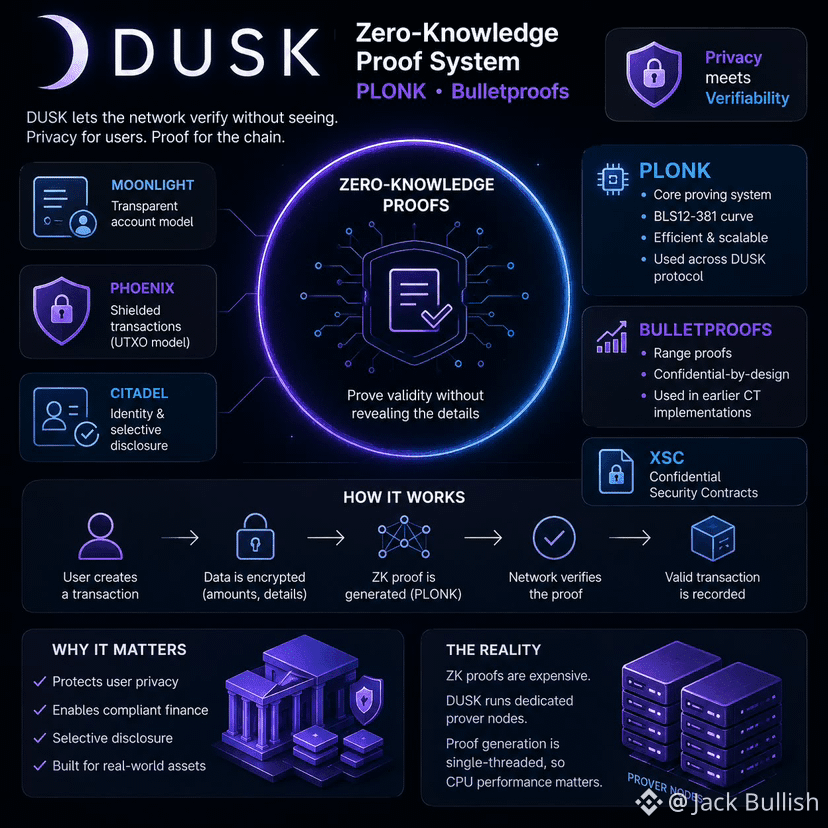
مع Phoenix، يمكن أن تبقى المبالغ وتفاصيل المعاملة مخفية، بينما يظلّ السلسلة يتحقق من أن المعاملة صحيحة.
وهذا تصور مختلف تمامًا عن مجرد إلقاء التشفير في كل الاتجاهات.
ثم هناك PLONK.
تستخدم Dusk PLONK كنظام إثبات أساسي، مع وجود BLS12-381 في الأسفل. الجزء المثير للاهتمام هو أن الإثبات ليس “المنتج” بحد ذاته. بل هو الآلية التي تتيح لـ Dusk الحفاظ على المعلومات الحساسة خاصةً، مع تقديم شيء يمكن للتحقق منه بواسطة المدققين.
كما أن Bulletproofs جزء من القصة أيضًا، لكنني لن أضعها على نفس مستوى PLONK اليوم. فهي تظهر أكثر في عمل Dusk المبكر حول المعاملات السرية. لقد تطور المكدس.
الذي أعتبره مثيرًا للاهتمام فعلًا هو المقايضة التي لا يحب أحد الحديث عنها:
الإثباتات تكلف حسابات.
لا بد أن يقوم شخص ما بتوليدها.
لأجل ذلك تحديدًا، تمتلك Dusk بنية تحتية مخصصة للمثبت.
لذا عندما يقول الناس “الذكاء الصفري (Zero Knowledge) يسمح لك بإخفاء كل شيء”، أعتقد أنهم يفوتهم النقطة الأهم.
إنه يتيح لك إخفاء بعض الأشياء مع إثبات الأشياء التي تهم.
بالنسبة للمال، قد يكون هذا أكثر فائدة بكثير من جعل البلوك تشين غير شفاف تمامًا.
ليس دائمًا تحتاج أن يرى الجميع المعاملة.
أحيانًا ما تحتاجه هو الأشخاص المناسبون — أو البروتوكول نفسه — لكي يعرفوا أنها صحيحة.
#dusk $DUSK @Dusk
بل هذا:
يمكن للشبكة التحقق من شيء ما دون الحاجة إلى معرفة القصة كاملة.
يبدو الأمر بسيطًا حتى تفكر فيما يعنيه ذلك بالنسبة للنشاط المالي الحقيقي.
مع Phoenix، يمكن أن تبقى المبالغ وتفاصيل المعاملة مخفية، بينما يظلّ السلسلة يتحقق من أن المعاملة صحيحة.
وهذا تصور مختلف تمامًا عن مجرد إلقاء التشفير في كل الاتجاهات.
ثم هناك PLONK.
تستخدم Dusk PLONK كنظام إثبات أساسي، مع وجود BLS12-381 في الأسفل. الجزء المثير للاهتمام هو أن الإثبات ليس “المنتج” بحد ذاته. بل هو الآلية التي تتيح لـ Dusk الحفاظ على المعلومات الحساسة خاصةً، مع تقديم شيء يمكن للتحقق منه بواسطة المدققين.
كما أن Bulletproofs جزء من القصة أيضًا، لكنني لن أضعها على نفس مستوى PLONK اليوم. فهي تظهر أكثر في عمل Dusk المبكر حول المعاملات السرية. لقد تطور المكدس.
الذي أعتبره مثيرًا للاهتمام فعلًا هو المقايضة التي لا يحب أحد الحديث عنها:
الإثباتات تكلف حسابات.
لا بد أن يقوم شخص ما بتوليدها.
لأجل ذلك تحديدًا، تمتلك Dusk بنية تحتية مخصصة للمثبت.
لذا عندما يقول الناس “الذكاء الصفري (Zero Knowledge) يسمح لك بإخفاء كل شيء”، أعتقد أنهم يفوتهم النقطة الأهم.
إنه يتيح لك إخفاء بعض الأشياء مع إثبات الأشياء التي تهم.
بالنسبة للمال، قد يكون هذا أكثر فائدة بكثير من جعل البلوك تشين غير شفاف تمامًا.
ليس دائمًا تحتاج أن يرى الجميع المعاملة.
أحيانًا ما تحتاجه هو الأشخاص المناسبون — أو البروتوكول نفسه — لكي يعرفوا أنها صحيحة.
#dusk $DUSK @Dusk